

On this page
A KEY QUESTION
Explore ways to preserve natural teeth before accepting irreversible preparation.
At a glance.
| Compare | Orthodontics | Veneers or crowns |
|---|---|---|
| Change | Tooth position and, where planned, bite | Shape, colour or damaged structure |
| Tooth changes | Some plans need extractions | Preparation can be irreversible |
| Ongoing care | Monitoring and retainers | Reviews, repairs and replacement |
General differences to discuss with your dentist. This comparison does not determine which treatment is suitable for you.
Describe what you want to change
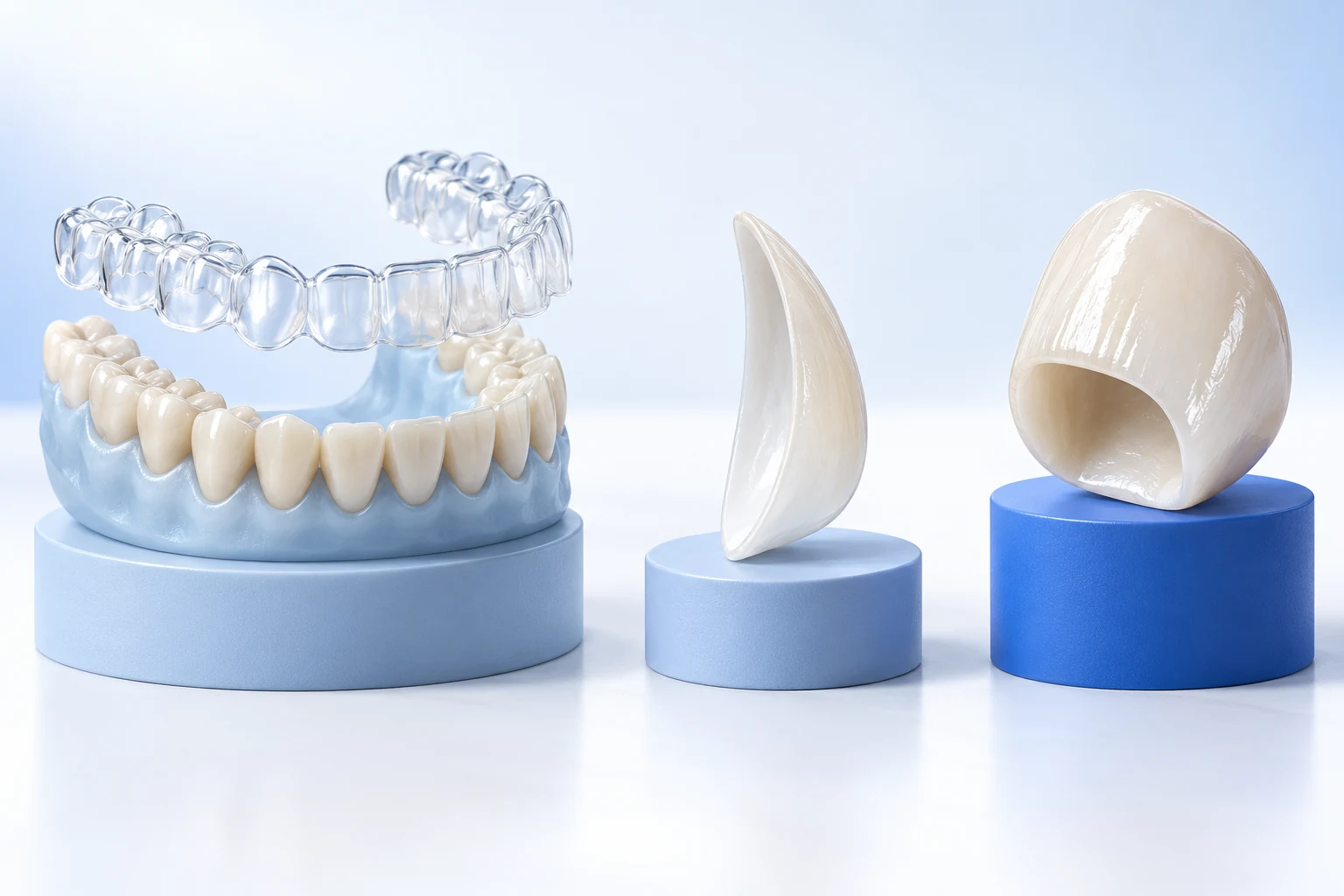
A rotated but sound tooth and a heavily damaged tooth need different discussions. Orthodontics does not whiten teeth or replace lost tissue. A crown may protect a weakened tooth; a veneer covers its front surface.
Assess oral health and bite
Discuss decay, gum problems, existing restorations, injuries and grinding. Photos or a digital preview cannot establish suitability. Ask whether an orthodontist’s opinion would help with crowding or bite. Adults can have orthodontic treatment, but every appliance has limitations.
For appliance choices, compare clear aligners and fixed braces, including ongoing reviews.

Understand irreversible changes
Crowns or veneers used to disguise irregularity can require irreversible tooth preparation and cannot hide every positioning problem. Request a reason for work on each tooth.
Orthodontics can also involve extractions. Seek another opinion if the reasons remain unclear.
- What changes does my plan require?
- Could moving teeth reduce later restorative work?
- What happens if I do nothing?
Compare risks and future care
Orthodontics needs regular monitoring and usually retainers afterwards. Discuss the timetable and risks, including root shortening, gum recession and later tooth movement.
Veneers and crowns need cleaning and reviews and may loosen, chip or need replacement. Compare lifetime maintenance as well as the speed of visible change.
Consider a staged approach
Moving teeth first may reduce later restorative work. Whitening or bonding may suit remaining colour or small shape concerns. Ask for written options, including no treatment now, with intended changes, irreversible steps, appointments and total costs. If clinicians share care, agree who controls the sequence.
Arrange continuing care
Consider how you would attend adjustments or get help with a broken appliance or retainer. Do not assume a local clinician will take over unfinished treatment; agree this before starting.
Ask whether the treating provider offers the proposed orthodontic or aligner treatment, who would supervise it and where ongoing reviews would take place.
Read the related guidance
Keep the wider treatment plan in view while comparing these options.
Choose questions to ask.
Select your questions and copy the list, or open it as a WhatsApp draft. You can edit the message before sending.
Your consultation questions
Untick any questions you don’t need.
6 selected · No contact details needed.
Common questions
About this information
Published by Best Smile Turkey, a health-tourism intermediary. Your treating dentist is responsible for assessment, treatment and care.
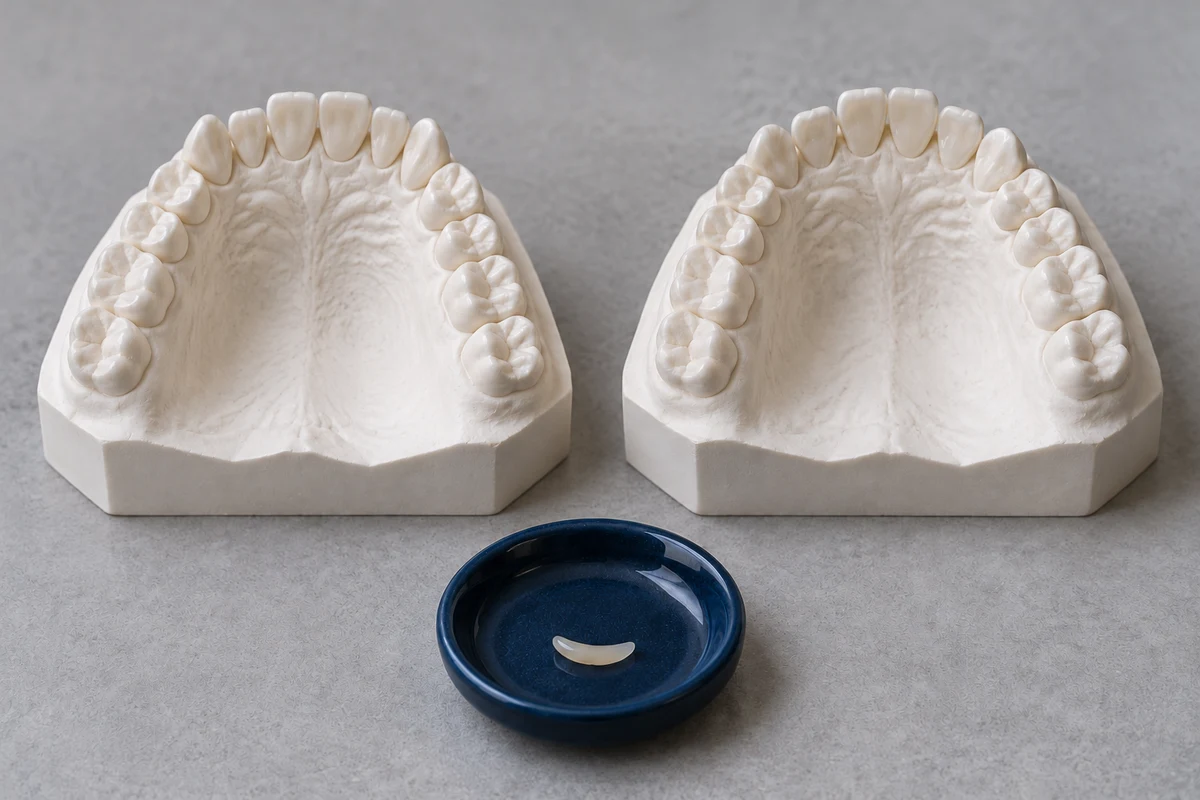
Use this information to prepare questions for your dentist. An examination is needed to advise on treatment. Photographs, models and previews cannot establish suitability or predict results.
Source checking is not a clinical review. How we use sources and images, or how to report a correction.
Sources and further reading
- NHS: braces Tooth straightening in adults and children, appointments, retainers and ongoing oral care.
- British Orthodontic Society: adult treatment questions Orthodontic assessment, possible extractions and the irreversible trade-offs of restorative alternatives.
- American Dental Association: veneers Veneer coverage, tooth preparation, oral health requirements and possible repair or replacement.
- American Dental Association: crowns Reasons a crown may be recommended to restore or protect a damaged or weakened tooth.
- Leeds Teaching Hospitals: orthodontic benefits and risks Oral health prerequisites and potential risks including root shortening, recession and tooth movement after treatment.
- NHS: dental treatments explained An overview of crowns, bridges, veneers, implants and other options.
- General Dental Council: going abroad for dental treatment Questions to ask about the treating provider, follow-up arrangements and concerns.
These resources offer general guidance; their publishers do not endorse Best Smile Turkey or the treating provider. Manufacturer links identify products or records, not independently compared outcomes. NHS funding information concerns UK care, not treatment costs in Turkey.
Ask about this information or report a correction