

On this page
A KEY QUESTION
Choose a suitable plan you can maintain, with reliable access to the clinician throughout treatment.
At a glance.
| Question | Clear aligners | Fixed braces |
|---|---|---|
| Can I remove them? | Yes, according to the prescribed routine. | The appliance remains attached to the teeth. |
| What is my daily responsibility? | Wear consistently and follow the change schedule. | Clean around the appliance and follow care instructions. |
| Could extra components be used? | Ask about attachments and elastics. | Ask about brackets, wires and any elastics. |
| Will I need reviews? | Yes; removable does not mean unmonitored. | Yes; adjustments and checks are part of care. |
General differences to discuss with your dentist. This comparison does not determine which treatment is suitable for you.
Compare the treatment goals
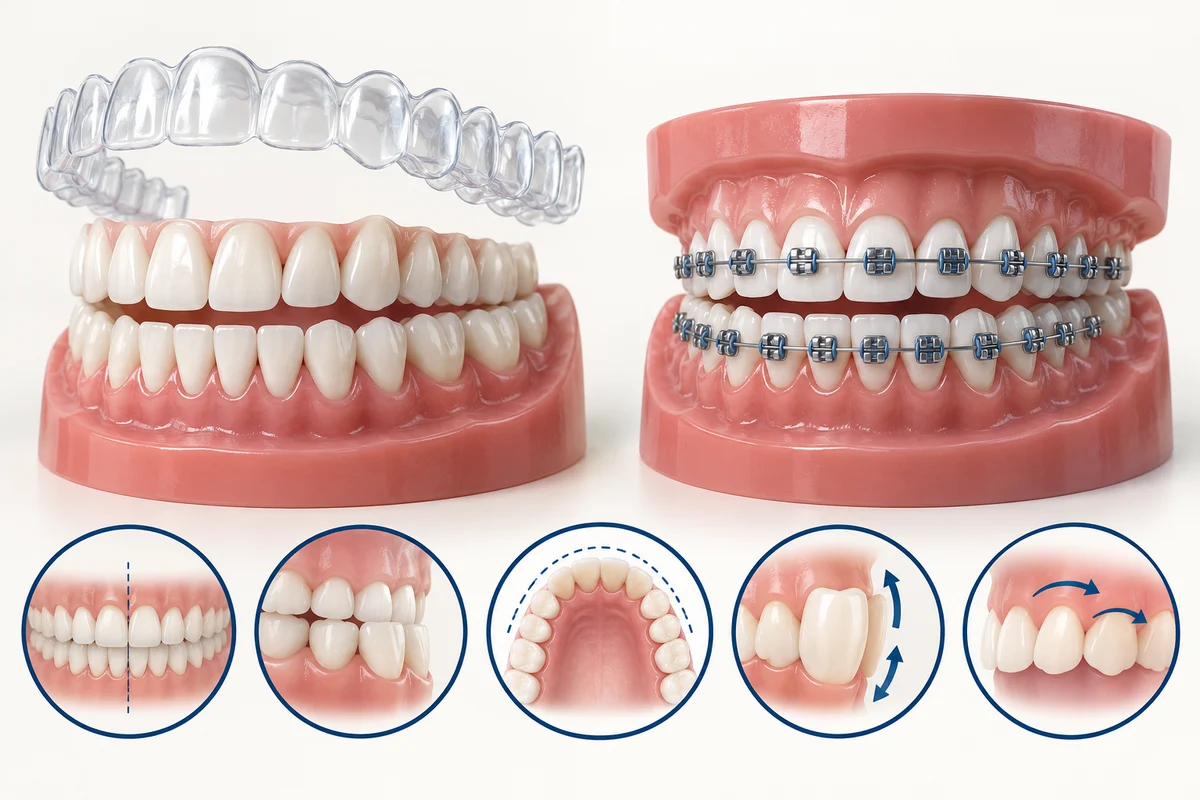
One plan may straighten only front teeth while another changes how the jaws’ teeth meet. Have the endpoint and any unchanged problems identified. Aligners are not suitable for every case; the clinician should explain how the proposed appliance can achieve the required movements.
Wearing aligners
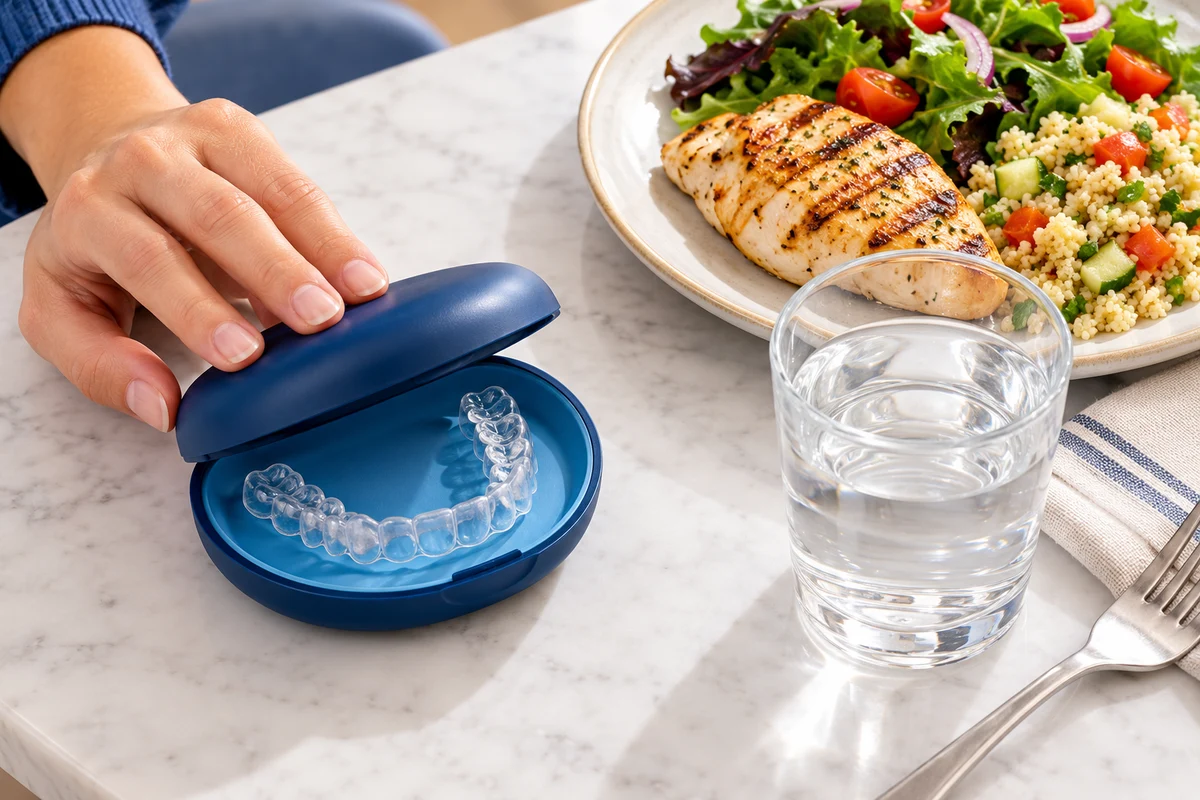
Aligners are generally worn for most of the day, with removal for meals, most drinks and cleaning. Follow your individual wear and change schedule. Get instructions for lost trays, missed wear or poor fit. Do not speed up the sequence yourself.
Caring for fixed braces
Fixed braces stay attached, but still require careful cleaning and protection from damage. Have cleaning around brackets and wires demonstrated. Discuss work or hobbies that may affect the choice, and establish where broken components can be assessed or repaired, with any costs.
Appearance and comfort
Clear aligners may need attachments or elastics that are more noticeable than the trays. See the complete proposed arrangement. Discuss discomfort, speech and your practical concerns. Both approaches have risks and cannot guarantee a completion date.
Reviews and full costs
Name the clinician monitoring progress and identify in-person appointments. Check what happens if the plan changes, including extra adjustments, replacement appliances or further aligners. Include retainers, their reviews and replacement charges in the written cost comparison.
Continuing care and travel
Regular access matters beyond the first fitting. Before starting abroad, establish where routine and unexpected visits will happen. Another practice may not accept a takeover without agreement. Verify the proposed orthodontic service with the provider rather than assuming availability from a general guide.
Read the related guidance
Keep the wider treatment plan in view while comparing these options.
Choose questions to ask.
Select your questions and copy the list, or open it as a WhatsApp draft. You can edit the message before sending.
Your consultation questions
Untick any questions you don’t need.
5 selected · No contact details needed.
Common questions
About this information
Published by Best Smile Turkey, a health-tourism intermediary. Your treating dentist is responsible for assessment, treatment and care.
Use this information to prepare questions for your dentist. An examination is needed to advise on treatment. Photographs, models and previews cannot establish suitability or predict results.
Source checking is not a clinical review. How we use sources and images, or how to report a correction.
Sources and further reading
- British Orthodontic Society: clear aligners Patient leaflet on wear commitment, attachments, suitability, monitoring and risks.
- NHS: braces Fixed and removable appliances, orthodontic assessment and ongoing care.
- British Orthodontic Society: adult orthodontic questions Adult treatment goals, appliance choices, limits and questions before starting.
- NHS: dental treatments explained An overview of crowns, bridges, veneers, implants and other options.
- General Dental Council: going abroad for dental treatment Questions to ask about the treating provider, follow-up arrangements and concerns.
These resources offer general guidance; their publishers do not endorse Best Smile Turkey or the treating provider. Manufacturer links identify products or records, not independently compared outcomes. NHS funding information concerns UK care, not treatment costs in Turkey.
Ask about this information or report a correction