
On this page
A KEY QUESTION
Know which problems need contact between visits and what findings could change or stop treatment.
Your individual risk discussion
General risk information needs to be applied to your history and goals. Complications can occur despite appropriate care. Discuss the consequences that concern you, alongside alternatives such as leaving things unchanged or choosing a limited goal. A promise of no risk is not reliable.
Enamel and gum health
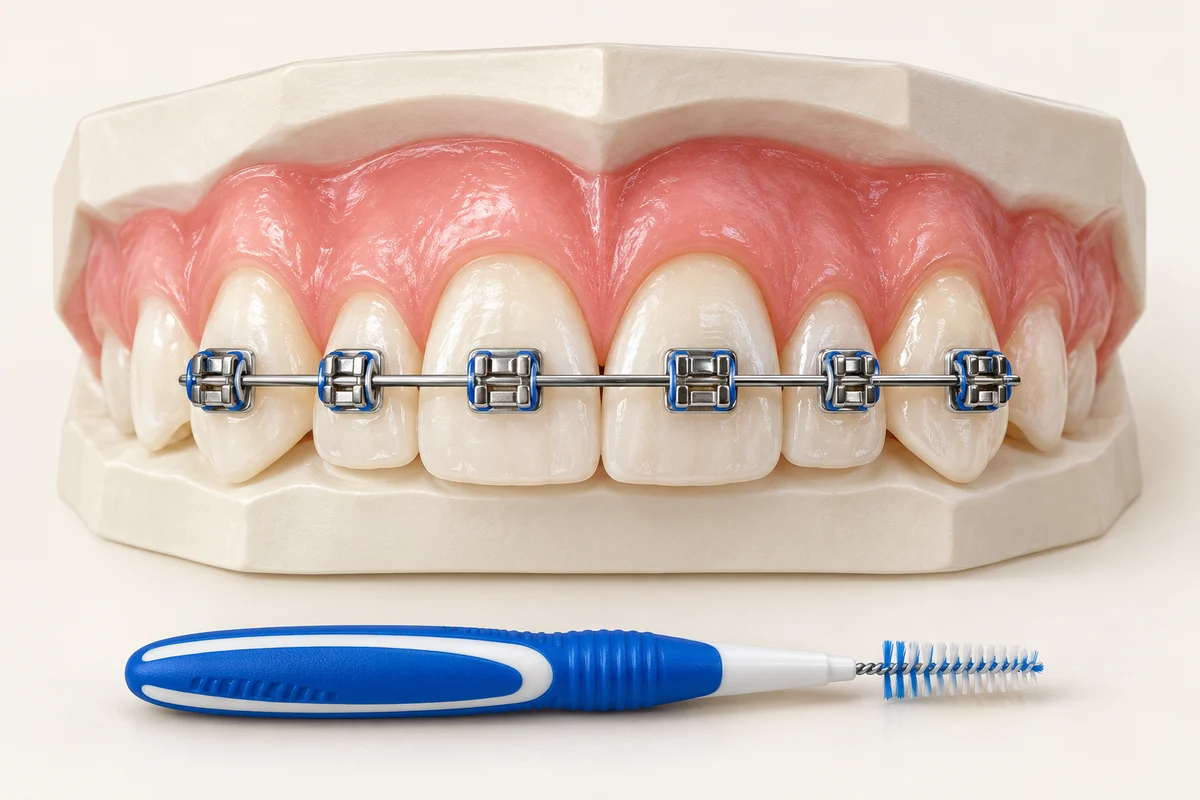
Decay, gum disease or inadequate cleaning may need attention before fitting an appliance. Poor cleaning during treatment can lead to early removal. Discuss white marks, cavities, inflammation and recession. Have cleaning demonstrated and continue routine dental care alongside orthodontic reviews.
Roots and previous injuries
Orthodontic movement can shorten roots; more extensive changes are less common but important. Mention past tooth injuries even if they no longer hurt. Have the starting findings and monitoring plan explained, including what might prompt imaging, a change of plan or stopping movement.
Discomfort and existing restorations
Get instructions for expected discomfort and irritation, with a contact for troublesome wires, trays or attachments. Tell the clinician about crowns, veneers and large fillings. Existing restorations may be damaged during appliance removal; discuss relevant risks and how repair would be arranged and charged.
If the plan needs to change
Discuss problems with wear, cleaning or attendance early. Findings may lead to a pause, shorter course or revised goal. Before agreeing to changes, obtain updated options and costs, including what an incomplete result means and which retention or further care remains necessary.
After active treatment
Teeth can move afterwards, so retention is part of the initial decision. Include long-term reviews and replacement-retainer costs. For treatment abroad, establish who handles unexpected problems, routine monitoring and retention at home, and verify the proposed service with the provider.
Read the related guidance
Keep the wider treatment plan in view while comparing these options.
Choose questions to ask.
Select your questions and copy the list, or open it as a WhatsApp draft. You can edit the message before sending.
Your consultation questions
Untick any questions you don’t need.
5 selected · No contact details needed.
Common questions
About this information
Published by Best Smile Turkey, a health-tourism intermediary. Your treating dentist is responsible for assessment, treatment and care.
Use this information to prepare questions for your dentist. An examination is needed to advise on treatment. Photographs, models and previews cannot establish suitability or predict results.
Source checking is not a clinical review. How we use sources and images, or how to report a correction.
Sources and further reading
- British Orthodontic Society: risks of orthodontic treatment Direct professional guidance on discussing common and serious risks, individual factors and uncertainty.
- Leeds Teaching Hospitals: orthodontic benefits and risks Oral-health prerequisites, possible root shortening, gum changes and relapse.
- University Hospitals of Leicester: having braces fitted Patient leaflet covering assessment, black triangles, treatment limitations and monitoring.
- NHS: dental treatments explained An overview of crowns, bridges, veneers, implants and other options.
- General Dental Council: going abroad for dental treatment Questions to ask about the treating provider, follow-up arrangements and concerns.
These resources offer general guidance; their publishers do not endorse Best Smile Turkey or the treating provider. Manufacturer links identify products or records, not independently compared outcomes. NHS funding information concerns UK care, not treatment costs in Turkey.
Ask about this information or report a correction