

On this page
A KEY QUESTION
Establish the cause and whether the tooth needs health-related care, then discuss any appearance concern.
The history of the mark
Tell the dentist whether it has always been there, appeared after braces or changed recently. An older photograph may help establish timing. White, brown or black spots can occur with decay, while faint white streaks can occur with fluorosis; colour alone cannot distinguish them.
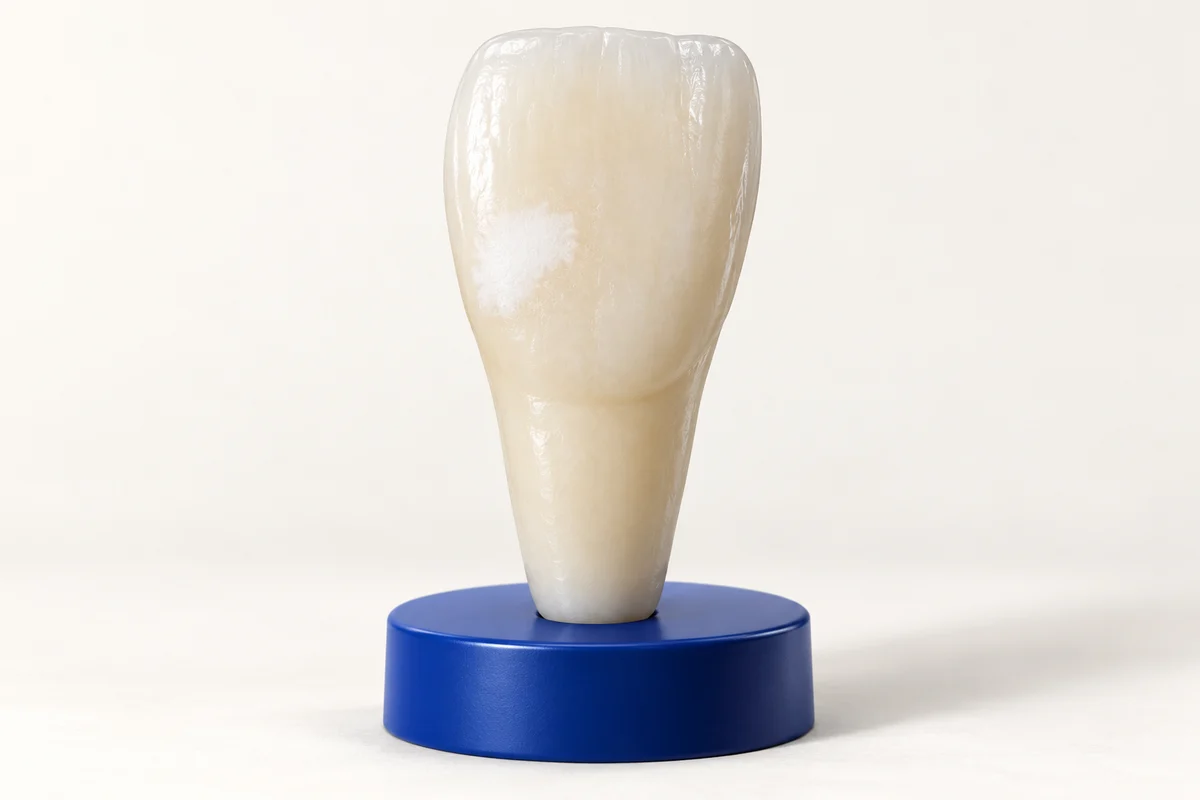
A painless spot still matters
Early decay can cause no symptoms. Treatment depends on whether there is an early change or an established cavity. Find out whether the surface is sound, needs monitoring or requires treatment, and what will be checked at review. Do not wait for pain.
Developmental changes
Fluorosis develops while teeth are forming beneath the gums. It does not newly develop in an erupted adult tooth. A mark first noticed in adulthood needs its history clarified. Do not stop normal preventive care because you suspect current toothpaste caused it.
After braces
Difficulty cleaning around braces can lead to white or brown marks. Mention when orthodontic treatment ended and which areas were hard to reach. Before further dental work, discuss whether it could affect a retainer’s fit and who will coordinate the sequence.
Treatment after diagnosis
Separate the care needed to protect the tooth from options to change its appearance. Monitoring may be appropriate, and a veneer is not automatic. For any proposed surface treatment, whitening or restoration, discuss tissue removal, likely benefit and uncertainty. Whitening will not reliably hide every patch.
Your next step
Keep the affected tooth, assessed cause and purpose of care in the plan. Observation needs a review date and advice on changes to report sooner. Elective treatment needs suitable alternatives and a full quotation. An enquiry image cannot establish the diagnosis or availability of a procedure.
Read the related guidance
Keep the wider treatment plan in view while comparing these options.
Choose questions to ask.
Select your questions and copy the list, or open it as a WhatsApp draft. You can edit the message before sending.
Your consultation questions
Untick any questions you don’t need.
4 selected · No contact details needed.
Common questions
About this information
Published by Best Smile Turkey, a health-tourism intermediary. Your treating dentist is responsible for assessment, treatment and care.
Use this information to prepare questions for your dentist. An examination is needed to advise on treatment. Photographs, models and previews cannot establish suitability or predict results.
Source checking is not a clinical review. How we use sources and images, or how to report a correction.
Sources and further reading
- NHS: tooth decay Possible colour changes, symptom-free early disease and assessment-led treatment.
- American Dental Association: fluorosis Developmental enamel colour changes and why fluorosis does not first develop in mature teeth.
- University Hospitals of Leicester: having braces fitted Patient leaflet covering assessment, black triangles, treatment limitations and monitoring.
- NHS: dental treatments explained An overview of crowns, bridges, veneers, implants and other options.
- General Dental Council: going abroad for dental treatment Questions to ask about the treating provider, follow-up arrangements and concerns.
These resources offer general guidance; their publishers do not endorse Best Smile Turkey or the treating provider. Manufacturer links identify products or records, not independently compared outcomes. NHS funding information concerns UK care, not treatment costs in Turkey.
Ask about this information or report a correction