

On this page
A KEY QUESTION
Ask which tooth surface is affected, how advanced the decay is and what care it needs.
Early decay or a cavity?
Bacteria use sugars and starches to produce acids that remove minerals from enamel. Saliva and fluoride help replace them. Continuing mineral loss can break down the surface into a cavity. If monitoring or fluoride treatment is advised, ask when improvement or stability will be checked.
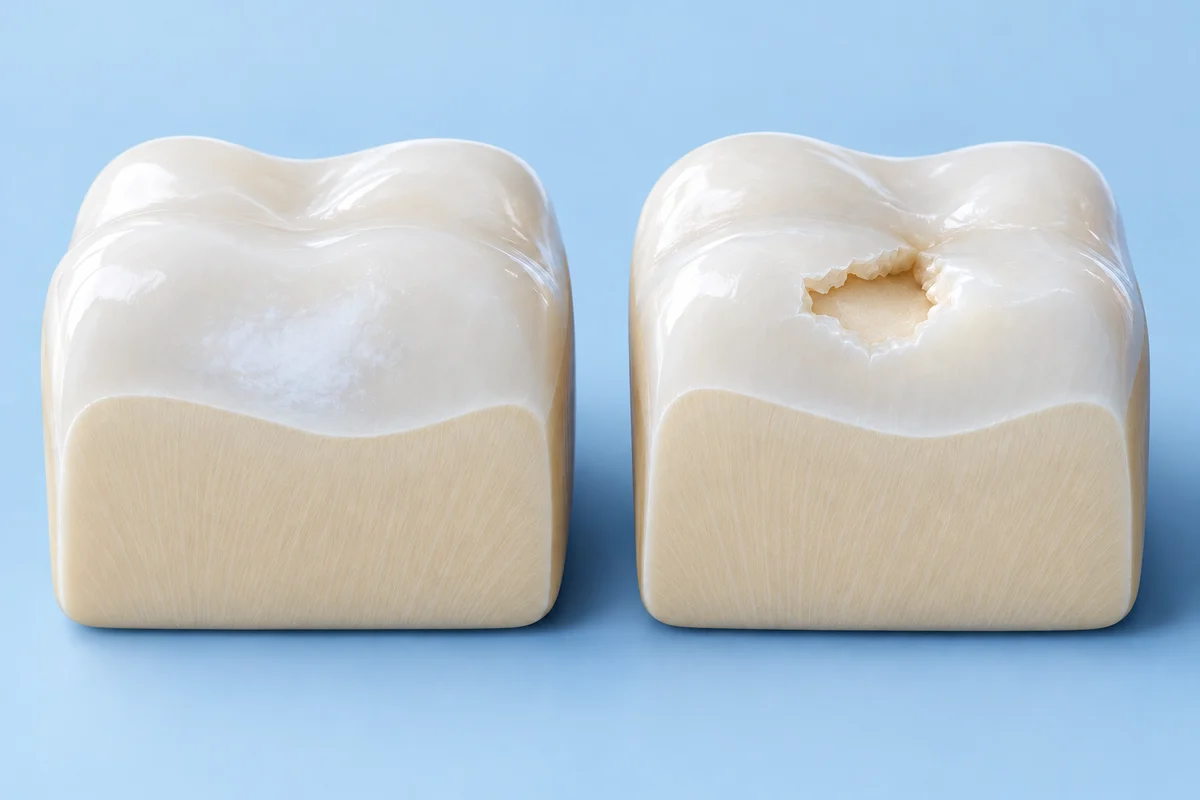
Colour and pain are not enough
Early decay may be painless. Examination and appropriate X-rays help assess areas that are hard to see. Report sensitivity, trapped food, a broken edge or changes around fillings. A white, brown or black mark in a photograph cannot establish the treatment needed.
Treatment depends on the damage
Early decay may suit fluoride treatment; a cavity may need a filling. Deeper decay affecting the pulp may need root canal treatment, and sometimes extraction. Discuss any finding that could change the plan or cost before work starts.
- Which tooth and surface are affected?
- Is the surface intact or cavitated?
- Why is this treatment recommended?
- What could change during treatment?
- When will the tooth be reviewed?
Preventing further decay
Adults remain at risk, including on exposed root surfaces. Frequent sugary snacks or drinks increase acid exposure. Brush twice daily with fluoride toothpaste, spit without rinsing, clean between teeth and follow your dentist’s review advice. Discuss practical changes to eating, drinking and cleaning.
When to get urgent help
Arrange assessment for suspected decay rather than waiting for treatment abroad. A suspected abscess needs urgent dental care; NHS 111 can help if an urgent dentist is unavailable. In the UK, breathing or swallowing difficulty, eye swelling or vision changes, major mouth swelling or marked difficulty opening the mouth need 999 or A&E. Do not drive yourself to A&E; have someone take you or call 999 for an ambulance.
Before cosmetic work
If veneers or crowns are also proposed, establish how decay will be managed first. Record the tooth number, provisional findings and follow-up. An online enquiry cannot show the depth of decay or settle the final restoration. Keep records of recent local care for the treating dentist.
Read the related guidance
Keep the wider treatment plan in view while comparing these options.
Choose questions to ask.
Select your questions and copy the list, or open it as a WhatsApp draft. You can edit the message before sending.
Your consultation questions
Untick any questions you don’t need.
5 selected · No contact details needed.
Common questions
About this information
Published by Best Smile Turkey, a health-tourism intermediary. Your treating dentist is responsible for assessment, treatment and care.
Use this information to prepare questions for your dentist. An examination is needed to advise on treatment. Photographs, models and previews cannot establish suitability or predict results.
Source checking is not a clinical review. How we use sources and images, or how to report a correction.
Sources and further reading
- NHS: tooth decay Symptoms, fluoride treatment, cavities, restorative options and prevention.
- National Institute of Dental and Craniofacial Research: tooth decay Mineral loss, early reversible changes, cavitation, adult root-surface decay and assessment.
- NHS: dental abscess Urgent dental treatment and symptoms requiring emergency help.
- NHS: dental treatments explained An overview of crowns, bridges, veneers, implants and other options.
- General Dental Council: going abroad for dental treatment Questions to ask about the treating provider, follow-up arrangements and concerns.
These resources offer general guidance; their publishers do not endorse Best Smile Turkey or the treating provider. Manufacturer links identify products or records, not independently compared outcomes. NHS funding information concerns UK care, not treatment costs in Turkey.
Ask about this information or report a correction