

On this page
A KEY QUESTION
Ask why the proposed amount of coverage is needed for this tooth.
Start with the damage
The dentist may examine the existing restoration, test the tooth and check gums and X-rays. Active disease needs attention before an indirect restoration. Mention broken edges, trapped food or pain when biting. Ask what may remain uncertain until an old filling is removed.
When a filling may work
A direct filling, such as composite, is formed in the mouth. A small cavity does not automatically need a laboratory-made restoration. Ask whether an old filling can be repaired, needs replacing or needs a different design. These involve different amounts of work.
How partial coverage differs
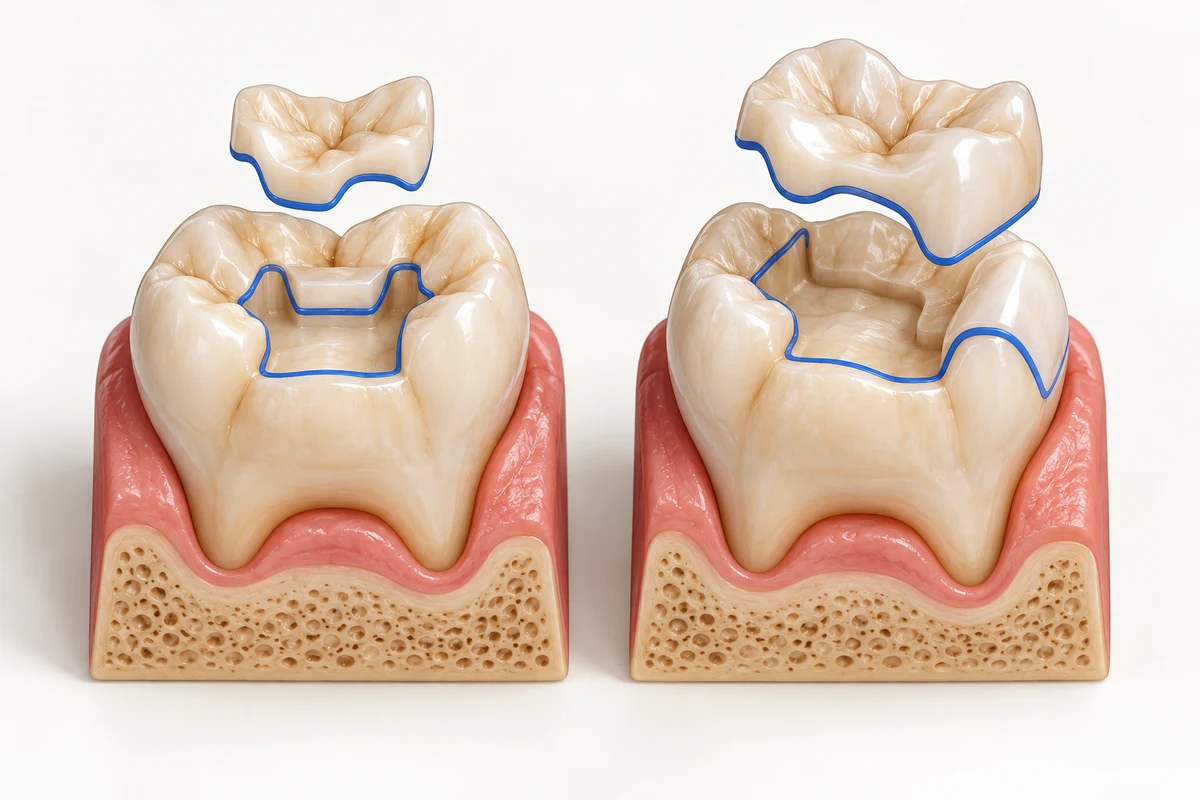
An inlay fits within the tooth. An onlay extends over biting surfaces, including weakened cusps, the raised parts of back teeth. Both are made outside the mouth and attached.
If the quote says “partial crown”, “overlay” or “ceramic filling”, ask for a diagram showing exactly which surfaces will be prepared and covered.
Compare the coverage. Then the method.
The area being restored and the way the restoration is made are separate questions.
Direct filling
Repairs an area within the tooth.
Placed and shaped in the mouthInlay
Fits within an area of the tooth.
Made separately, then attachedOnlay
Extends over selected biting surfaces.
Made separately, then attachedFull crown
Surrounds the prepared visible tooth.
Requires its own preparation decision
Which surfaces need protection, and why is this amount of coverage appropriate?
Why a crown may be needed
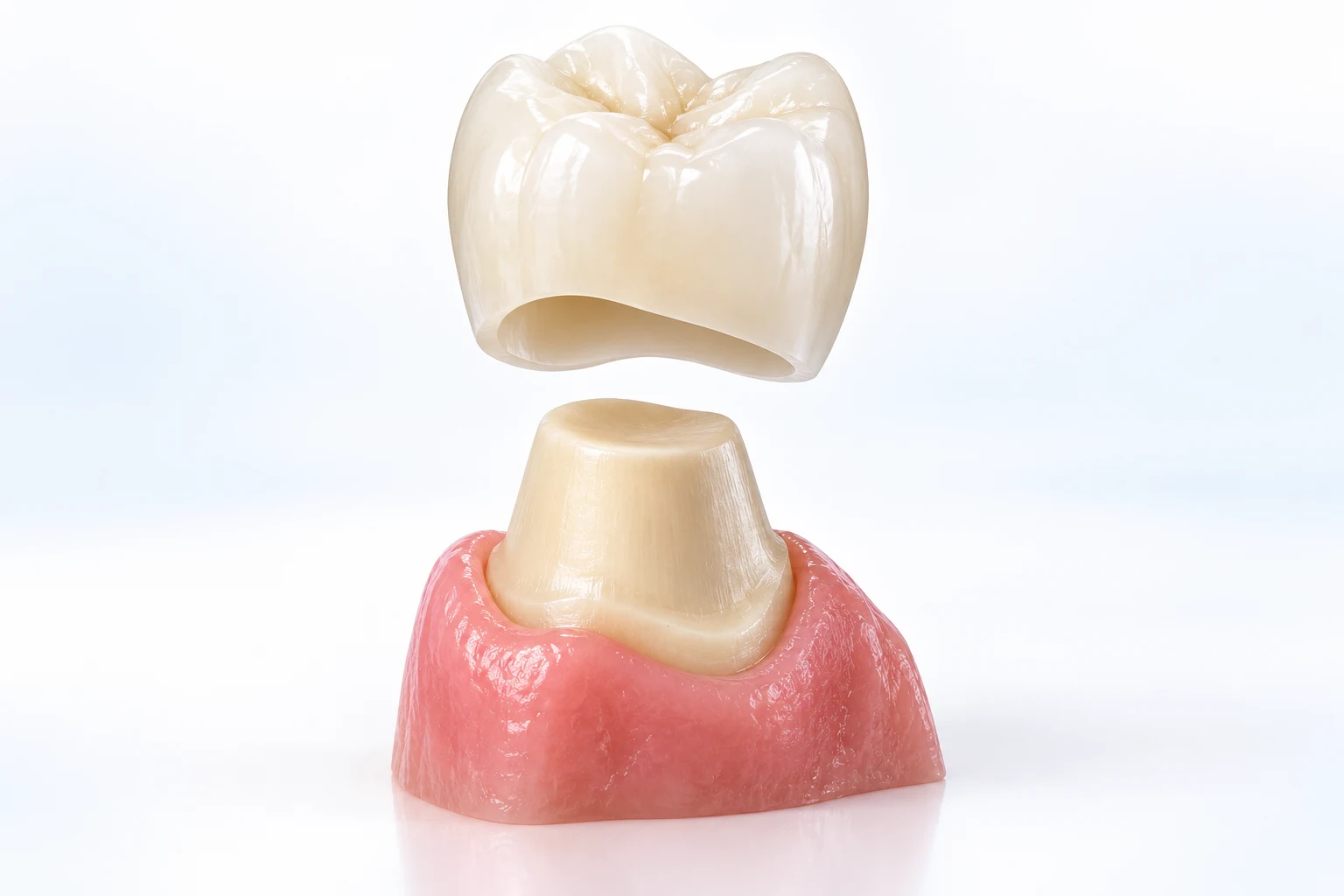
A crown can restore a substantially damaged tooth but requires reshaping. Removed tooth structure cannot be put back by taking the crown off.
- Why is full coverage needed?
- Would a smaller restoration protect the tooth adequately?
Specify design and material
Ceramic, composite or metal can be used for inlays and onlays. A material name does not identify the coverage. Confirm preparation, impressions or scans, any temporary protection, final fitting and bite checks. The manufacturing method alone does not establish the appointment count.
Discuss risks and repairs
Partial coverage still carries risks, including sensitivity, decay, bite problems and damage to the pulp inside the tooth. Ask whether the concern is the restoration, the tooth beneath it or both. Agree when to report discomfort, cleaning instructions and follow-up rather than relying on a promised lifespan.
What should a quote for a filling in Turkey include?
Request tooth numbers, design, material, temporary protection, fitting checks and reviews. Ask how unexpected findings during preparation would affect consent, costs and travel.
Best Smile Turkey coordinates enquiries; the treating dental team provides treatment. Confirm which options are available, whether another provider is needed for alternatives and which records you receive.
Read the related guidance
Keep the wider treatment plan in view while comparing these options.
Choose questions to ask.
Select your questions and copy the list, or open it as a WhatsApp draft. You can edit the message before sending.
Your consultation questions
Untick any questions you don’t need.
5 selected · No contact details needed.
Common questions
About this information
Published by Best Smile Turkey, a health-tourism intermediary. Your treating dentist is responsible for assessment, treatment and care.
Use this information to prepare questions for your dentist. An examination is needed to advise on treatment. Photographs, models and previews cannot establish suitability or predict results.
Source checking is not a clinical review. How we use sources and images, or how to report a correction.
Sources and further reading
- NHS: dental treatments Definitions of fillings and crowns, their uses and crown preparation.
- Bristol Dental School: inlays and onlays Patient information on partial restorations, preparation, fitting, alternatives and possible complications.
- NHS Business Services Authority: inlays and onlays Clinical terminology, materials and assessment principles; referenced for these distinctions, not NHS charging rules.
- General Dental Council: going abroad for dental treatment Questions to ask about the treating provider, follow-up arrangements and concerns.
These resources offer general guidance; their publishers do not endorse Best Smile Turkey or the treating provider. Manufacturer links identify products or records, not independently compared outcomes. NHS funding information concerns UK care, not treatment costs in Turkey.
Ask about this information or report a correction