

On this page
A KEY QUESTION
Compare the intended result and remaining limitations before choosing an appliance or a shorter cosmetic plan.
Your main concern
Describe what matters in daily life: difficult cleaning, trouble biting food or overlapping teeth, for example. Mention recent changes. Crowding, spacing and bite problems can justify assessment, but an online example of an overbite or crossbite cannot classify your own mouth.
Examination and records
Assessment may use models, photographs, imaging and your dental and medical history. The condition of the teeth and gums matters too. Mention earlier orthodontics, retainers, injuries, missing teeth and restorations. Have the purpose of each proposed record explained rather than collecting scans without a reason.
Teeth and jaw relationships
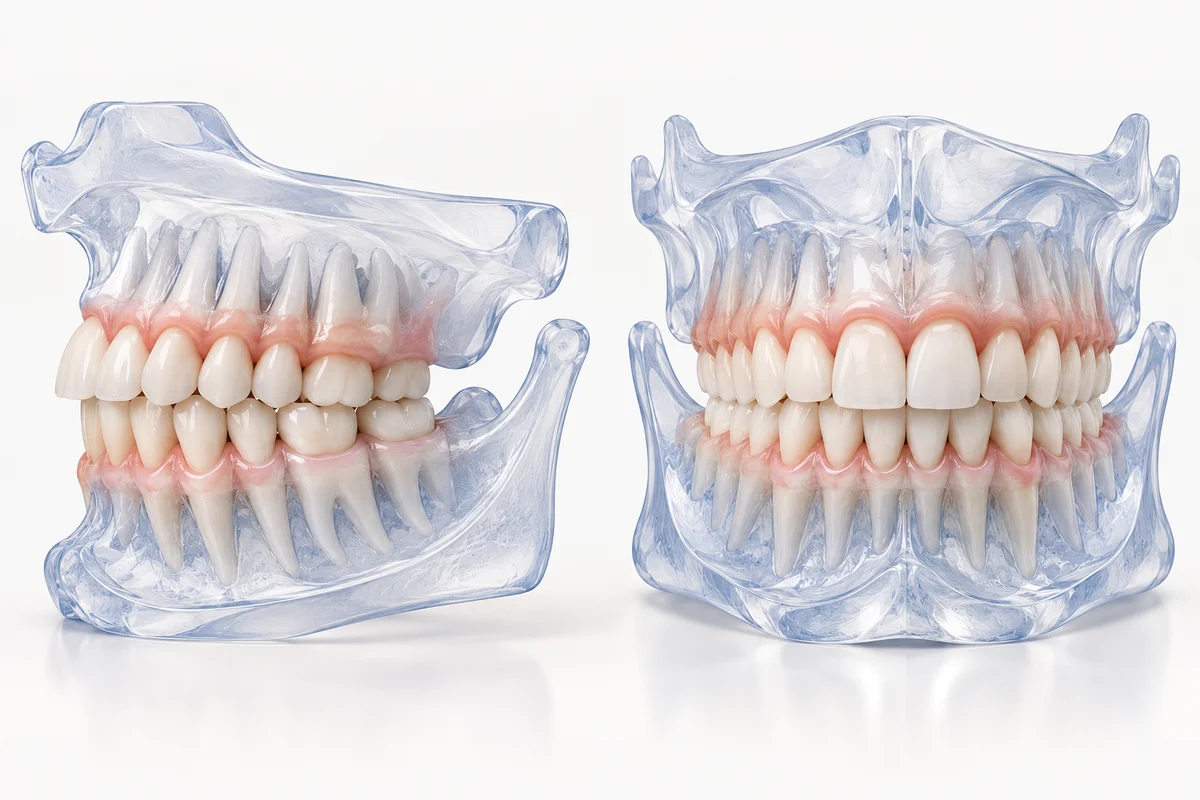
Find out whether the problem concerns tooth positions, the jaws’ relationship or both. Some discrepancies cannot be fully corrected by orthodontics alone and may lead to a surgical opinion. A referral explores options; it does not commit you to surgery.
Limited or broader treatment
A shorter plan may aim only to improve selected visible teeth. Another may address a broader bite problem. Compare both against your original concerns, including what stays unchanged. Record any compromise so a difference in duration is not mistaken for the same outcome achieved faster.
Space and other dental work
Any extraction, enamel alteration or later restoration needs its own explanation and consent. If another clinician will provide restorative work, agree the sequence, who confirms the teeth are ready and how retention works around those appointments.
Choosing a workable course
Once the goal is clear, compare suitable appliances, risks, reviews and retention. Discuss what happens if the original endpoint cannot be reached or you want to stop. Before overseas care, verify the responsible clinician, service availability and arrangements for continuing appointments.
Read the related guidance
Keep the wider treatment plan in view while comparing these options.
Choose questions to ask.
Select your questions and copy the list, or open it as a WhatsApp draft. You can edit the message before sending.
Your consultation questions
Untick any questions you don’t need.
5 selected · No contact details needed.
Common questions
About this information
Published by Best Smile Turkey, a health-tourism intermediary. Your treating dentist is responsible for assessment, treatment and care.
Use this information to prepare questions for your dentist. An examination is needed to advise on treatment. Photographs, models and previews cannot establish suitability or predict results.
Source checking is not a clinical review. How we use sources and images, or how to report a correction.
Sources and further reading
- NHS: braces Fixed and removable appliances, orthodontic assessment and ongoing care.
- University Hospitals of Leicester: having braces fitted Patient leaflet covering assessment, black triangles, treatment limitations and monitoring.
- Cambridge University Hospitals: corrective jaw surgery Why some bite discrepancies need assessment beyond orthodontic tooth movement alone.
- NHS: dental treatments explained An overview of crowns, bridges, veneers, implants and other options.
- General Dental Council: going abroad for dental treatment Questions to ask about the treating provider, follow-up arrangements and concerns.
These resources offer general guidance; their publishers do not endorse Best Smile Turkey or the treating provider. Manufacturer links identify products or records, not independently compared outcomes. NHS funding information concerns UK care, not treatment costs in Turkey.
Ask about this information or report a correction