

On this page
A KEY QUESTION
Ask whether a smaller repair could meet your goal.
At a glance.
| What to compare | Composite bonding | Porcelain veneers |
|---|---|---|
| Extent | May cover a small edge or a larger visible area. | A custom facing covers the planned front surface. |
| Process | Often shaped on the tooth; some composite facings are made separately. | A facing is made separately, then fitted and bonded. |
| Preparation | Can be additive; some cases need preparation. | Some tooth surface may need to be removed. |
| Future work | May need polishing, repair or replacement. | May need rebonding, repair or replacement. |
General differences to discuss with your dentist. This comparison does not determine which treatment is suitable for you.
How much coverage?
Bonding may repair a chipped edge or cover a larger area; a “composite veneer” usually means a broader resin facing. Ask the dentist to show the proposed coverage. Compare quotes for the same teeth and changes, not price alone.
Compare the listed bonding starting fee and scope and what a veneer price should cover. A bonding unit fee does not establish a whole-surface composite veneer package. Confirm availability and ask for the same tooth count, coverage, design, fitting and reviews to be itemised.
How will the composite be shaped?
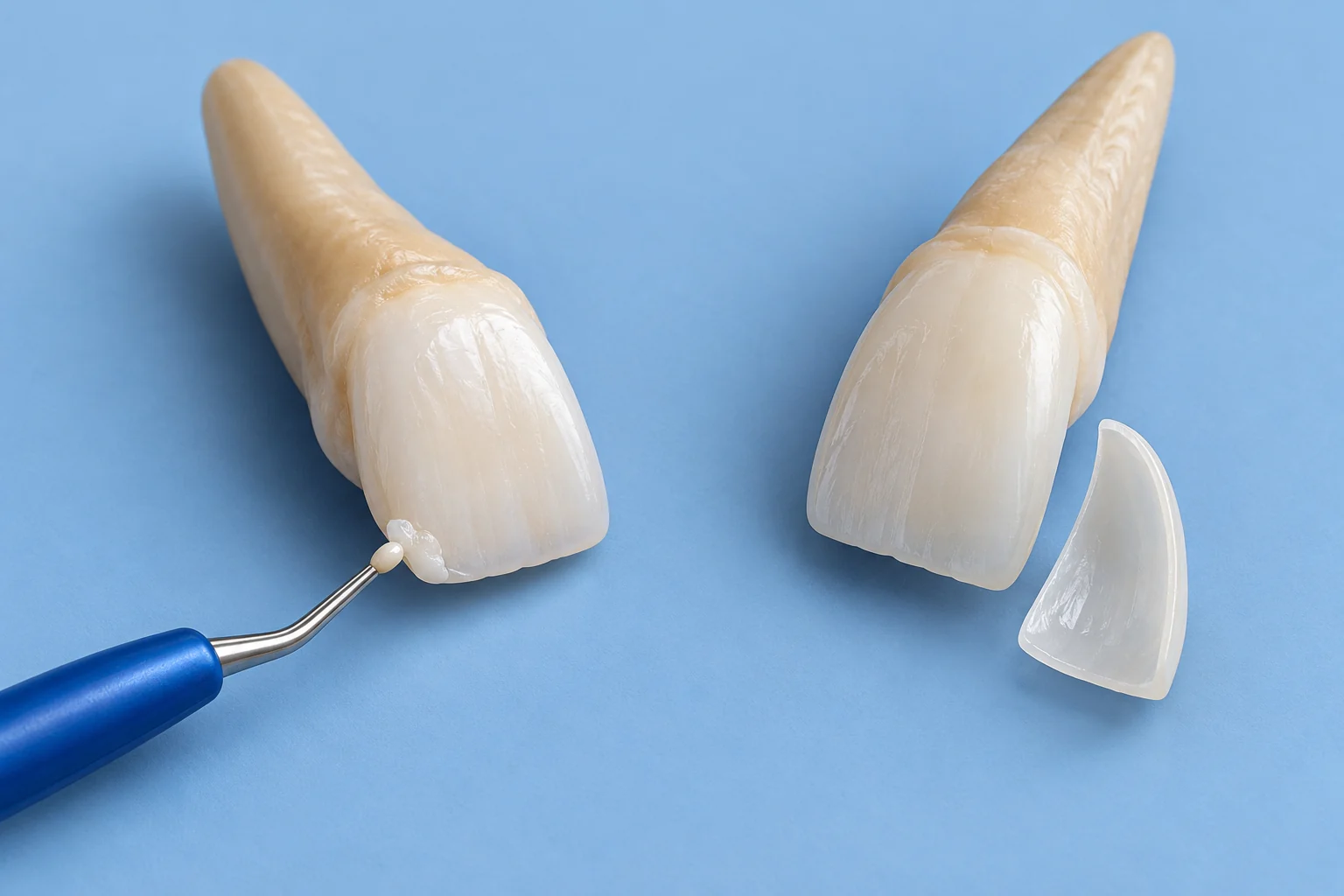
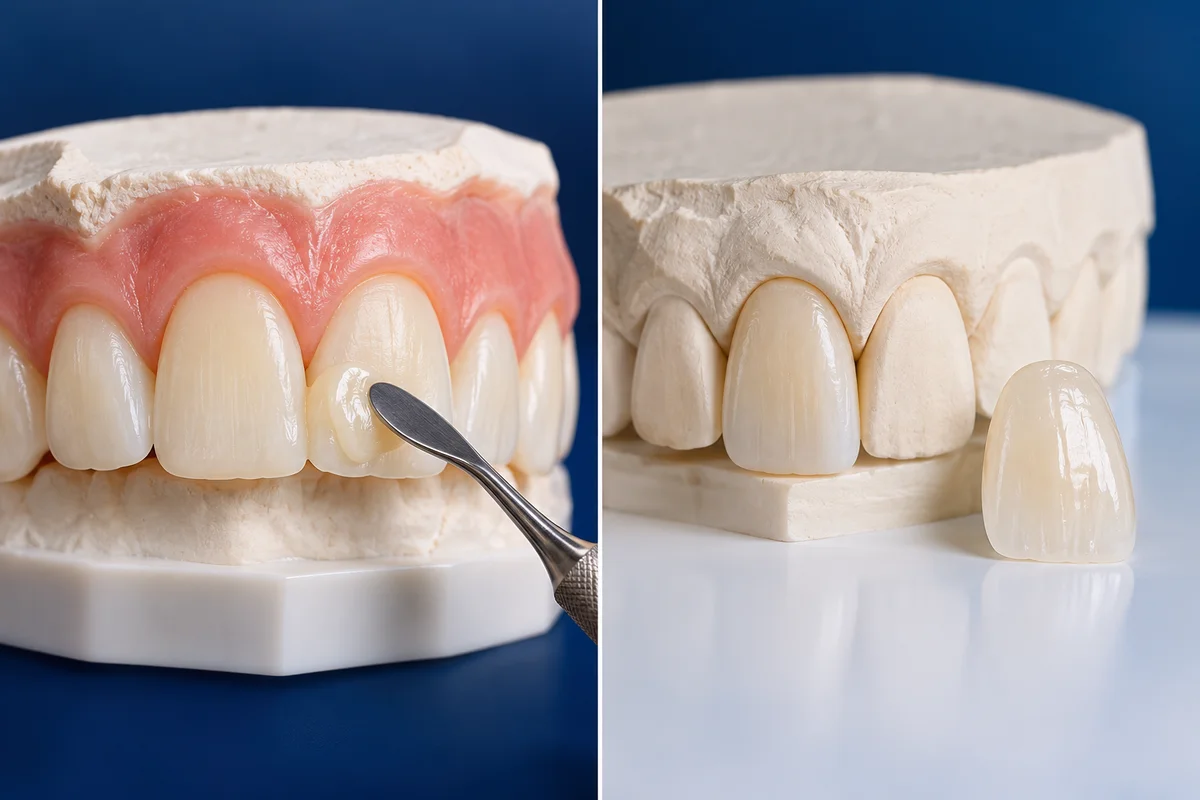
Direct composite is shaped on the tooth. An indirect composite facing is made outside the mouth and later attached. Ask which approach the quote describes, whether laboratory work is included and when you can review the proposed shape.
Intraoral injection-moulded bonding, also called injection moulding, is a direct technique for transferring a planned shape using a clear mould and a suitable flowable composite. “Injection” here refers to placing restorative material, not injecting medicine into your gums. The dentist still has to assess the teeth, control bonding conditions, finish the edges and check the bite.
A technique name does not guarantee no drilling, reversibility or longer-lasting results. Ask why this method suits the change you want, whether a small repair is possible and how future repair would work. Manufacturer technique guides explain a process; they do not prove it is best for your teeth or confirm that a provider offers it.
- Is the composite made directly on the teeth or indirectly, and is a mould used?
- What can I review before preparation and final bonding?
- Which design, laboratory, fitting and maintenance charges are included?
Read about physical mock-ups and trial smiles to distinguish reviewing a proposed shape from agreeing to final bonding.
Health and alternatives
Decay and gum problems need assessment first. Mention grinding, broken restorations or biting difficulties. For colour concerns, ask about supervised whitening; for tooth position, ask about orthodontic advice. Leaving an appearance concern untreated is also an option. Confirm which services the provider offers.
Is preparation needed?
Some composite treatment is additive, but bonding is not always no-drill or reversible. It may involve reshaping or replacing material. Porcelain veneers may also require enamel removal. Removing a restoration cannot restore lost natural tooth.
- What will be removed or added to each tooth?
- What would later removal or replacement involve?
If a proposal uses the term “no prep”, read about no-prep veneers and tooth preservation before assuming that no preparation is needed or that removal is straightforward.
Shade and shape
Examples and previews help explain preferences; they do not promise a result. If whitening is planned, agree the sequence before selecting restorative shades. Resin and ceramic do not lighten like natural teeth. Discuss how the treated teeth will match those left unchanged.
Use the guide to veneer material and product names when a quotation mixes composite, porcelain, Empress or Emax labels.
Repairs and follow-up
Composite can often be repaired or added to and may need repolishing. Porcelain can chip or loosen too; repair depends on the damage. Ask who will assess problems and whether local repair is possible. Include reviews, records and possible travel in an overseas treatment budget.
Read the related guidance
Keep the wider treatment plan in view while comparing these options.
Choose questions to ask.
Select your questions and copy the list, or open it as a WhatsApp draft. You can edit the message before sending.
Your consultation questions
Untick any questions you don’t need.
4 selected · No contact details needed.
Common questions
About this information
Published by Best Smile Turkey, a health-tourism intermediary. Your treating dentist is responsible for assessment, treatment and care.
Use this information to prepare questions for your dentist. An examination is needed to advise on treatment. Photographs, models and previews cannot establish suitability or predict results.
Source checking is not a clinical review. How we use sources and images, or how to report a correction.
Sources and further reading
- NHS: dental treatments Overview of veneers and other dental treatment options.
- Bristol Dental School: composite build-ups Patient information on additive composite treatment for selected worn teeth, maintenance and repair.
- GC: composite injection-moulding technique Professional manufacturer guide supporting the clear-mould technique description, not a comparison of clinical outcomes or self-treatment instructions.
- GC: indirect laboratory composite Manufacturer information identifying indirect laboratory composite and veneer applications; no comparative marketing claims are adopted.
- American Dental Association: veneers Porcelain and composite processes, preparation, suitability and future care.
- Leeds Teaching Hospitals: tooth whitening Why existing restorative shades need consideration when planning whitening.
- General Dental Council: going abroad for dental treatment Questions to ask about the treating provider, follow-up arrangements and concerns.
These resources offer general guidance; their publishers do not endorse Best Smile Turkey or the treating provider. Manufacturer links identify products or records, not independently compared outcomes. NHS funding information concerns UK care, not treatment costs in Turkey.
Ask about this information or report a correction