

On this page
A KEY QUESTION
Understand what an adjustment aims to change before any natural tooth or restoration is altered.
Describe the change
Explain what feels different when closing, chewing or moving the jaw, and whether it followed dental work or injury. Mention pain, locking or limited opening. Avoid repeatedly testing until it hurts. Bring any existing appliance and its instructions.
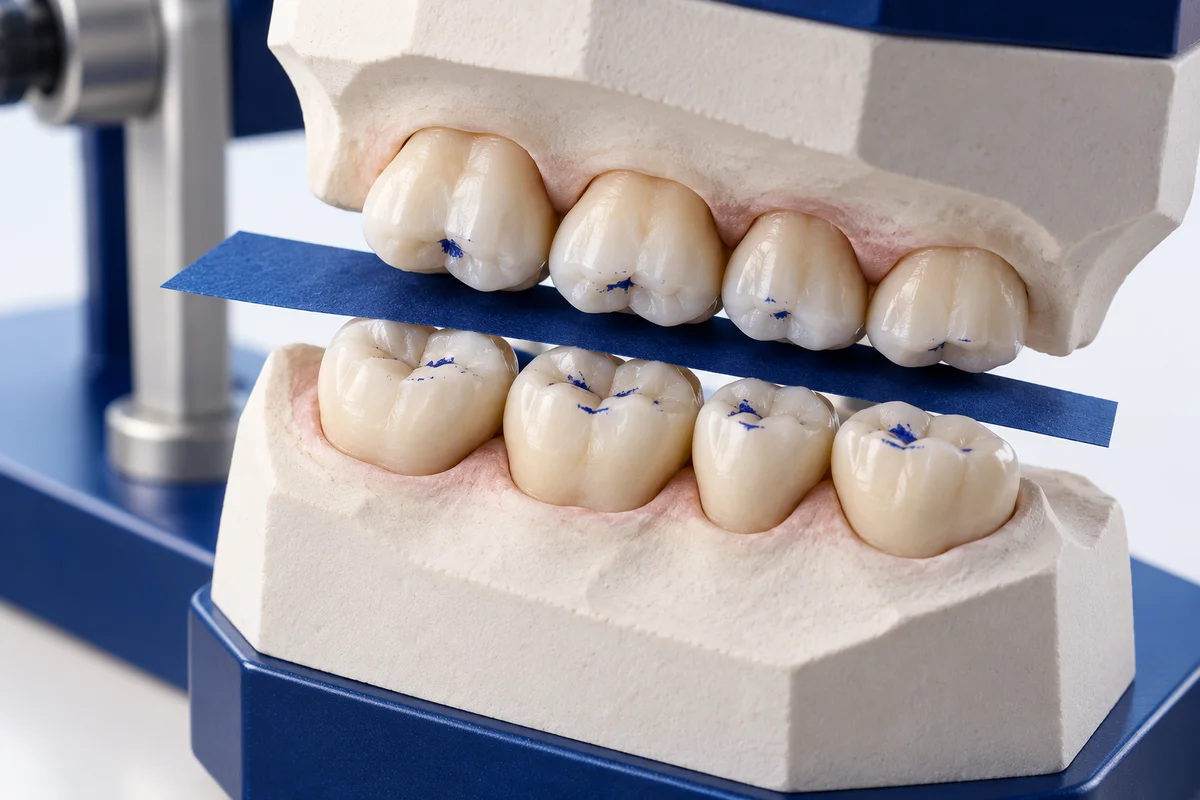
What coloured paper shows
Articulating paper marks contact areas when you close or move the teeth. The dentist interprets these marks with other findings; a large mark alone is not a diagnosis. Do not recreate the test at home or file a tooth based on its appearance.
Joints, muscles and teeth
Jaw joint and muscle symptoms need their own assessment. Painless clicking is common and does not by itself require treatment. Find out whether the concern involves a restoration, tooth position, muscles, a joint or an issue that remains uncertain.
Checking a new restoration
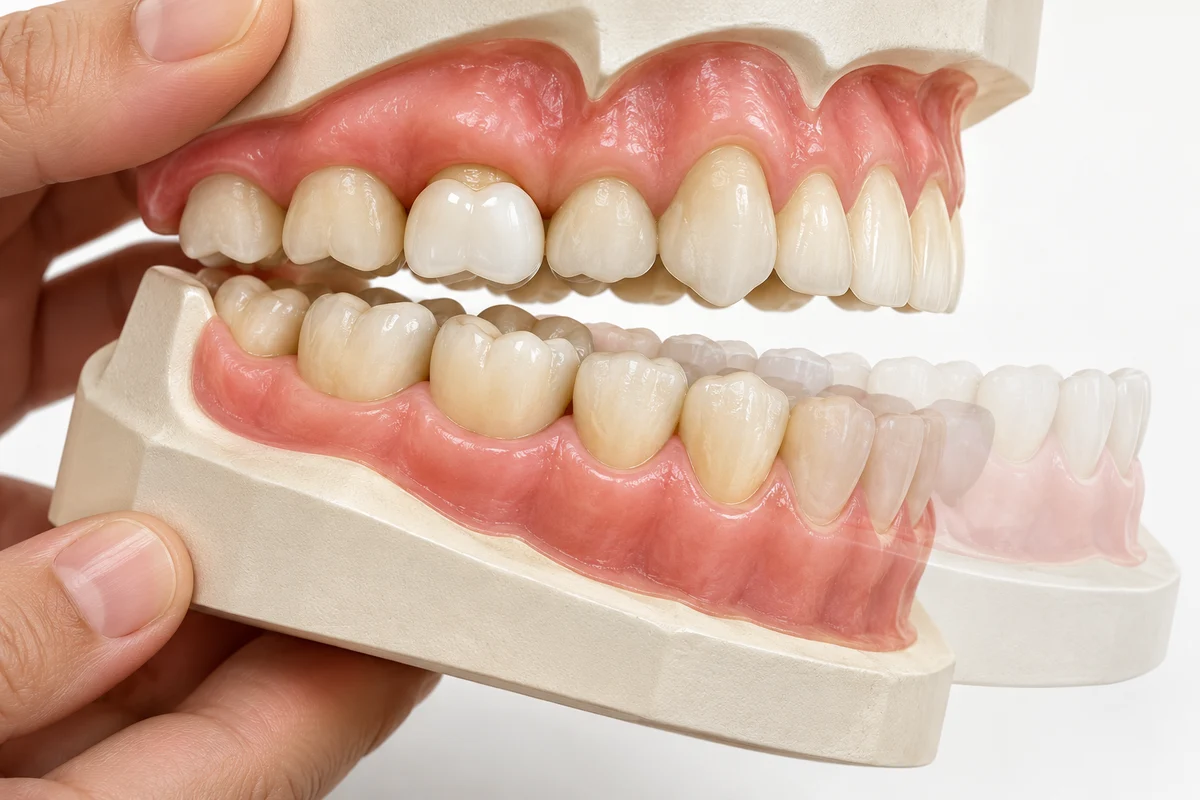
Crowns and other dental work need checks against the opposing teeth during relevant movements. A photograph cannot show comfortable function. Contact the dentist if new work feels as though it touches first or makes chewing uncomfortable; several problems can cause pain after treatment.
Before removing material
Have the proposed change, material involved, benefits and alternatives explained. Wider irreversible bite changes deserve particular care. NIDCR advises against permanent changes to teeth or the bite as routine treatment for temporomandibular disorders. Guarantees about curing headaches or all jaw pain warrant further assessment.
Follow-up and travel
Arrange time to review fit and function before leaving after overseas treatment, and establish how later concerns will be assessed. Keep the treated tooth and date in your records. Significant pain, locking or inability to open normally needs prompt local dental or medical assessment.
Read the related guidance
Keep the wider treatment plan in view while comparing these options.
Choose questions to ask.
Select your questions and copy the list, or open it as a WhatsApp draft. You can edit the message before sending.
Your consultation questions
Untick any questions you don’t need.
3 selected · No contact details needed.
Common questions
About this information
Published by Best Smile Turkey, a health-tourism intermediary. Your treating dentist is responsible for assessment, treatment and care.
Use this information to prepare questions for your dentist. An examination is needed to advise on treatment. Photographs, models and previews cannot establish suitability or predict results.
Source checking is not a clinical review. How we use sources and images, or how to report a correction.
Sources and further reading
- American Dental Association: occlusal analysis methods Articulating paper and digital recording of tooth contacts; a research summary rather than an endorsement of one device.
- NIDCR: temporomandibular disorders Jaw assessment, painless clicking and cautions about permanent bite-changing treatment.
- NHS: temporomandibular disorder Jaw symptoms and when to seek clinical help.
- NHS: dental treatments explained An overview of crowns, bridges, veneers, implants and other options.
- General Dental Council: going abroad for dental treatment Questions to ask about the treating provider, follow-up arrangements and concerns.
These resources offer general guidance; their publishers do not endorse Best Smile Turkey or the treating provider. Manufacturer links identify products or records, not independently compared outcomes. NHS funding information concerns UK care, not treatment costs in Turkey.
Ask about this information or report a correction