
On this page
A KEY QUESTION
Ask how grinding changes treatment suitability, design and follow-up.
Share your history
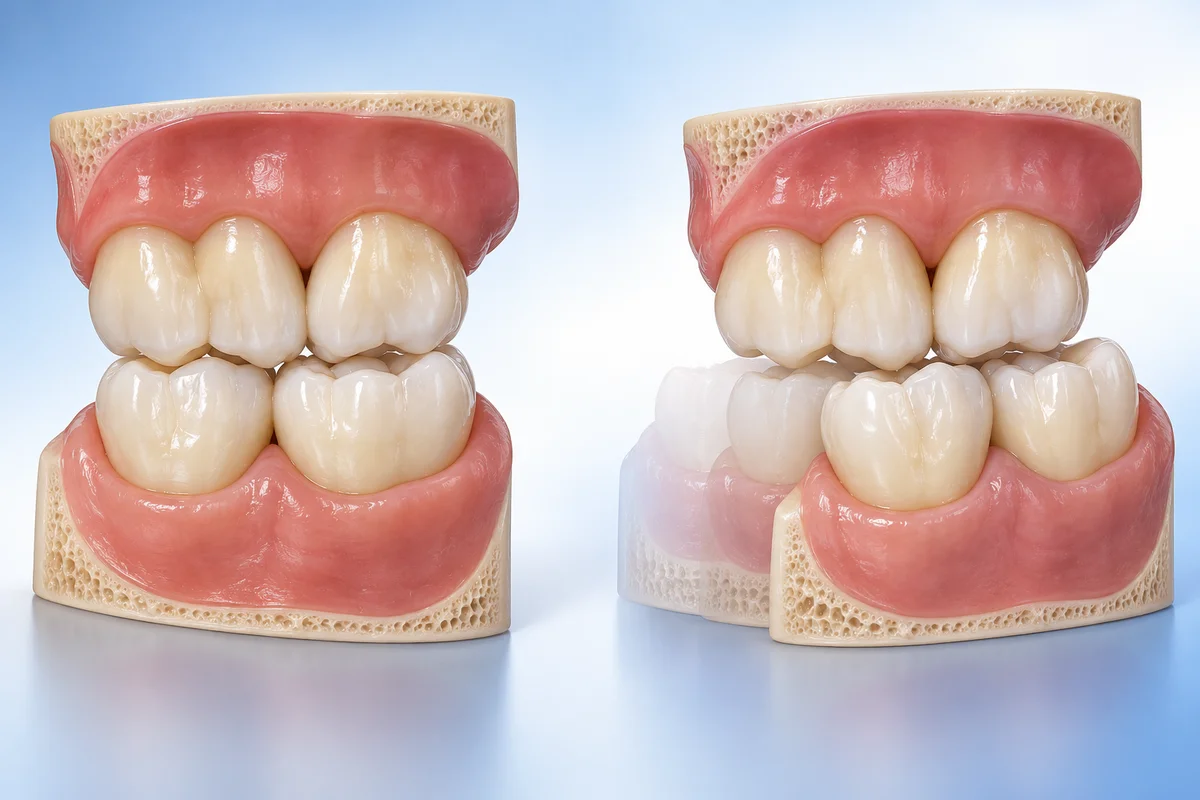
Bruxism means grinding or clenching. Signs can include worn or broken teeth, sensitivity, jaw discomfort, headaches and disturbed sleep. A partner may hear grinding. These are reasons for assessment, not a self-diagnosis. Bring details of previous damage, symptoms and any appliance you use.
Look beyond worn teeth
Stress, sleep problems and some medicines may contribute. Share your health, sleep and medication history; ask whether GP advice or further investigation is needed. Jaw pain has other possible causes. A photograph of short teeth cannot justify a large restorative plan.
Compare treatment risks
Veneers may be unsuitable for people who grind. Ask about smaller treatments, delaying cosmetic work or alternatives. Grinding can also damage fillings, crowns and implants. Discuss tooth preparation, bite checks and which implant components may need monitoring or repair.
- Why this restoration and material for each tooth?
- Which symptoms or damage need early review?
- Which repairs and reviews are included?
What can a guard do?
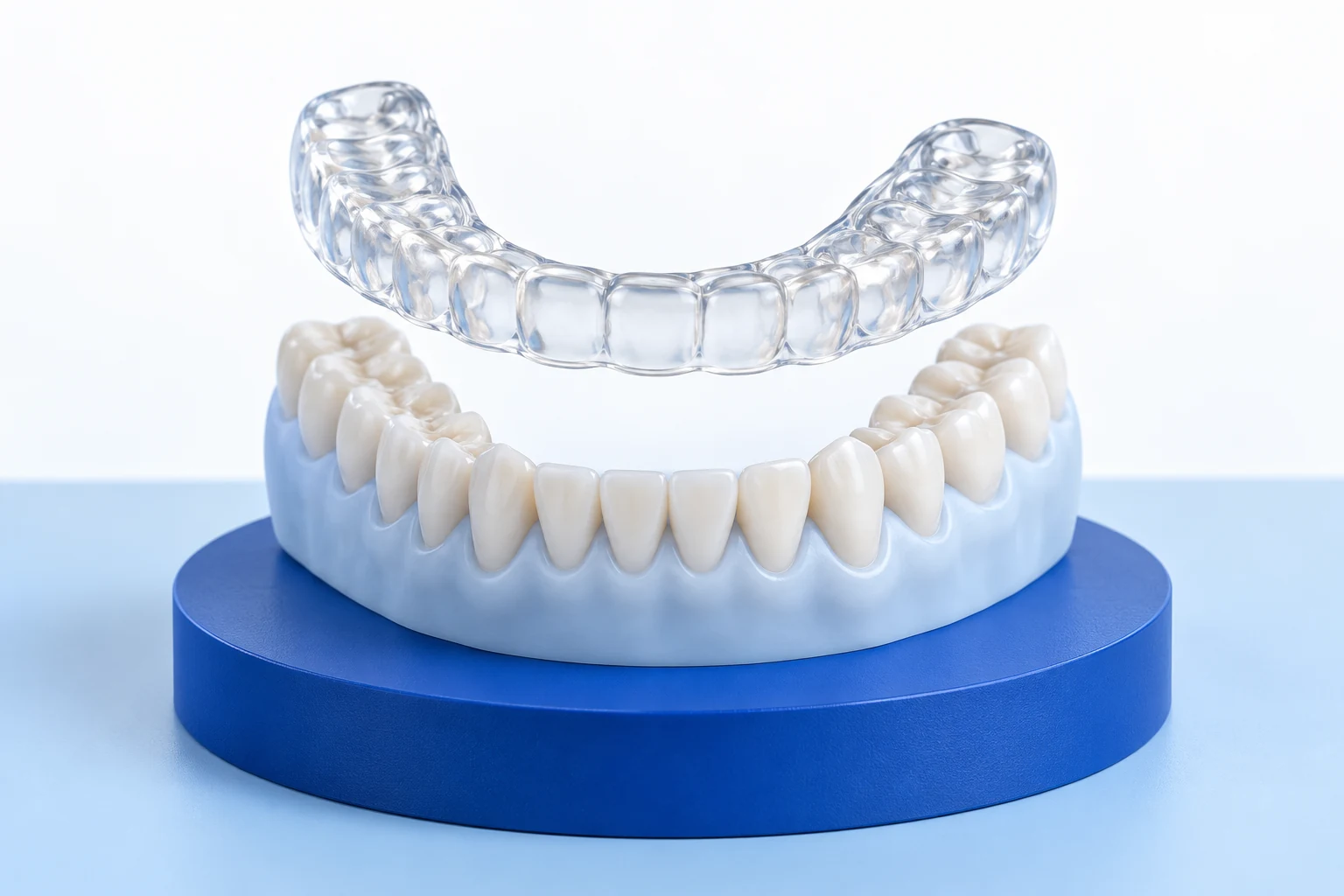
A dentist-made guard or splint may protect teeth but cannot guarantee that grinding stops or restorations never break. Grinding appliances differ from sports guards. Ask about fit, wearing instructions and reviews. New dental work may require an existing guard to be checked; a generic product may not provide equivalent protection.

Arrange bite checks
Report looseness, chips, persistent discomfort or difficulty biting. Do not simply buy another guard or change ceramic without assessment. Keep a record of symptoms and bring your appliance to reviews if requested. Ask whom to contact if it becomes uncomfortable or damaged.
Plan aftercare abroad
Get appliance details, restoration materials, review dates and repair costs in writing. Ask what happens if the bite remains uncomfortable before departure or damage occurs at home. Best Smile Turkey coordinates enquiries; the treating dental team provides care. Confirm appliance provision and grinding-related services directly.
Read the related guidance
Keep the wider treatment plan in view while comparing these options.
Choose questions to ask.
Select your questions and copy the list, or open it as a WhatsApp draft. You can edit the message before sending.
Your consultation questions
Untick any questions you don’t need.
5 selected · No contact details needed.
Common questions
About this information
Published by Best Smile Turkey, a health-tourism intermediary. Your treating dentist is responsible for assessment, treatment and care.
Use this information to prepare questions for your dentist. An examination is needed to advise on treatment. Photographs, models and previews cannot establish suitability or predict results.
Source checking is not a clinical review. How we use sources and images, or how to report a correction.
Sources and further reading
- NHS: teeth grinding Symptoms, reasons to seek assessment and dentist-made guards or splints.
- Cleveland Clinic: bruxism Awake and sleep bruxism, contributing factors, clinical assessment and management.
- American Dental Association: teeth grinding and jaw pain Other causes of jaw pain and the role and limitations of protective appliances.
- American Dental Association: veneers Clenching and grinding as considerations when assessing veneer suitability.
- Bupa: teeth grinding Assessment and potential damage affecting natural teeth, fillings, crowns and implants.
- NHS: dental treatments explained An overview of crowns, bridges, veneers, implants and other options.
- General Dental Council: going abroad for dental treatment Questions to ask about the treating provider, follow-up arrangements and concerns.
These resources offer general guidance; their publishers do not endorse Best Smile Turkey or the treating provider. Manufacturer links identify products or records, not independently compared outcomes. NHS funding information concerns UK care, not treatment costs in Turkey.
Ask about this information or report a correction