

On this page
A KEY QUESTION
Confirm a receiving clinician and an interim care plan before allowing an avoidable gap in supervision.
Tell your orthodontist before the move.
Give your current team the destination and likely date. Discuss whether continuing with them is practical or whether a transfer is needed. Occasional return trips or photographs may not provide sufficient supervision.
A new practice needs to know treatment is already active. Book a transfer assessment, with its fee explained, rather than assuming a routine consultation includes acceptance of the case.
Confirm acceptance and the revised plan.
The receiving clinician needs to assess your progress and appliance. Orthodontists use different systems and approaches, so continuation may involve changes. Establish why any revision is needed, its risks and its effect on appointments.
Obtain confirmation of whether the clinician will take over and when responsibility begins. An available appointment is not proof that the existing plan can continue unchanged.
Send starting and current records.
Request the original diagnosis, goals and plan, available models or scans, photographs, X-rays and progress notes. Include procedures already completed and details of the appliance and current treatment stage.
Have the teams agree usable formats and secure transfer. Establish whether any digital or laboratory arrangement can transfer, then confirm the recipient can open the records.
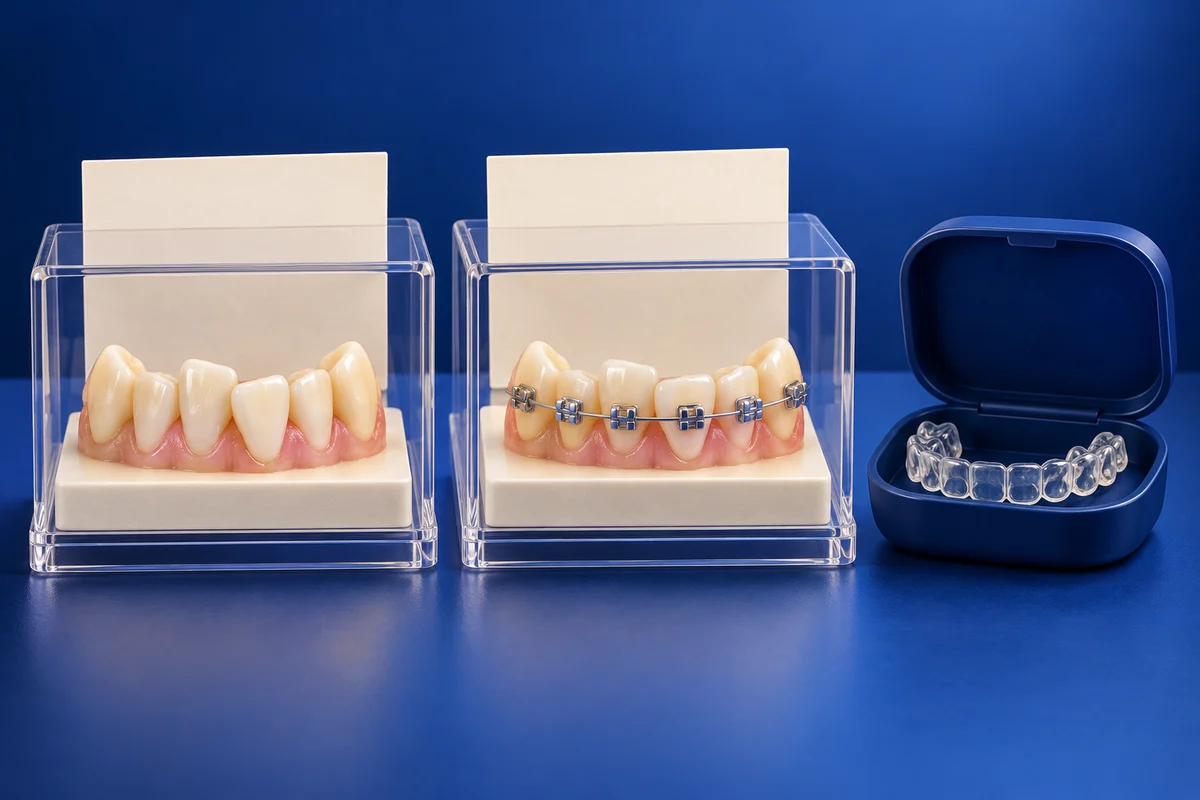
Get fees and funding clarified.
The original contract and the new provider’s quotation are separate. Clarify assessment charges, remaining treatment, repairs and retention, plus any financial consequences of leaving the first practice.
NHS England’s transfer-from-abroad policy says adults arriving in England with an orthodontic device generally need ongoing care privately. Do not assume adult NHS funding. That policy does not establish arrangements in Scotland, Wales or Northern Ireland; check the relevant service.
Avoid an unplanned gap in supervision.
Agree the next review, the responsible practice and a contact for broken, painful or poorly fitting appliances. Tell the current clinician if the receiving appointment falls through. Obtain advice before changing aligner progression or elastic instructions; do not remove active components yourself.
An emergency repair does not necessarily transfer the treatment course. Update both teams afterwards. Best Smile Turkey cannot accept clinical responsibility for active orthodontics or guarantee a receiving practice.
Read the related guidance
Keep the wider treatment plan in view while comparing these options.
Choose questions to ask.
Select your questions and copy the list, or open it as a WhatsApp draft. You can edit the message before sending.
Your consultation questions
Untick any questions you don’t need.
5 selected · No contact details needed.
Common questions
About this information
Published by Best Smile Turkey, a health-tourism intermediary. Your treating dentist is responsible for assessment, treatment and care.
Use this information to prepare questions for your dentist. An examination is needed to advise on treatment. Photographs, models and previews cannot establish suitability or predict results.
Source checking is not a clinical review. How we use sources and images, or how to report a correction.
Sources and further reading
- British Orthodontic Society: patient FAQs Transfer planning, differing appliances and records; historical funding wording and fixed delay estimates are not relied on here.
- NHS England: policy book for primary dental services, section 9.3 England-specific policy on orthodontic transfers from abroad; relevant official indexed text checked on 10 October 2026, with direct-page access restricted by a verification screen.
- NHS: dental treatments explained An overview of crowns, bridges, veneers, implants and other options.
- General Dental Council: going abroad for dental treatment Questions to ask about the treating provider, follow-up arrangements and concerns.
These resources offer general guidance; their publishers do not endorse Best Smile Turkey or the treating provider. Manufacturer links identify products or records, not independently compared outcomes. NHS funding information concerns UK care, not treatment costs in Turkey.
Ask about this information or report a correction