

On this page
A KEY QUESTION
Bring the current swallowing plan and connect the dentist with the professionals who know it. Do not copy a posture, thickener or mouth-care technique from another person.
Explain the current swallowing plan
Describe the established difficulty, including problems with saliva, and provide your speech and language therapy contact where applicable. Mention tube feeding or instructions not to eat or drink by mouth. Bring the current written plan and its date.
Swallowing problems differ between people. If instructions conflict, have the clinicians clarify them. A carer can help with your consent; say what assistance and communication support you want.
Before you sit in the dental chair
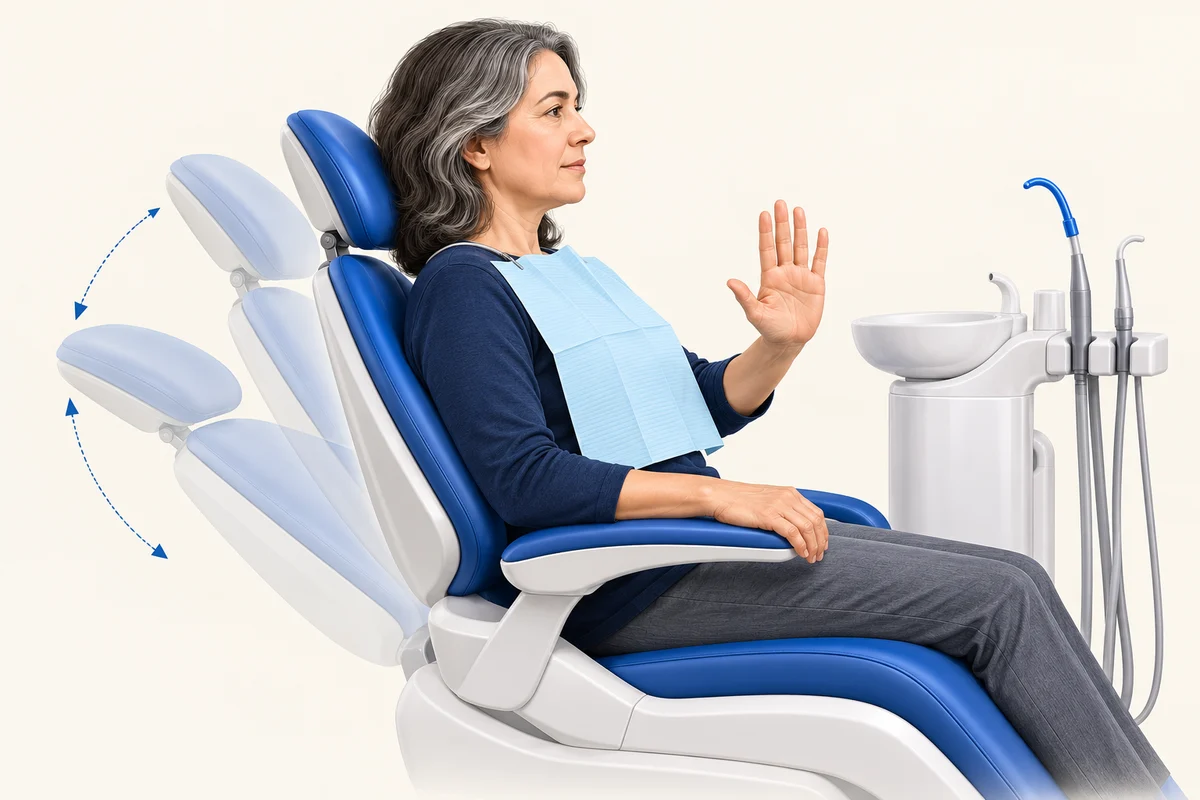
Discuss chair position, water, rinsing, suction and pauses for the procedure being considered. Describe previous difficulties and agree a signal to stop. Establish whether the treatment setting can provide the adaptations your plan requires.
Do not copy a chin-tuck, thickener, food texture or suction technique from another person or an online article. Follow the assessment and advice of your swallowing team.
A workable daily mouth-care routine
Wirral Community NHS stresses that mouth care remains important even when someone is not eating by mouth. Its guidance discusses possible adaptations, including toothpaste choice and assistance; the appropriate approach depends on the person.
Explain whether you can spit, rinse and brush comfortably. Request a demonstrated routine covering teeth, gums, tongue and dentures. If treatment leaves you numb or sore, get advice about how the routine should be managed.
Changes that need clinical help
Contact your GP or speech and language therapist for new or worsening swallowing problems. Relevant changes include coughing with meals, a wet or gurgly voice after drinking, increasing effort, repeated chest infections, weight loss or difficulty taking enough fluid.
Severe choking or breathing difficulty needs immediate local emergency help. Do not wait for a dental enquiry response. Best Smile Turkey’s coordination role cannot replace swallowing assessment or establish that specialist support is available at a particular clinic.
Read the related guidance
Keep the wider treatment plan in view while comparing these options.
Choose questions to ask.
Select your questions and copy the list, or open it as a WhatsApp draft. You can edit the message before sending.
Your consultation questions
Untick any questions you don’t need.
4 selected · No contact details needed.
Common questions
About this information
Published by Best Smile Turkey, a health-tourism intermediary. Your treating dentist is responsible for assessment, treatment and care.
Use this information to prepare questions for your dentist. An examination is needed to advise on treatment. Photographs, models and previews cannot establish suitability or predict results.
Source checking is not a clinical review. How we use sources and images, or how to report a correction.
Sources and further reading
- Wirral Community NHS: oral health advice for dysphagia The importance of mouth care and individual adaptation where swallowing or saliva management is impaired.
- Guy’s and St Thomas’: dysphagia overview Individual swallowing assessment, warning changes and contacting the GP or speech and language therapist.
- NHS inform: adult choking first aid Severe choking and immediate emergency help; this guide does not teach individual swallowing techniques.
- NHS: dental treatments explained An overview of crowns, bridges, veneers, implants and other options.
- General Dental Council: going abroad for dental treatment Questions to ask about the treating provider, follow-up arrangements and concerns.
These resources offer general guidance; their publishers do not endorse Best Smile Turkey or the treating provider. Manufacturer links identify products or records, not independently compared outcomes. NHS funding information concerns UK care, not treatment costs in Turkey.
Ask about this information or report a correction