

On this page
A KEY QUESTION
Keep your sleep team and dentist informed about the appliance, its fit and any planned changes to your teeth.
How a mandibular advancement device works
The appliance holds the lower jaw forward during sleep to help keep the airway open. Sherwood Forest Hospitals describes this basic mechanism. It is also called a mandibular advancement splint. Similar-looking appliances can have different purposes, so show the dentist what you actually use.
If you have snoring or suspected sleep apnoea without a diagnosis, seek medical assessment. An appliance advertisement cannot determine the cause or choose the right treatment.
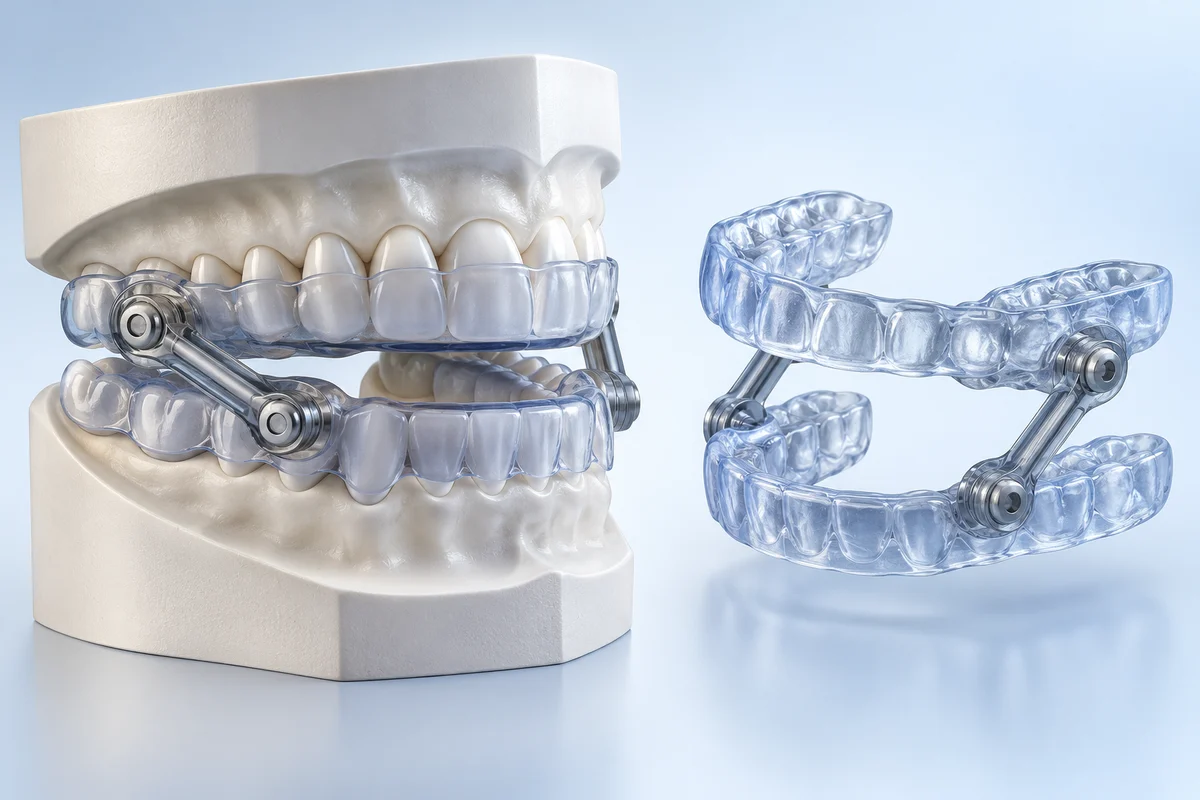
Why the mouth needs assessment
NICE includes dental and periodontal health in its recommendations for considering mandibular advancement splints in adults. Teeth, gums and jaw symptoms need assessment alongside the sleep condition. A tooth count or an absence of pain cannot establish suitability.
Tell the assessing clinician about loose teeth, gum problems, restorations and jaw discomfort. Ask whether any dental problems need attention first. This guide does not determine whether an appliance is appropriate or which design you should use.
Discuss dental work before the fit changes
Bring the appliance and its instructions to relevant dental appointments. Before a crown, extraction or other change, ask the dentist and appliance provider whether fit or use will need reviewing and what the sleep-treatment plan will be meanwhile.
Report pain, damage, looseness or a change in your bite. Do not force the appliance into place, reshape it or adjust the jaw position yourself. Get instructions from the responsible provider.
Keep the two kinds of follow-up connected
NICE recommends follow-up to assess adjustment, symptom improvement and control of sleep apnoea. The dentist also needs to review the effect on teeth, bite and supporting tissues. Ask who arranges each review and how findings are shared.
Do not stop CPAP or another prescribed treatment because a dental appliance feels comfortable. Contact the sleep service if you cannot use your current treatment. Before booking dental care abroad, ask whether the treating provider can assess your appliance and work with your sleep service.
Read the related guidance
Keep the wider treatment plan in view while comparing these options.
Choose questions to ask.
Select your questions and copy the list, or open it as a WhatsApp draft. You can edit the message before sending.
Your consultation questions
Untick any questions you don’t need.
3 selected · No contact details needed.
Common questions
About this information
Published by Best Smile Turkey, a health-tourism intermediary. Your treating dentist is responsible for assessment, treatment and care.
Use this information to prepare questions for your dentist. An examination is needed to advise on treatment. Photographs, models and previews cannot establish suitability or predict results.
Source checking is not a clinical review. How we use sources and images, or how to report a correction.
Sources and further reading
- Sherwood Forest Hospitals: mandibular advancement device Basic mechanism and the relevance of dental and jaw health; home-device purchasing instructions are not adopted here.
- NICE NG202: obstructive sleep apnoea recommendations Clinician selection, dental and periodontal health, and follow-up for mandibular advancement splints.
- NICE NG202: monitoring evidence review Follow-up considerations, including the effect of oral appliances on dentition and bite.
- NHS: dental treatments explained An overview of crowns, bridges, veneers, implants and other options.
- General Dental Council: going abroad for dental treatment Questions to ask about the treating provider, follow-up arrangements and concerns.
These resources offer general guidance; their publishers do not endorse Best Smile Turkey or the treating provider. Manufacturer links identify products or records, not independently compared outcomes. NHS funding information concerns UK care, not treatment costs in Turkey.
Ask about this information or report a correction