

On this page
A KEY QUESTION
Before fitting, discuss how the crown can be accessed for future care.
At a glance.
| Question | Screw-retained | Cement-retained |
|---|---|---|
| Access route | Through a sealed screw opening | Release or access the cemented crown |
| Checks needed | Screw, access filling and tissues | Cement margin, connection and tissues |
| Removal | Planned access, with possible complications | May damage the crown or require replacement |
General differences to discuss with your dentist. This comparison does not determine which treatment is suitable for you.
Which connection uses a screw?
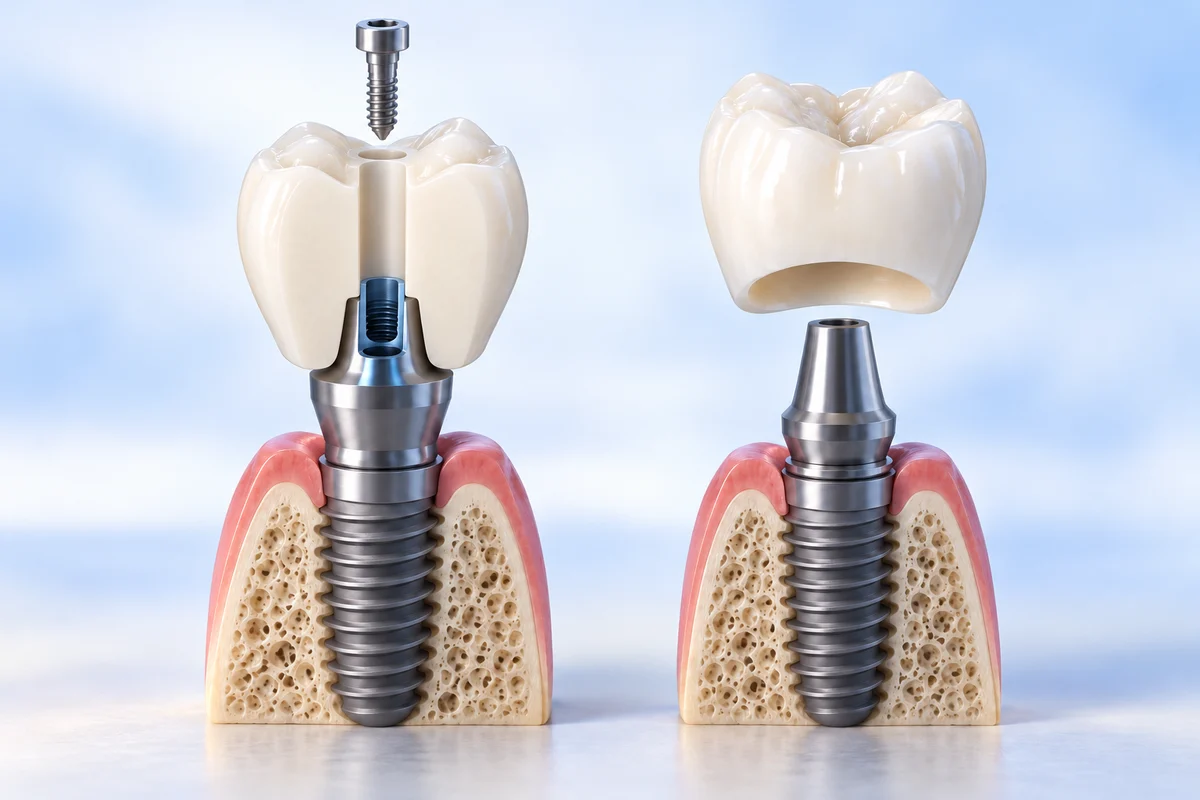
A cemented crown may still sit on an abutment held by a screw. Ask the dentist to show where each connection sits and how it can be reached. If a quote says “screwless”, ask which connection it describes and request an itemised price for the implant, abutment and crown.
For proposed work, check the implant, abutment and final-crown quote scope. Confirm the planned connections in writing; this is not a repair quote.
Access to a screw-retained crown
The dentist removes the material sealing the screw opening to reach the connection. This usually provides a way to retrieve the crown, though removal can still be difficult. Ask where the opening will be. Do not pick at its seal or expose the screw yourself.
Cement near the gum
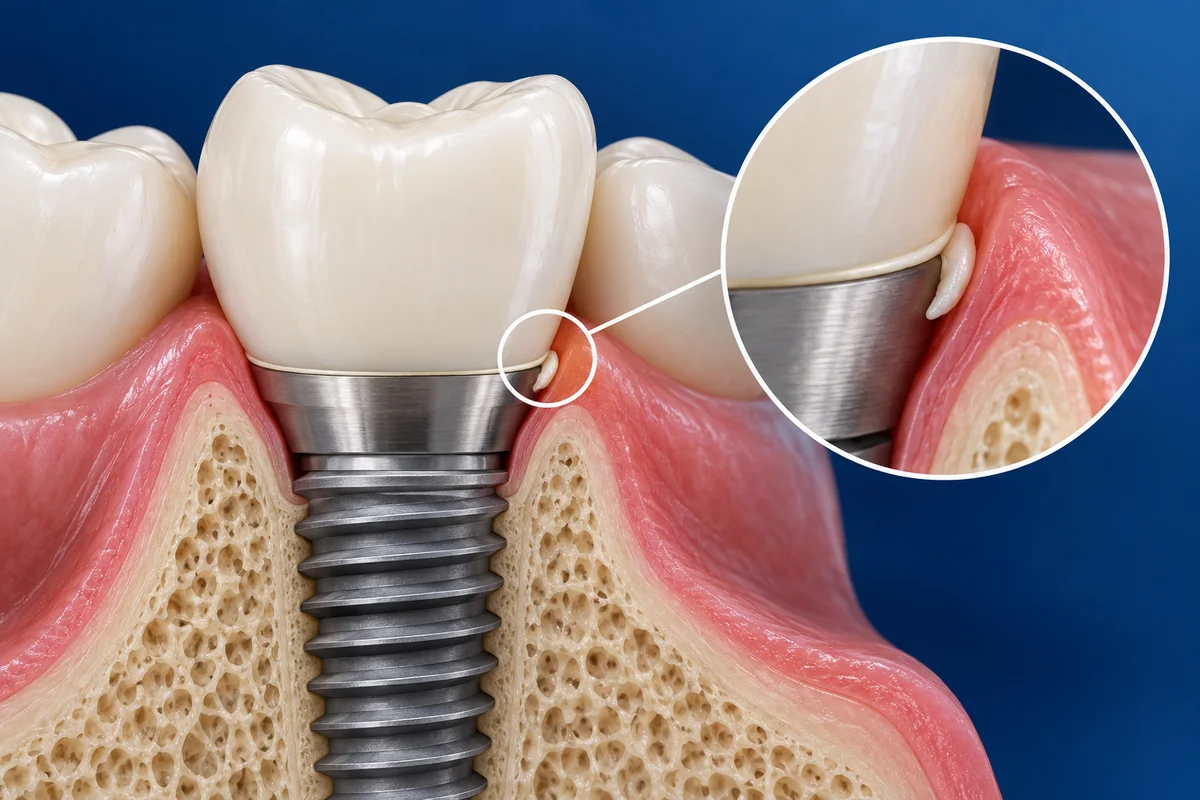
Excess cement beneath the gum is something clinicians check when assessing peri-implant disease. Ask how the margin will be checked after fitting. A cemented crown may be harder to remove if the underlying connection needs attention; discuss whether removal could damage it.
Checks before you leave
Either type can chip or loosen. At fitting, report a high bite, discomfort or difficulty cleaning. The dentist should assess the crown and surrounding tissues.
- Can I demonstrate the cleaning method?
- Does the bite feel comfortable?
- Who checks a chip or damaged access filling?
If the crown moves
Arrange prompt dental advice so the dentist can identify the loose part. Mention a changed bite, missing filling or detached piece. Avoid hard biting to test it, turning screws or using household glue. Discuss the repair before agreeing to removal.
Your repair and handover plan
Before travelling home, obtain the retention method and component details from the treating team. A local dentist must confirm what care they can provide. Agree who arranges assessment, pays for repairs and covers any return travel.
- Tooth position and retention method
- Location of any screw access
- What removal might involve
- Clinical contact and repair charges
Read the related guidance
Keep the wider treatment plan in view while comparing these options.
Choose questions to ask.
Select your questions and copy the list, or open it as a WhatsApp draft. You can edit the message before sending.
Your consultation questions
Untick any questions you don’t need.
4 selected · No contact details needed.
Common questions
About this information
Published by Best Smile Turkey, a health-tourism intermediary. Your treating dentist is responsible for assessment, treatment and care.
Use this information to prepare questions for your dentist. An examination is needed to advise on treatment. Photographs, models and previews cannot establish suitability or predict results.
Source checking is not a clinical review. How we use sources and images, or how to report a correction.
Source-check record
These checks cover only the stated claims, not the whole page or your individual care.
- University of Toronto teaching material explains screw-access fillings and crown retrieval. This is not a recommendation for a retention method, a claim that removal is always easy or self-repair guidance. Checked .
- EFP treatment information discusses checking residual cement; Toronto teaching material describes difficult access to some cemented crowns. This does not prove cement caused a particular problem or predict damage during removal. Checked .
Sources and further reading
- Leeds Teaching Hospitals NHS: dental implants Fixed screw- and cement-retained restorations and possible crown or bridge complications.
- University of Toronto Faculty of Dentistry: single-tooth implant restoration Professional teaching material explaining retention, screw access and difficulty accessing a cemented restoration.
- European Federation of Periodontology: peri-implant disease treatment Why a clinician checks for residual cement when assessing inflammation around an implant.
- NHS: dental treatments explained An overview of crowns, bridges, veneers, implants and other options.
- General Dental Council: going abroad for dental treatment Questions to ask about the treating provider, follow-up arrangements and concerns.
These resources offer general guidance; their publishers do not endorse Best Smile Turkey or the treating provider. Manufacturer links identify products or records, not independently compared outcomes. NHS funding information concerns UK care, not treatment costs in Turkey.
Ask about this information or report a correction