
On this page
A KEY QUESTION
Check the numbering system and have the dentist point out the tooth in your mouth and on the plan.
Your left and right
Charts often show the mouth as if the dentist is facing you, so your upper right teeth may appear on the page’s left. Mirrored selfies add confusion. Use your own left and right, the jaw and the tooth name when checking a proposal.
Quadrants and Palmer notation
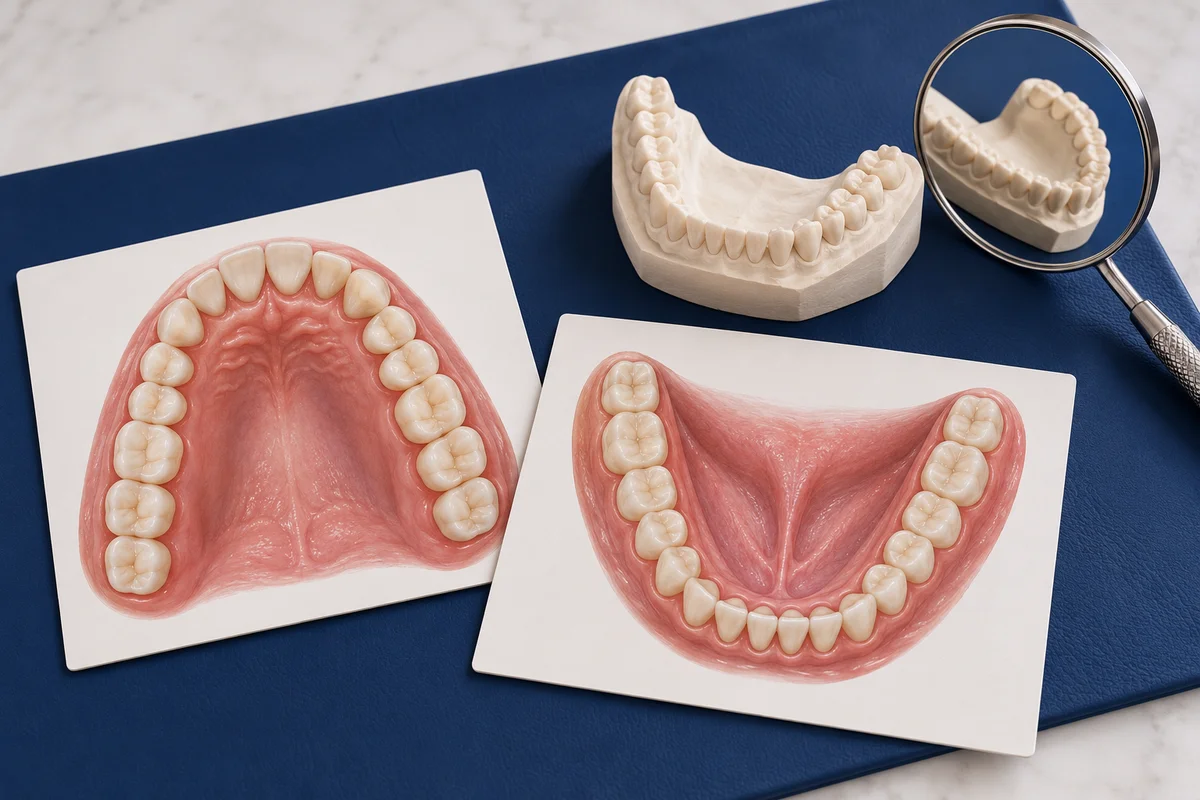
Each adult quarter of the mouth is numbered 1 to 8, starting at the centre. UR, UL, LR and LL mean upper right, upper left, lower right and lower left. Palmer uses quadrant symbols. UR6 is the upper right first permanent molar.
FDI and Universal numbers
FDI uses two digits. The first identifies the adult quadrant: 1 upper right, 2 upper left, 3 lower left, 4 lower right. The second is the position, 1–8. FDI 16 is the upper right first molar; the American Universal system calls it tooth 3.
Colours and surface markings
Marks may show existing fillings, observations, missing teeth or proposed work. Their meaning depends on the chart key, and entries may come from different visits. For bridges, have supporting teeth distinguished from replacement units. A coloured mark alone does not establish untreated decay.
Before treatment starts
Read back the tooth’s name, location, proposed procedure and reason, and have the clinician correct any misunderstanding. This is especially important before extraction or irreversible preparation. The consent form should match the current agreed plan.
Sharing records
Keep the original labels and chart date rather than converting numbers yourself. The receiving dentist should resolve differences between systems. For treatment abroad, use matching identifiers on the clinical plan and quotation, and verify them with the treating clinician.
Read the related guidance
Keep the wider treatment plan in view while comparing these options.
Choose questions to ask.
Select your questions and copy the list, or open it as a WhatsApp draft. You can edit the message before sending.
Your consultation questions
Untick any questions you don’t need.
3 selected · No contact details needed.
Common questions
About this information
Published by Best Smile Turkey, a health-tourism intermediary. Your treating dentist is responsible for assessment, treatment and care.
Use this information to prepare questions for your dentist. An examination is needed to advise on treatment. Photographs, models and previews cannot establish suitability or predict results.
Source checking is not a clinical review. How we use sources and images, or how to report a correction.
Sources and further reading
- American Dental Association: tooth designation mapping Official permanent-tooth names and Universal-to-ISO numbering equivalents.
- Royal College of Surgeons: avoiding wrong-site extraction Clear tooth notation, written tooth descriptions and clinical verification.
- NHS: dental treatments explained An overview of crowns, bridges, veneers, implants and other options.
- General Dental Council: going abroad for dental treatment Questions to ask about the treating provider, follow-up arrangements and concerns.
These resources offer general guidance; their publishers do not endorse Best Smile Turkey or the treating provider. Manufacturer links identify products or records, not independently compared outcomes. NHS funding information concerns UK care, not treatment costs in Turkey.
Ask about this information or report a correction