

On this page
A KEY QUESTION
Ask what tissue the proposed treatment aims to retain, how the tooth will be restored and what would make the plan change.
Where the pulp is
The pulp contains nerves, blood vessels and other tissue beneath the enamel and dentine. It extends from the natural crown into the root canals. A fully developed tooth can remain in place after its pulp is removed.
A root canal is an anatomical space. Root canal treatment is work carried out inside it.
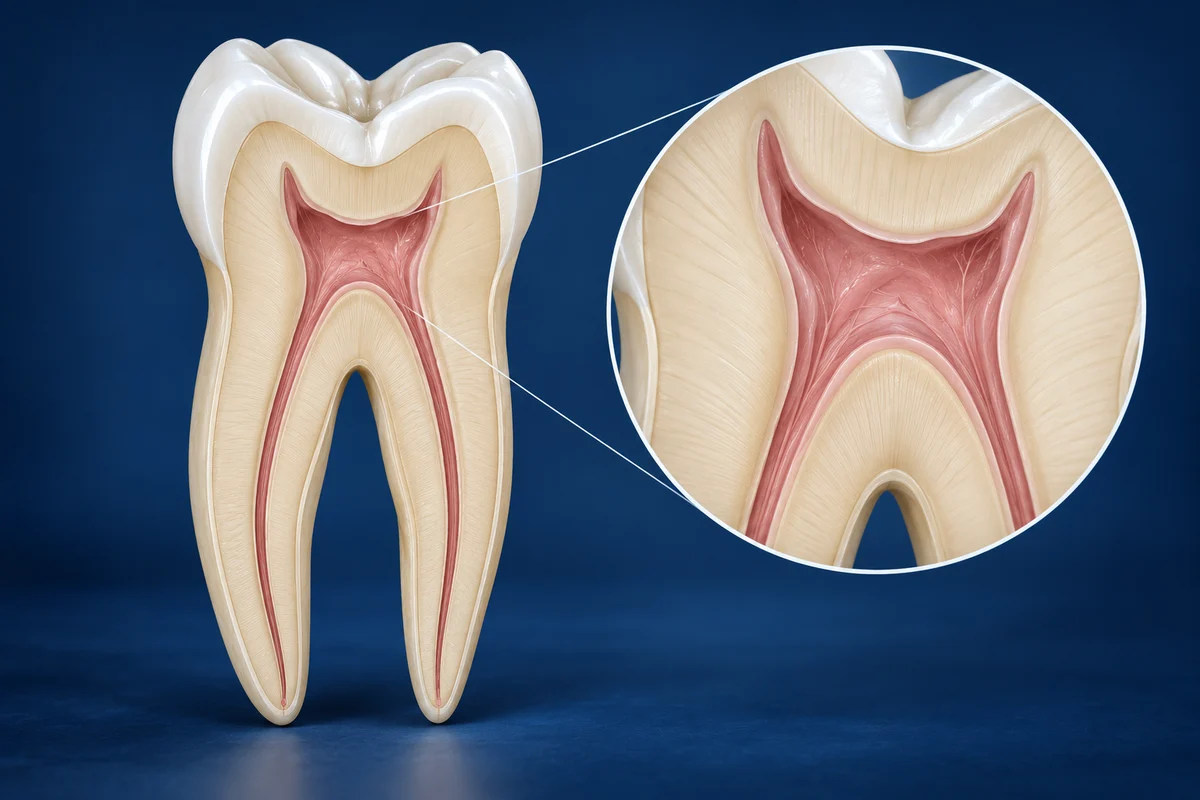
Capping and pulpotomy
Pulp capping uses a protective material to support pulp preservation. Direct capping concerns exposed pulp; indirect approaches protect it through remaining tooth tissue. A partial pulpotomy removes some crown pulp. A complete pulpotomy removes the crown pulp while aiming to retain living tissue in the roots.
The AAE discusses these options in selected mature teeth, not just developing teeth. Suitability still needs clinical assessment.
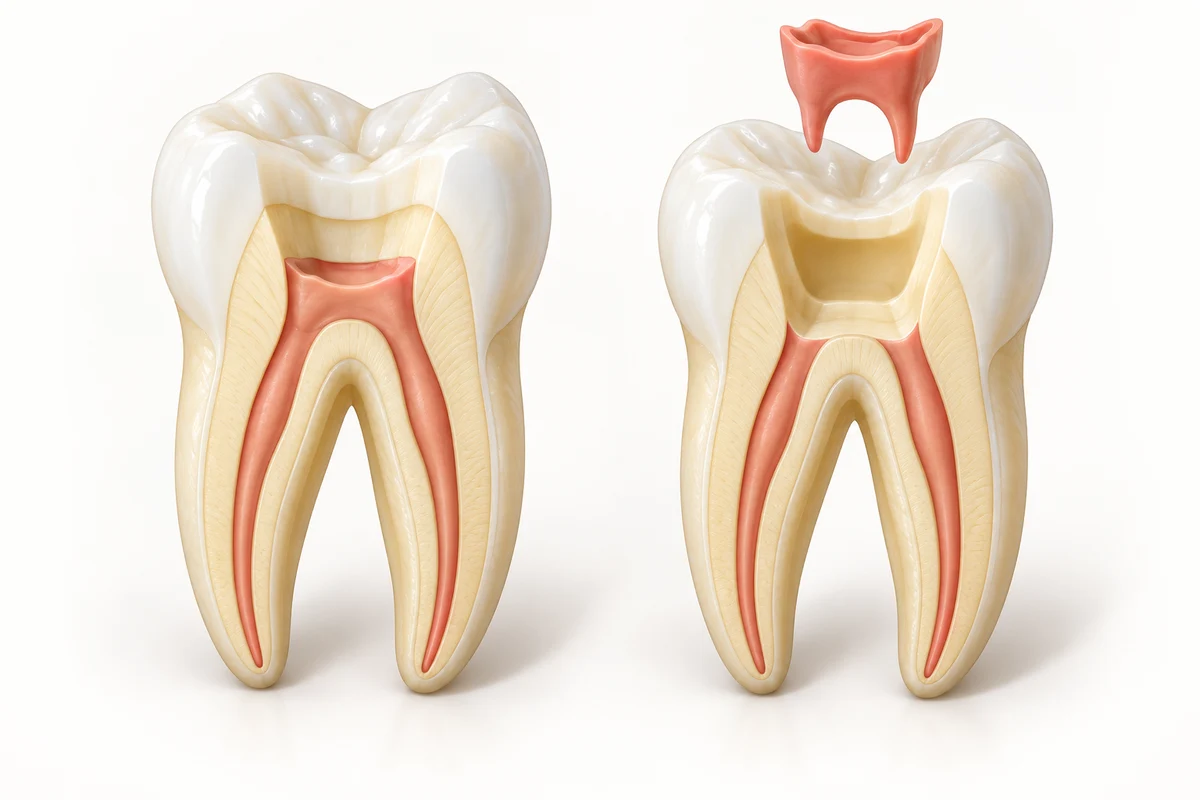
Pulpectomy and root canal treatment
Pulpectomy means removing pulp, including tissue in the root canals. Root canal treatment also includes cleaning, shaping, filling and sealing those spaces.
If the appointment is described as “removing the nerve”, establish what will be completed that day. Pain relief does not mean the root filling or final restoration is finished.
Why the plan can change
Pain history, examination, sensibility tests and X-rays provide different information. Cold and electrical tests measure a response rather than every aspect of pulp health. Findings during treatment can add information.
The clinician should explain what is known, what remains uncertain and how any change in treatment will be discussed.
Restoring and reviewing the tooth
Pulp treatment does not rebuild missing tooth structure. The tooth needs an appropriate seal and restoration, sometimes a crown, as well as review.
Know who will complete the restoration and how to protect the tooth meanwhile. Report new symptoms or a broken or missing filling. Keep the diagnosis, pulp procedure and restoration recorded separately.
If a different treatment is proposed
Request an explanation of the new finding, the proposed next step and its effect on the restoration. Specialist endodontic advice may help where the decision is complex.
Clinical decisions belong to the treating dentist. If Best Smile Turkey coordinates appointments, obtain the revised clinical plan before rearranging travel around it.
Read the related guidance
Keep the wider treatment plan in view while comparing these options.
Choose questions to ask.
Select your questions and copy the list, or open it as a WhatsApp draft. You can edit the message before sending.
Your consultation questions
Untick any questions you don’t need.
3 selected · No contact details needed.
Common questions
About this information
Published by Best Smile Turkey, a health-tourism intermediary. Your treating dentist is responsible for assessment, treatment and care.
Use this information to prepare questions for your dentist. An examination is needed to advise on treatment. Photographs, models and previews cannot establish suitability or predict results.
Source checking is not a clinical review. How we use sources and images, or how to report a correction.
Sources and further reading
- AAE Position Statement: Vital Pulp Therapy (2021) Pulp capping and pulpotomy terminology, selected mature teeth, diagnostic uncertainty and restorative completion.
- NHS: root canal treatment Removal of infected pulp, cleaning and sealing the tooth, restorative completion and follow-up.
- American Association of Endodontists: what is a root canal? Pulp anatomy and the distinction between treating the inner tissue and retaining the natural tooth.
- NHS: dental treatments explained An overview of crowns, bridges, veneers, implants and other options.
- General Dental Council: going abroad for dental treatment Questions to ask about the treating provider, follow-up arrangements and concerns.
These resources offer general guidance; their publishers do not endorse Best Smile Turkey or the treating provider. Manufacturer links identify products or records, not independently compared outcomes. NHS funding information concerns UK care, not treatment costs in Turkey.
Ask about this information or report a correction