

On this page
A KEY QUESTION
Compare the complete restoration and the reason for crowning the tooth, rather than choosing from a material name alone.
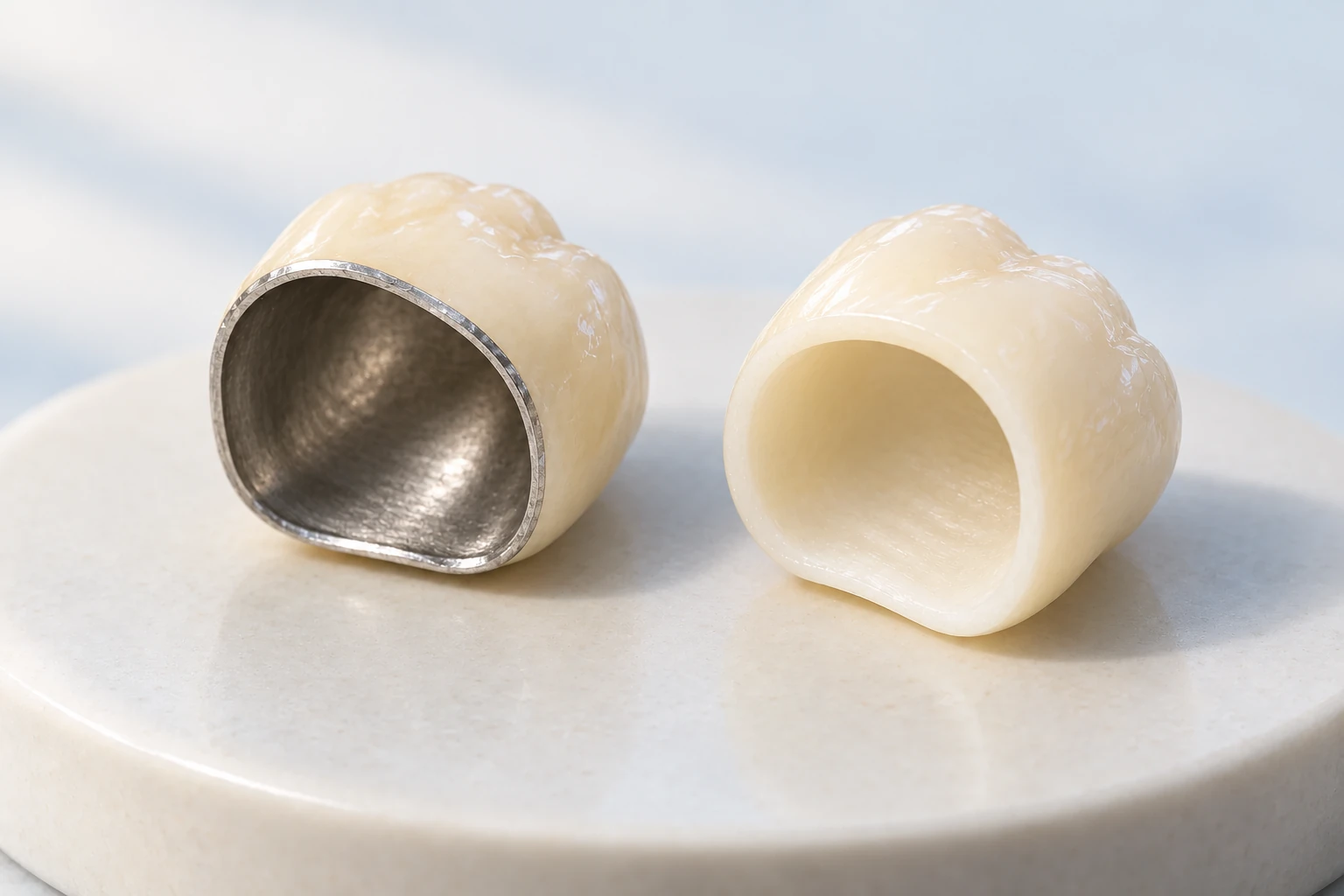
Identify what is being proposed
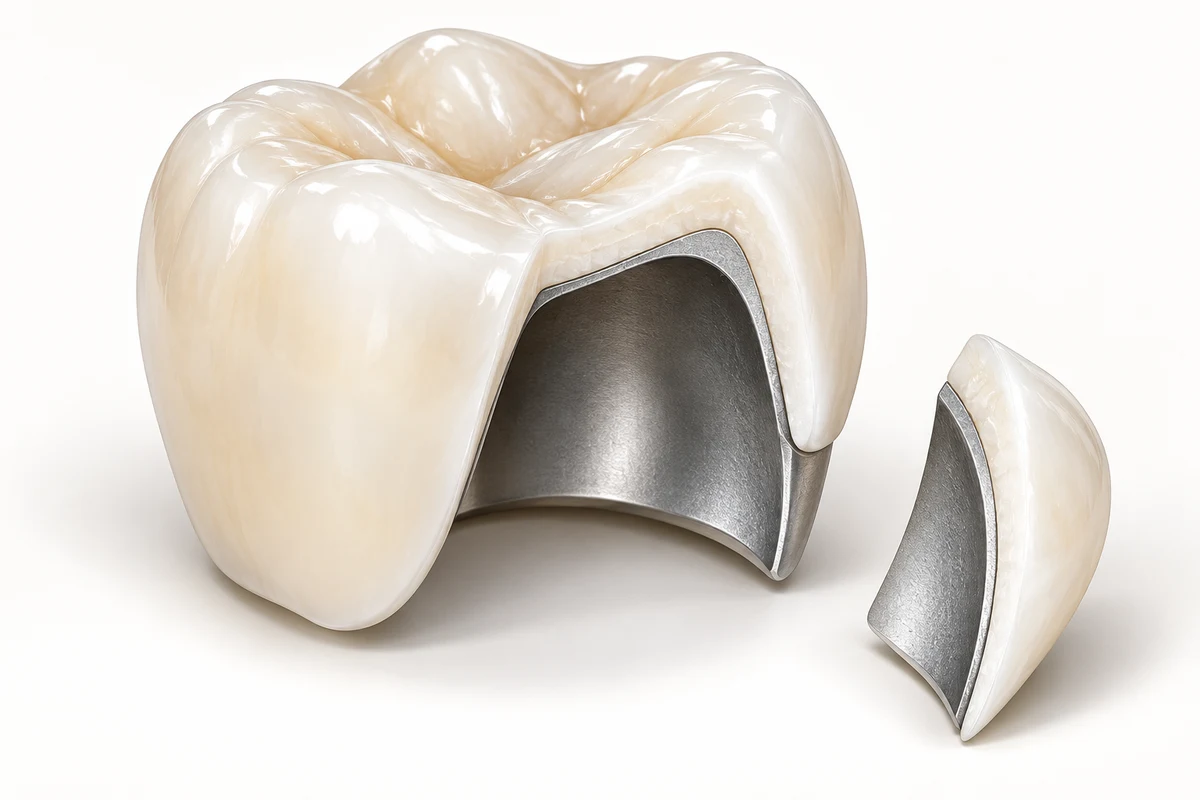
“Porcelain crown” can be an incomplete description. Ask whether there is a metal lining, what the visible surface is made from and which tooth the quotation covers. If two proposals use different terms, ask each dentist to translate them before comparing.
Keep a note of the proposed construction beside the tooth number. A photograph of the visible surface does not supply the missing material specification.
Start with the tooth’s condition
Crowns can restore broken teeth or protect teeth weakened by substantial damage or large fillings. First ask what problem the dentist has found and whether a crown is necessary for this tooth.
A natural tooth normally needs reshaping for a crown. Leeds Teaching Hospitals notes that preparation varies with design. Ask about the amount of tooth involved and whether a filling or another less extensive restoration is reasonable.
Discuss appearance and function together
The visible position, bite and remaining tooth structure matter when discussing materials. Ask how the proposed construction addresses your priorities and whether clenching or grinding changes the recommendation.
If appearance matters most to you, identify the concern precisely: colour, shape or the edge near the gum. Ask to review those details with the dentist before fitting. Request an explanation of any compromise rather than a promise based on another person’s result.
Plan care beyond fitting day
Brushing with fluoride toothpaste, cleaning between teeth and professional reviews remain important after a crown. Ask the team to show the cleaning method for your restoration.
Keep the material record, fitting date and written care advice. Clarify who checks discomfort or a changed bite and how repair or replacement would be assessed. Best Smile Turkey coordinates enquiries; the treating dentist must confirm the clinical recommendation and available materials.
Read the related guidance
Keep the wider treatment plan in view while comparing these options.
Choose questions to ask.
Select your questions and copy the list, or open it as a WhatsApp draft. You can edit the message before sending.
Your consultation questions
Untick any questions you don’t need.
3 selected · No contact details needed.
Common questions
About this information
Published by Best Smile Turkey, a health-tourism intermediary. Your treating dentist is responsible for assessment, treatment and care.
Use this information to prepare questions for your dentist. An examination is needed to advise on treatment. Photographs, models and previews cannot establish suitability or predict results.
Source checking is not a clinical review. How we use sources and images, or how to report a correction.
Sources and further reading
- Leeds Teaching Hospitals: crowns Crown constructions, preparation, suitability, alternatives and everyday care.
- American Dental Association: crowns Reasons for restoring or protecting a tooth with a crown.
- NHS: dental treatments explained An overview of crowns, bridges, veneers, implants and other options.
- General Dental Council: going abroad for dental treatment Questions to ask about the treating provider, follow-up arrangements and concerns.
These resources offer general guidance; their publishers do not endorse Best Smile Turkey or the treating provider. Manufacturer links identify products or records, not independently compared outcomes. NHS funding information concerns UK care, not treatment costs in Turkey.
Ask about this information or report a correction