

On this page
A KEY QUESTION
Use photographs to explain a preference. The clinical shade assessment and fitting checks still need to happen.
Describe the change you want
You might want to match a neighbouring tooth, reduce a contrast or lighten the whole smile. Explain the brightness and uniformity you prefer. With an example photograph, identify the colour you like separately from the tooth shape, size and position.
Using shade samples
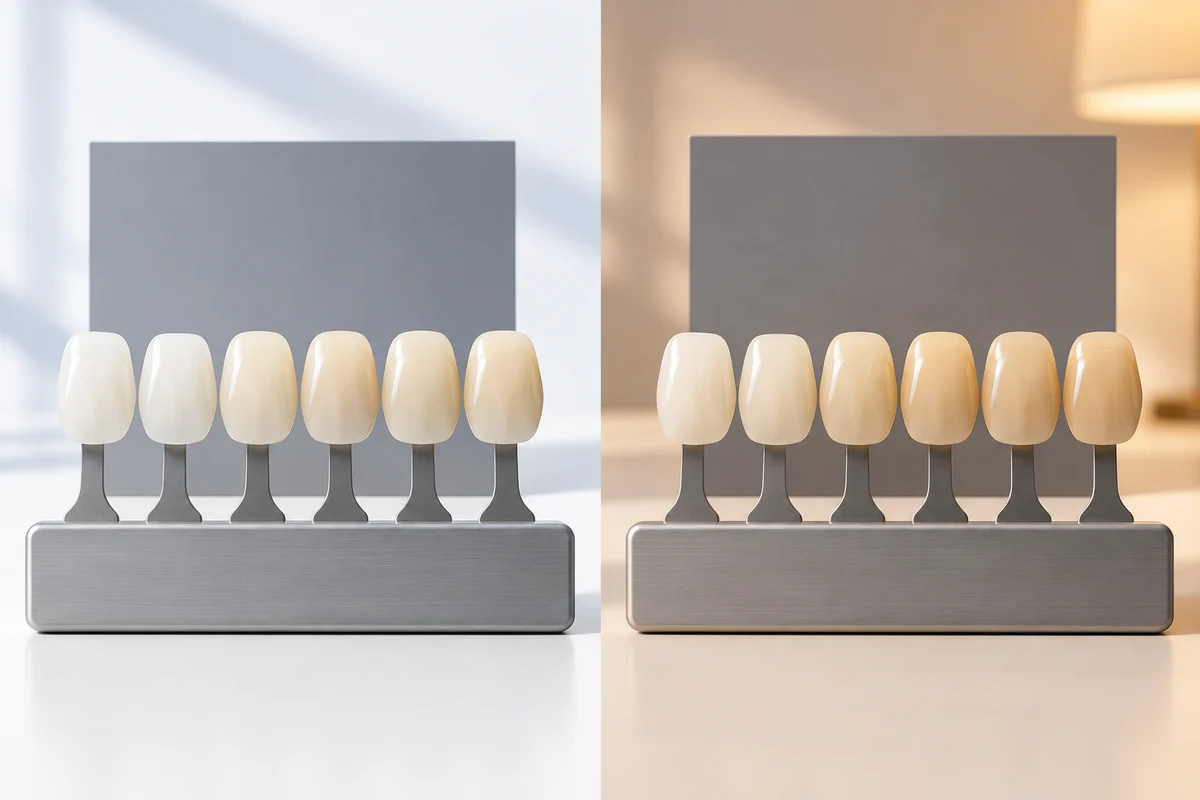
A shade guide provides a shared reference. Compare relevant samples and have any recorded code explained. Clarify whether the aim is a match or a planned difference. A popular code used by someone else may not suit your teeth or preference.
Lighting and photographs
Lighting can influence visual shade assessment. Find out how the colour will be recorded consistently and whether it needs rechecking after teeth have been dried during treatment. Phone screens, edited previews and digital equipment cannot guarantee a clinical colour match.
Use the guide to understanding dental before-and-after images when comparing lighting, treatment stages and claimed results.
Teeth and restorations that remain
Whitening changes natural teeth, not crowns, veneers, fillings or other replacement teeth. Identify visible restorations that will stay and discuss possible mismatches. If replacement is proposed, get its reason and cost separately; a preference for lighter teeth does not authorise replacing sound work.
Treatment order and fitting
If whitening and restorations are both planned, have the sequence and final shade assessment explained. Whitening response varies. Establish when you can raise concerns before laboratory work or fitting, and which changes are possible at each point.
Record the preference
Keep a short note of the intended change, samples discussed and unresolved concerns. Distinguish aesthetic preferences from advice on clinical suitability. For an elective choice, take time to consider it and verify the shade process with the treating team.
Read the related guidance
Keep the wider treatment plan in view while comparing these options.
Choose questions to ask.
Select your questions and copy the list, or open it as a WhatsApp draft. You can edit the message before sending.
Your consultation questions
Untick any questions you don’t need.
4 selected · No contact details needed.
Common questions
About this information
Published by Best Smile Turkey, a health-tourism intermediary. Your treating dentist is responsible for assessment, treatment and care.
Use this information to prepare questions for your dentist. An examination is needed to advise on treatment. Photographs, models and previews cannot establish suitability or predict results.
Source checking is not a clinical review. How we use sources and images, or how to report a correction.
Sources and further reading
- Health Research Authority: assessing tooth colour University of Manchester research summary explaining shade guides and the influence of assessment lighting; not treatment-outcome evidence.
- NHS: teeth whitening Professional assessment, natural-tooth colour changes and whitening limitations.
- Leeds Teaching Hospitals: tooth whitening for adults Shade records, existing restorations, non-vital whitening, variable results and risks.
- NHS: dental treatments explained An overview of crowns, bridges, veneers, implants and other options.
- General Dental Council: going abroad for dental treatment Questions to ask about the treating provider, follow-up arrangements and concerns.
These resources offer general guidance; their publishers do not endorse Best Smile Turkey or the treating provider. Manufacturer links identify products or records, not independently compared outcomes. NHS funding information concerns UK care, not treatment costs in Turkey.
Ask about this information or report a correction