
On this page
A KEY QUESTION
Use gallery images to frame questions, then base treatment decisions on a dentist’s assessment of your teeth and treatment needs.
At a glance.
| Visible change | Possible uncertainty | Ask |
|---|---|---|
| Brighter teeth | Lighting or real shade change? | Were settings comparable? |
| Straighter teeth | Movement or restorations? | Which procedures were used? |
| A complete smile | Temporary or final teeth? | When was the picture taken? |
General differences to discuss with your dentist. This comparison does not determine which treatment is suitable for you.
Photo, illustration or simulation?
Check how the image is labelled. A simulation shows a proposal; an illustration explains a concept. Neither records completed care. UK CAP guidance says advertisers should have evidence that clinical before-and-after images are genuine and permission to use them. Ask for context without requesting another patient’s identity or records.
Compare how the pictures were taken
Look at lighting, camera angle, head position, expression and visible teeth. Retracted lips show a different view from a relaxed smile. Cropping may hide context. Screens and colour settings also affect appearance, so photographs cannot select an exact clinical shade.
Editing and filters
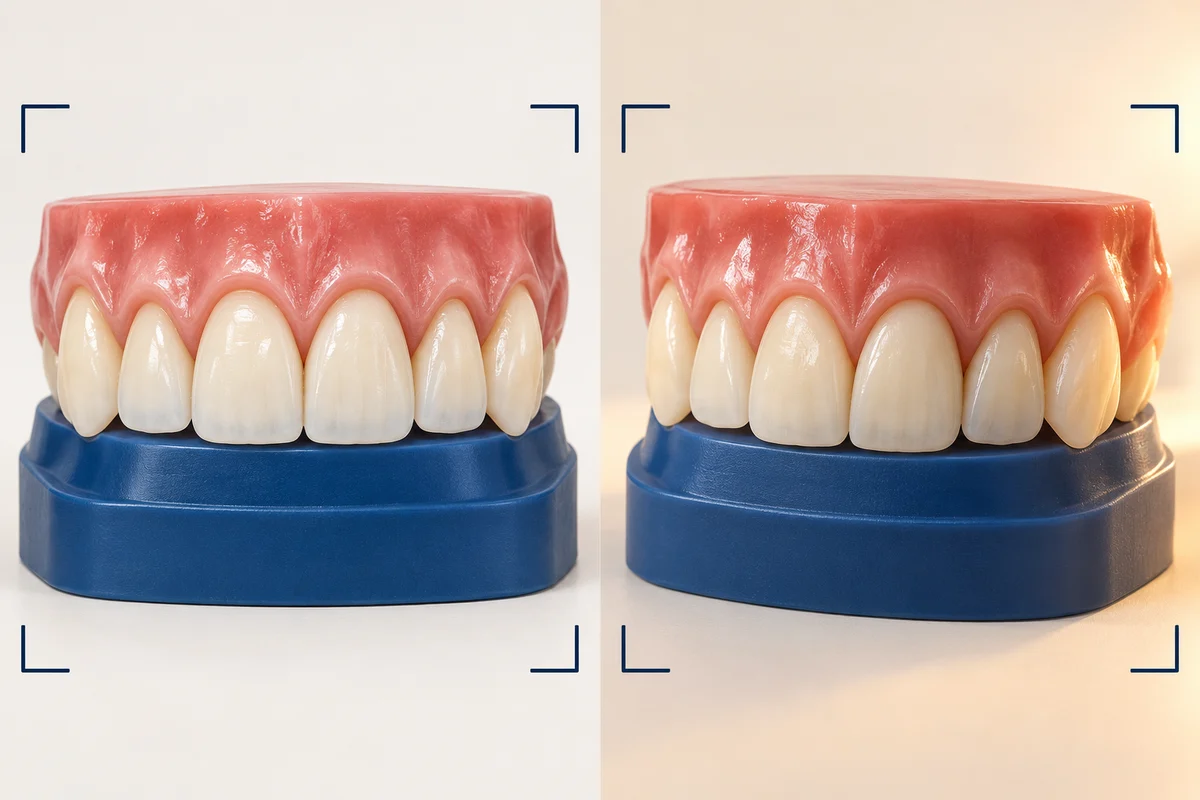
Ask whether tooth colour, edges, gums or gaps were altered digitally. Production techniques can exaggerate apparent changes. A “results vary” caption does not correct a misleading impression, but unusual appearance alone does not prove deception. Request a clear explanation and comparable example.
Find out the treatment and timing
Ask whether the result involved orthodontics, whitening, bonding, veneers, crowns or a combination. A fitting-day image cannot document years of wear or maintenance.
- Procedures and teeth involved
- Date or stage of each image
- Whether the teeth shown are temporary or final
What a smile image cannot show
A front view cannot establish tooth preparation, bite comfort or the health of roots and supporting tissues. Ask about these directly. Describe specific preferences, such as shade or edge shape, and discuss what is realistic for your own mouth.
Bring images to the consultation
Keep the original link and note what appeals to you and what remains unclear. Ask the dentist to explain alternatives and irreversible steps behind any preview. Educational website images do not establish that a named clinician performed the work or that you will get the same result. Verify the context of claimed clinical examples.
Read the related guidance
Keep the wider treatment plan in view while comparing these options.
Choose questions to ask.
Select your questions and copy the list, or open it as a WhatsApp draft. You can edit the message before sending.
Your consultation questions
Untick any questions you don’t need.
4 selected · No contact details needed.
Common questions
About this information
Published by Best Smile Turkey, a health-tourism intermediary. Your treating dentist is responsible for assessment, treatment and care.
Use this information to prepare questions for your dentist. An examination is needed to advise on treatment. Photographs, models and previews cannot establish suitability or predict results.
Source checking is not a clinical review. How we use sources and images, or how to report a correction.
Sources and further reading
- ASA and CAP: dental advertising guidance Evidence, permission and representative presentation of dental before-and-after photographs.
- ASA and CAP: before-and-after photos Genuine imagery, production techniques, exaggeration and the limits of disclaimers in UK advertising.
- General Dental Council: valid consent UK professional guidance on discussing treatment choices and checking understanding; it does not define Turkish law.
- NHS: dental treatments explained An overview of crowns, bridges, veneers, implants and other options.
- General Dental Council: going abroad for dental treatment Questions to ask about the treating provider, follow-up arrangements and concerns.
These resources offer general guidance; their publishers do not endorse Best Smile Turkey or the treating provider. Manufacturer links identify products or records, not independently compared outcomes. NHS funding information concerns UK care, not treatment costs in Turkey.
Ask about this information or report a correction