

On this page
A KEY QUESTION
Find out what the appointment will treat and how to keep the affected areas clean afterwards.
At a glance.
| Finding | What it means | Useful question |
|---|---|---|
| Plaque | A bacterial film on tooth surfaces. | Where am I missing it during daily care? |
| Calculus or tartar | Deposits that have hardened. | Where is professional removal needed? |
| Surface staining | A change in appearance that needs identifying. | Is stain removal the aim, or is there a gum-health problem too? |
General differences to discuss with your dentist. This comparison does not determine which treatment is suitable for you.
Identify the deposit
Plaque can contribute to decay and gum disease, and can harden into tartar, also called calculus. A rough or discoloured area may have another cause. Have it examined rather than deciding by its colour or scraping it yourself.
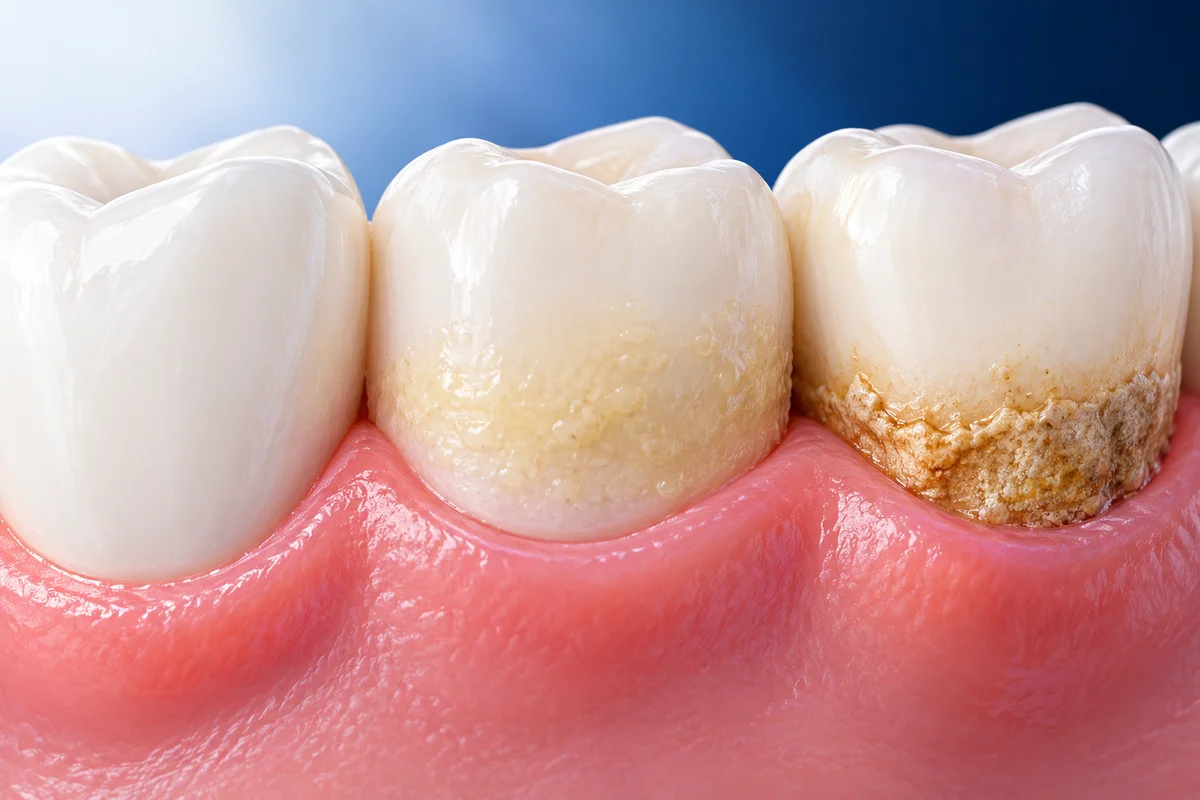
Home and professional cleaning
Brushing and interdental cleaning control the soft film that repeatedly forms. They cannot remove hardened calculus. A dentist, hygienist or therapist can remove it and show how to reach areas where it accumulated. Harder brushing will not solve the problem.
What your appointment includes
A scale and polish, hygiene visit and periodontal treatment can have different purposes. Clarify whether assessment, cleaning below the gumline and reassessment are included. Tell the practice about bleeding, loose teeth or pain when booking so the appointment fits your needs.
Appearance and gum health
Polishing surface stains may improve appearance, but it does not establish that gum inflammation or pockets have been assessed. Gum disease can be painless. Equally, extensive gum treatment is not necessary for everyone; the examination should guide the recommendation.
Make one useful change
Have the team demonstrate cleaning in a difficult area, using the correct tool size and technique. Say if it hurts or cannot reach. Report recurring food trapping, bleeding or a persistent rough edge so the clinician can assess the cause.
Continuing care after travel
Before arranging cleaning during an overseas visit, establish what assessment is included and who will manage any disease found. Plan follow-up somewhere you can attend regularly. A one-off clean should leave you with a clear explanation of any further care needed.
Read the related guidance
Keep the wider treatment plan in view while comparing these options.
Choose questions to ask.
Select your questions and copy the list, or open it as a WhatsApp draft. You can edit the message before sending.
Your consultation questions
Untick any questions you don’t need.
3 selected · No contact details needed.
Common questions
About this information
Published by Best Smile Turkey, a health-tourism intermediary. Your treating dentist is responsible for assessment, treatment and care.
Use this information to prepare questions for your dentist. An examination is needed to advise on treatment. Photographs, models and previews cannot establish suitability or predict results.
Source checking is not a clinical review. How we use sources and images, or how to report a correction.
Sources and further reading
- American Dental Association: plaque The bacterial film on teeth, its role in decay and gum inflammation, and hardened calculus.
- Leeds Teaching Hospitals: gum disease leaflet Patient leaflet covering calculus, gum assessment, non-surgical treatment and reassessment.
- American Dental Association: gum disease Why painless gums can still need examination and why treatment depends on the findings.
- NHS: dental treatments explained An overview of crowns, bridges, veneers, implants and other options.
- General Dental Council: going abroad for dental treatment Questions to ask about the treating provider, follow-up arrangements and concerns.
These resources offer general guidance; their publishers do not endorse Best Smile Turkey or the treating provider. Manufacturer links identify products or records, not independently compared outcomes. NHS funding information concerns UK care, not treatment costs in Turkey.
Ask about this information or report a correction