

On this page
A KEY QUESTION
Have the sizes and technique demonstrated in your mouth, then keep a simple note of which tool goes where.
Match the tool to the gap
Floss suits contacts too tight for a brush. Interdental brushes can clean wider, accessible spaces when they fit snugly without force. You may need several sizes. Keep the packaging: colour codes can differ between product ranges.
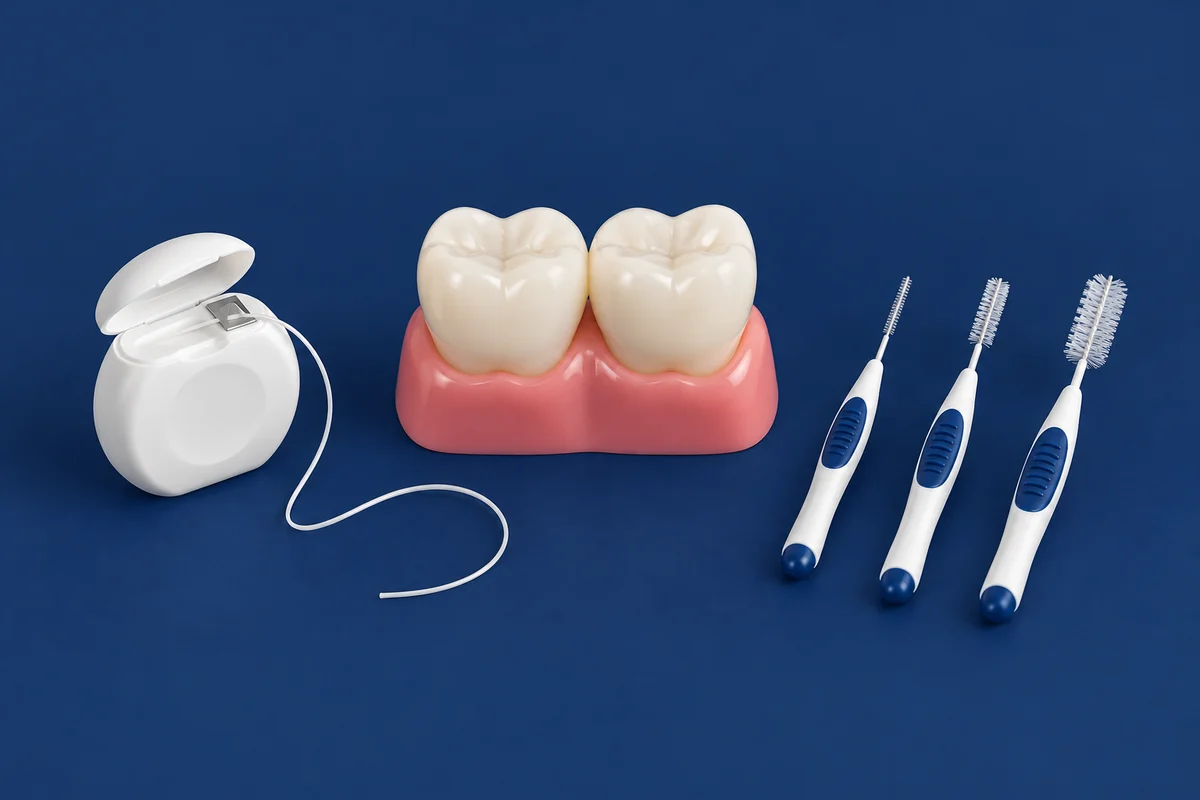
Using floss
Guide floss gently through the contact without snapping it onto the gum. Curve it against one tooth, clean that surface, then the neighbouring tooth. Repeated fraying or catching in one place needs dental advice; pulling harder is not the answer.
Sizing interdental brushes
Have a dentist or hygienist check the fit and demonstrate access to your back teeth. The brush should not become stuck. If its wire presses against a tooth or gum, stop and get the approach checked. Never use sharp objects to enlarge a gap.
When handling is difficult
Floss holders, shaped handles or a water flosser may help if hand movement limits cleaning. Discuss what each device would do in your mouth and whether it replaces or adds to another step. Start with a routine you can manage consistently.
Bleeding or pain
Bleeding can accompany gum inflammation. Report persistent pain, bleeding or a new change, including the tool and space involved. Pain is not a sign of effective cleaning. Healing surgical sites and implant restorations need their own instructions.
Keep a cleaning map
Record the sizes and locations in plain terms, such as the back upper gaps. Practise the difficult areas before leaving your appointment. Review the plan when dental work or gum changes alter access, and agree who will check it after travel.
Read the related guidance
Keep the wider treatment plan in view while comparing these options.
Choose questions to ask.
Select your questions and copy the list, or open it as a WhatsApp draft. You can edit the message before sending.
Your consultation questions
Untick any questions you don’t need.
3 selected · No contact details needed.
Common questions
About this information
Published by Best Smile Turkey, a health-tourism intermediary. Your treating dentist is responsible for assessment, treatment and care.
Use this information to prepare questions for your dentist. An examination is needed to advise on treatment. Photographs, models and previews cannot establish suitability or predict results.
Source checking is not a clinical review. How we use sources and images, or how to report a correction.
Sources and further reading
- American Dental Association: flossing Interdental tools, gentle floss technique and options when handling is difficult.
- NHS: how to keep your teeth clean Adult fluoride toothpaste, brushing coverage and the timing of rinses.
- Leeds Teaching Hospitals: gum disease leaflet Patient leaflet covering calculus, gum assessment, non-surgical treatment and reassessment.
- NHS: dental treatments explained An overview of crowns, bridges, veneers, implants and other options.
- General Dental Council: going abroad for dental treatment Questions to ask about the treating provider, follow-up arrangements and concerns.
These resources offer general guidance; their publishers do not endorse Best Smile Turkey or the treating provider. Manufacturer links identify products or records, not independently compared outcomes. NHS funding information concerns UK care, not treatment costs in Turkey.
Ask about this information or report a correction