

On this page
A KEY QUESTION
Know which sites need treatment, how comfort will be managed and when the response will be checked.
Why treatment is needed
Have the diagnosis, affected sites and relevant measurements explained. Gingivitis and periodontitis are different conditions. Tell the team about past gum treatment, smoking, health conditions and medicines. These can affect planning, but do not change prescribed medication yourself.
During the appointment
The clinician removes deposits and bacterial film above and below the gumline using hand or powered instruments. Local anaesthetic may be used. Treatment can take one or several visits. Establish the areas covered, expected appointment length and who will carry it out.
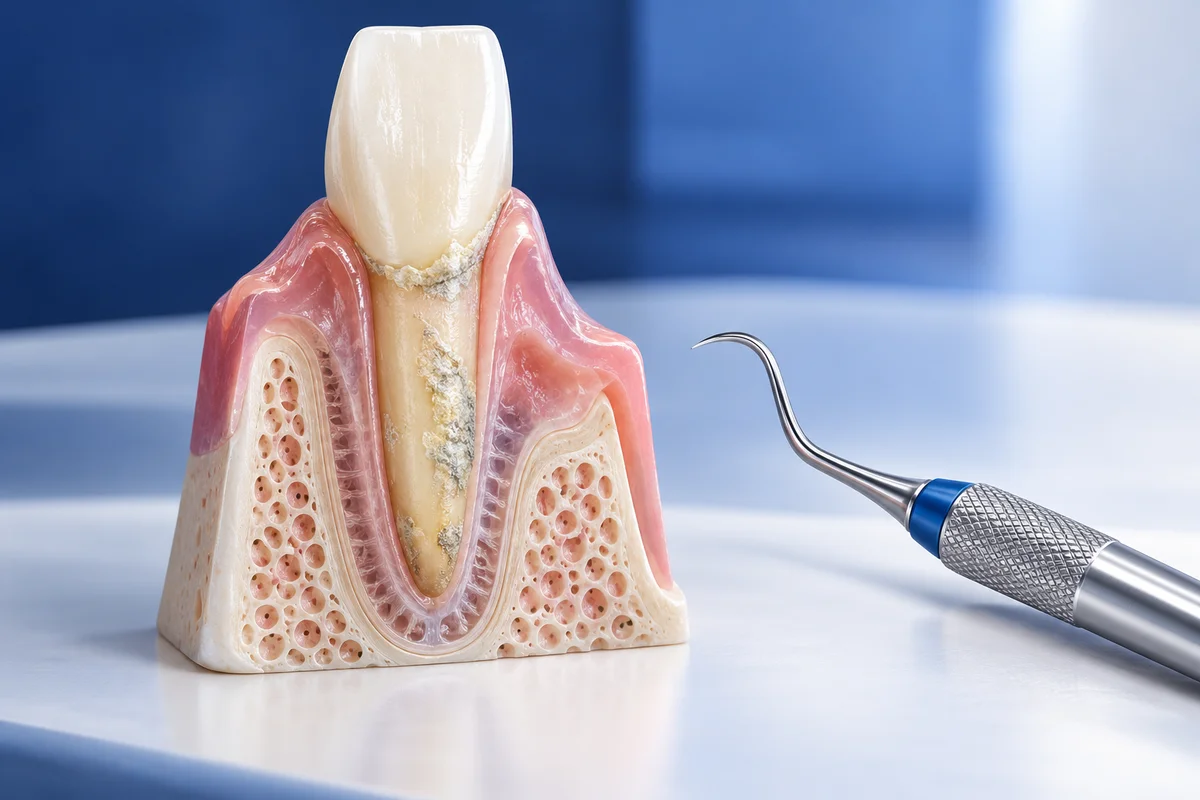
Comfort and possible changes
Mention concerns about numbness, sensitivity or water spray, and agree a pause signal. Get aftercare and eating instructions. As swollen gums settle, teeth may look longer, spaces can become visible and sensitivity may occur. Discuss these possibilities before starting.
Care between visits
Have difficult areas and suitable cleaning tools demonstrated. Explain if the routine is hard to manage. Follow written instructions for any prescription. Antibiotics or antiseptic rinses are not automatically required; do not start leftover medicines.
Checking the response
A follow-up assesses healing and pocket depths, alongside symptoms, bleeding and cleaning. Keep before-and-after findings together. Some sites may need further treatment or another opinion. Establish when reassessment takes place and what the possible next steps are.
Before crowns, veneers or implants
Some restorative decisions depend on the gum-treatment response. Leave time for reassessment, even when flights are booked. Discuss any effect on costs or travel dates and verify the proposed periodontal service with the treating provider.
Read the related guidance
Keep the wider treatment plan in view while comparing these options.
Choose questions to ask.
Select your questions and copy the list, or open it as a WhatsApp draft. You can edit the message before sending.
Your consultation questions
Untick any questions you don’t need.
5 selected · No contact details needed.
Common questions
About this information
Published by Best Smile Turkey, a health-tourism intermediary. Your treating dentist is responsible for assessment, treatment and care.
Use this information to prepare questions for your dentist. An examination is needed to advise on treatment. Photographs, models and previews cannot establish suitability or predict results.
Source checking is not a clinical review. How we use sources and images, or how to report a correction.
Sources and further reading
- American Dental Association: scaling and root planing Cleaning below the gumline, comfort measures and checking the response afterwards.
- Leeds Teaching Hospitals: gum disease leaflet Patient leaflet covering calculus, gum assessment, non-surgical treatment and reassessment.
- NHS: dental treatments explained An overview of crowns, bridges, veneers, implants and other options.
- General Dental Council: going abroad for dental treatment Questions to ask about the treating provider, follow-up arrangements and concerns.
These resources offer general guidance; their publishers do not endorse Best Smile Turkey or the treating provider. Manufacturer links identify products or records, not independently compared outcomes. NHS funding information concerns UK care, not treatment costs in Turkey.
Ask about this information or report a correction