

On this page
A KEY QUESTION
Find out whether you have a screening score or a detailed measurement, then have the clinical conclusion explained.
Screening or detailed chart?
The UK Basic Periodontal Examination, or BPE, indicates whether more assessment is needed. It does not diagnose gum disease or track individual sites after treatment. A detailed chart records specific teeth. A BPE code is different from a depth in millimetres.
What pocket depth means
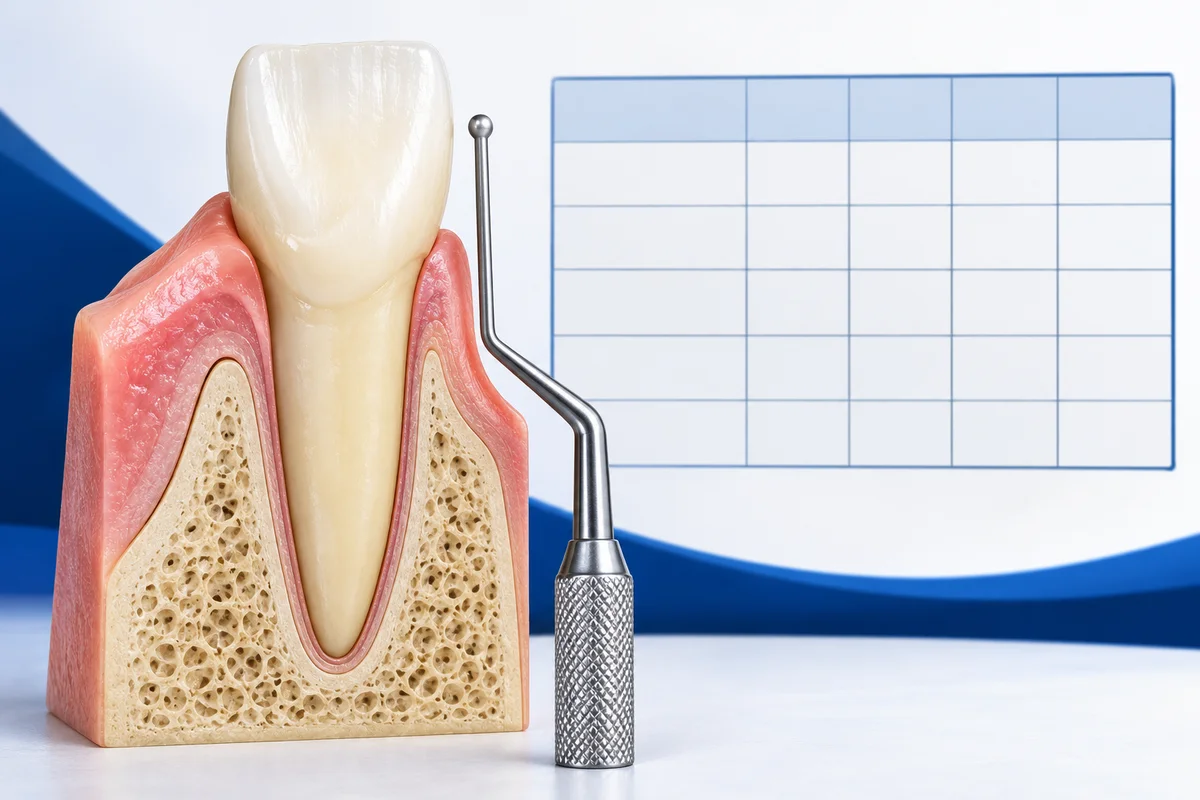
A clinician gently measures the space beside a tooth below the gum edge with a periodontal probe. Detailed charts commonly record six sites per tooth. Have one measurement located in your mouth and any unfamiliar tooth numbering explained. Do not measure it yourself.
The rest of the examination
Bleeding, recession, tooth movement and other features help explain the depths. Imaging may show bone support. One number cannot decide whether a tooth needs extraction, treatment has worked or implants are suitable. Any irreversible recommendation needs a fuller explanation.
Comparing visits
Keep the chart’s date and treatment stage, and provide earlier records if you change practice. Reassessment compares the same sites. Find out which still bleed or need treatment. A smaller depth alone does not tell the whole story if the gum edge has moved.
Turning findings into a plan
Have priority areas and their cleaning needs identified. Your next appointment may be for treatment, reassessment or maintenance. If a referral is suggested, establish what question the specialist will address. You should leave understanding the diagnosis without having to interpret the chart yourself.
Using records at another practice
Before elective treatment abroad, provide the gum chart, treatment summary and relevant images if requested. Saying you have “had a clean” does not describe the findings or response. The treating clinician decides whether further assessment is needed; BPE is a UK screening system.
Read the related guidance
Keep the wider treatment plan in view while comparing these options.
Choose questions to ask.
Select your questions and copy the list, or open it as a WhatsApp draft. You can edit the message before sending.
Your consultation questions
Untick any questions you don’t need.
4 selected · No contact details needed.
Common questions
About this information
Published by Best Smile Turkey, a health-tourism intermediary. Your treating dentist is responsible for assessment, treatment and care.
Use this information to prepare questions for your dentist. An examination is needed to advise on treatment. Photographs, models and previews cannot establish suitability or predict results.
Source checking is not a clinical review. How we use sources and images, or how to report a correction.
Sources and further reading
- SDCEP: periodontal probing The screening purpose and limitations of a Basic Periodontal Examination.
- SDCEP: what a periodontal examination records Pocket depth, bleeding, recession and other findings used together in clinical assessment.
- SDCEP: review charting Site-by-site measurements and records used to monitor treated periodontitis.
- NHS: dental treatments explained An overview of crowns, bridges, veneers, implants and other options.
- General Dental Council: going abroad for dental treatment Questions to ask about the treating provider, follow-up arrangements and concerns.
These resources offer general guidance; their publishers do not endorse Best Smile Turkey or the treating provider. Manufacturer links identify products or records, not independently compared outcomes. NHS funding information concerns UK care, not treatment costs in Turkey.
Ask about this information or report a correction