

On this page
A KEY QUESTION
If it persists after a few weeks of self-care, book a dentist; accompanying dental symptoms need attention sooner.
What to describe
Note how long it has been happening, whether it is mainly on waking or throughout the day, and any unpleasant taste. Mention bleeding gums, dryness, pain, denture problems and products tried. You do not need to prove the smell before seeking help.
Possible causes
Tooth and gum problems, infection, dry mouth, smoking, foods and some medical conditions can contribute. Ask what the examination found and what remains uncertain. A cosmetic procedure should have a clinical purpose rather than be chosen from breath symptoms alone.
Clean gently and thoroughly
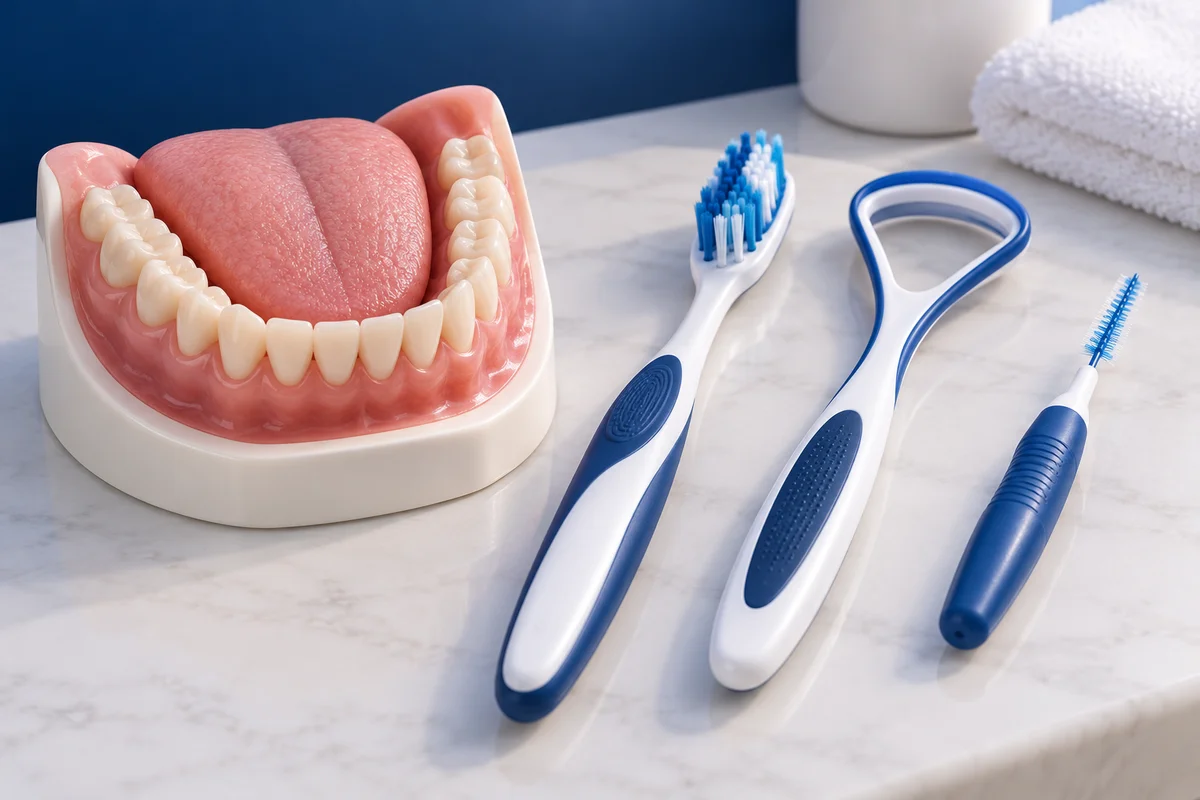
Brush twice daily with fluoride toothpaste, clean between teeth daily and gently clean the tongue once a day. Avoid scrubbing until gums or tongue bleed. Clean dentures and follow overnight removal advice. For a fixed bridge, explain where food catches or tools cannot pass.
- Can you show me areas I am missing?
- Which tools fit around this restoration?
- Does bleeding or discomfort also need treatment?
Using mouthwash
A rinse may offer temporary help or have a specific treatment purpose. Ask which product, how long to use it and when to review the result. It cannot replace removal of plaque and food. Mention dryness, medicines and current rinses. Do not change prescribed medicine to test its effect.
When to book
See a dentist if bad breath remains after a few weeks of self-care, or with painful, swollen or bleeding gums, toothache, loose adult teeth or denture problems. Avoid repeated product trials instead of assessment. If the mouth is healthy but symptoms persist, ask whether GP review is appropriate.
Check whether the plan helps
Record the findings, recommended changes and review point. Note continuing taste, dryness or other symptoms. If advice has not helped, this gives the next clinician useful context. Raise the concern before finalising elective treatment abroad; no particular dental procedure can be promised to resolve it without assessment.
Read the related guidance
Keep the wider treatment plan in view while comparing these options.
Choose questions to ask.
Select your questions and copy the list, or open it as a WhatsApp draft. You can edit the message before sending.
Your consultation questions
Untick any questions you don’t need.
3 selected · No contact details needed.
Common questions
About this information
Published by Best Smile Turkey, a health-tourism intermediary. Your treating dentist is responsible for assessment, treatment and care.
Use this information to prepare questions for your dentist. An examination is needed to advise on treatment. Photographs, models and previews cannot establish suitability or predict results.
Source checking is not a clinical review. How we use sources and images, or how to report a correction.
Sources and further reading
- NHS: bad breath Self-care, possible causes and symptoms that warrant a dental appointment.
- American Dental Association: bad breath Oral causes, limits of mouthwash and medical assessment when indicated.
- NHS: dental treatments explained An overview of crowns, bridges, veneers, implants and other options.
- General Dental Council: going abroad for dental treatment Questions to ask about the treating provider, follow-up arrangements and concerns.
These resources offer general guidance; their publishers do not endorse Best Smile Turkey or the treating provider. Manufacturer links identify products or records, not independently compared outcomes. NHS funding information concerns UK care, not treatment costs in Turkey.
Ask about this information or report a correction