

On this page
A KEY QUESTION
Arrange a dental assessment for bleeding, swelling or movement, even if the implant does not hurt.
At a glance.
| Finding | Peri-implant mucositis | Peri-implantitis |
|---|---|---|
| Affected tissues | Inflamed soft tissues without associated bone loss | Inflammation with supporting-bone loss |
| Review question | Has inflammation resolved? | Are inflammation and bone support stable? |
General differences to discuss with your dentist. This comparison does not determine which treatment is suitable for you.
How the diagnosis is made
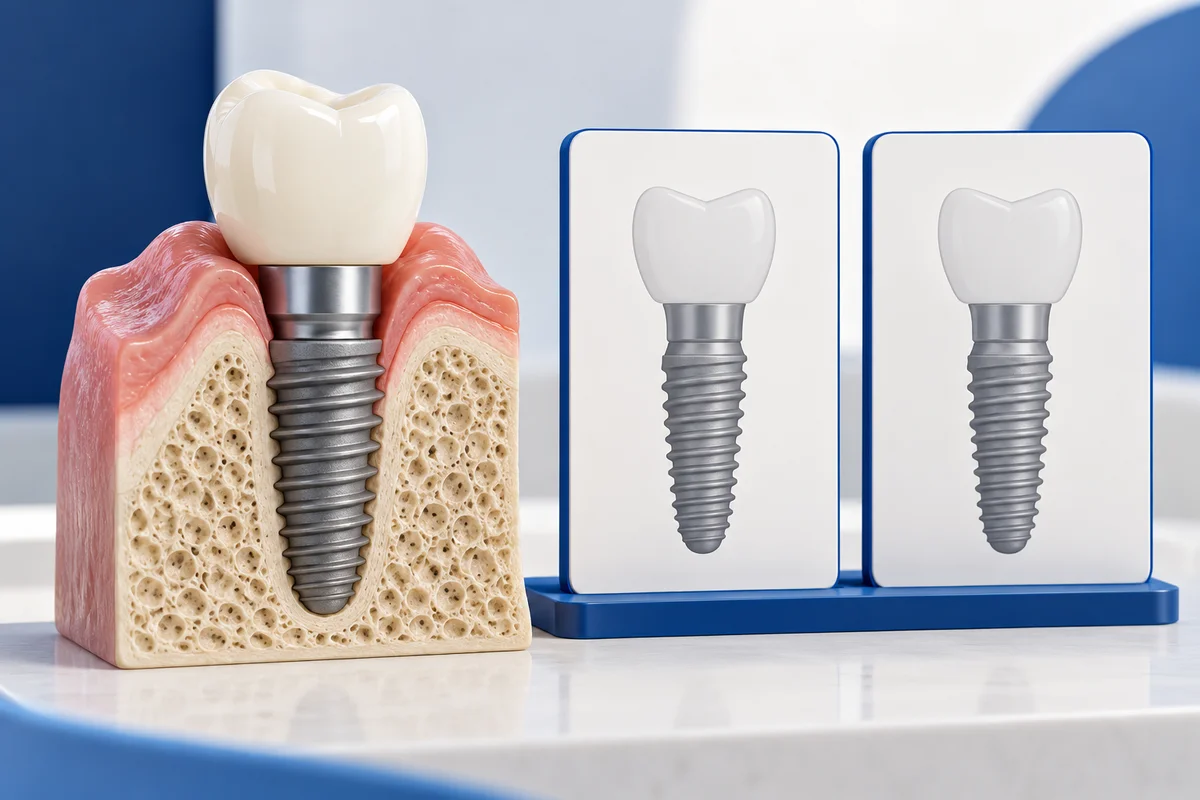
Mucositis can resolve with appropriate care, but untreated inflammation may progress. Gum colour or a photograph cannot establish bone loss. Ask which implant is affected and what the examination shows.
Changes to report
Bleeding when cleaning, swollen gums, bad breath or taste, and a loose implant or replacement tooth need prompt dental advice. Problems can develop without obvious symptoms. Keep routine reviews and do not wait for pain or your next trip abroad.
Why earlier records help
The dentist checks bleeding, the gum margin and the space around the implant. Earlier measurements and X-rays help show changes. Further imaging depends on clinical findings. Online pocket-depth thresholds cannot diagnose your condition.
Risk and cleaning access
Previous periodontitis, smoking, diabetes and plaque control are relevant to risk. Tell the team if you cannot reach an area to clean it, or if your health has changed. The restoration’s design may need review as well as your cleaning routine.
Treatment and reassessment
Treatment for mucositis aims to control inflammation and confirm it has settled. Peri-implantitis may need more complex care, including surgery. Ask about the likely outcome, alternatives and reassessment date. Avoid substituting unprescribed mouthwash or leftover antibiotics for an examination. Neither recovery nor implant removal is a foregone conclusion.
Your maintenance visits
Reviews should assess tissue health and how well you can clean. Demonstrate your technique and agree a review interval based on your needs.
- What has changed since the last examination?
- Are any areas still bleeding or hard to clean?
- What needs an earlier appointment?
- Who checks the response to treatment?
Follow-up after treatment abroad
Arrange accessible follow-up and obtain your treatment summary and baseline records. If symptoms develop at home, seek local assessment while informing the treating team. Do not delay care while waiting for a travel or warranty decision.
Read the related guidance
Keep the wider treatment plan in view while comparing these options.
Choose questions to ask.
Select your questions and copy the list, or open it as a WhatsApp draft. You can edit the message before sending.
Your consultation questions
Untick any questions you don’t need.
4 selected · No contact details needed.
Common questions
About this information
Published by Best Smile Turkey, a health-tourism intermediary. Your treating dentist is responsible for assessment, treatment and care.
Use this information to prepare questions for your dentist. An examination is needed to advise on treatment. Photographs, models and previews cannot establish suitability or predict results.
Source checking is not a clinical review. How we use sources and images, or how to report a correction.
Source-check record
These checks cover only the stated claims, not the whole page or your individual care.
- AAP information supports potentially reversible mucositis, and EFP explains possible progression. This does not guarantee recovery, diagnose bone loss from a photograph or determine treatment for an individual. Checked .
- EFP patient information lists bleeding, swelling, altered taste or breath and loosening as changes needing prompt assessment, and notes disease may be hard to detect. This is not a diagnosis or an individual urgency assessment. Checked .
Sources and further reading
- European Federation of Periodontology: peri-implant diseases Patient information on disease around implants, warning signs and seeking assessment.
- European Federation of Periodontology: prevention guideline summary Clinical guidance on baseline records, assessment, individual risk and supportive peri-implant care.
- American Academy of Periodontology: peri-implant diseases Distinguishes mucositis from peri-implantitis and explains why treatment and regular evaluation matter.
- NHS: dental treatments explained An overview of crowns, bridges, veneers, implants and other options.
- General Dental Council: going abroad for dental treatment Questions to ask about the treating provider, follow-up arrangements and concerns.
These resources offer general guidance; their publishers do not endorse Best Smile Turkey or the treating provider. Manufacturer links identify products or records, not independently compared outcomes. NHS funding information concerns UK care, not treatment costs in Turkey.
Ask about this information or report a correction