

On this page
A KEY QUESTION
Have tooth or gum changes assessed, and seek urgent help for infected, embedded or loose jewellery.
Show the dentist how the jewellery sits.
Tell your dentist about tongue or lip jewellery, tooth ornaments and any habit of clicking or biting them. Explain where it catches, rubs or feels different. The examination can include the teeth, gum margins and soft tissues around those contact points.
Jewellery can feel comfortable while repeatedly contacting a tooth or gum.
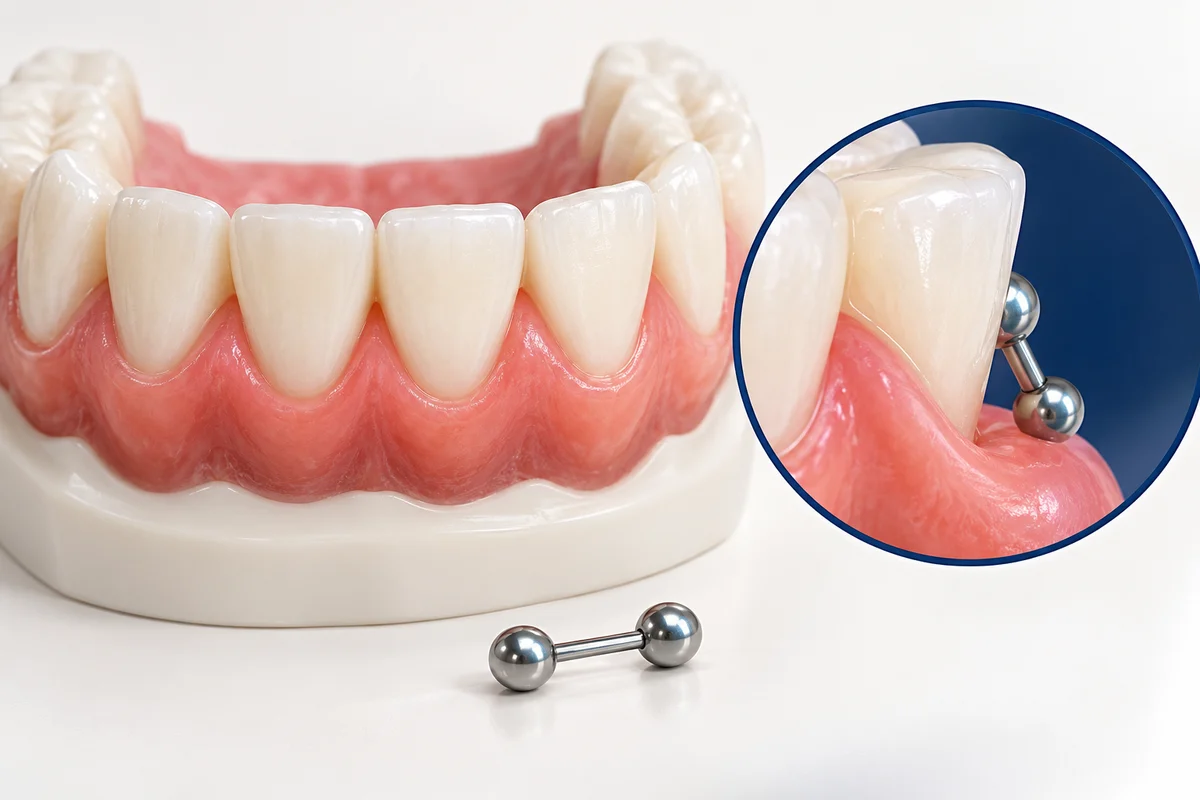
Look beyond an obvious chipped tooth.
Jewellery can damage teeth and fillings, and repeated gum contact can contribute to recession. Plaque can collect around tooth ornaments or their attachments. Soreness, sensitivity or a change in the gum margin deserves examination rather than a product swap chosen online.
Ask what damage, if any, is present and whether reducing the exposure or professional removal would help. No particular material or style can be promised to eliminate dental risk.
Discuss it before dental treatment.
Jewellery may interfere with examination, X-rays or a planned procedure. Tell the team before the appointment and obtain instructions tailored to the care you are having. Do not assume removing it briefly resolves any existing tooth or tissue damage.
Keep cleaning the teeth and between them, and ask how to clean awkward areas without injuring the piercing site. Mouthwash cannot undo mechanical damage. Discuss sports and mouthguard fit with the dental team too.
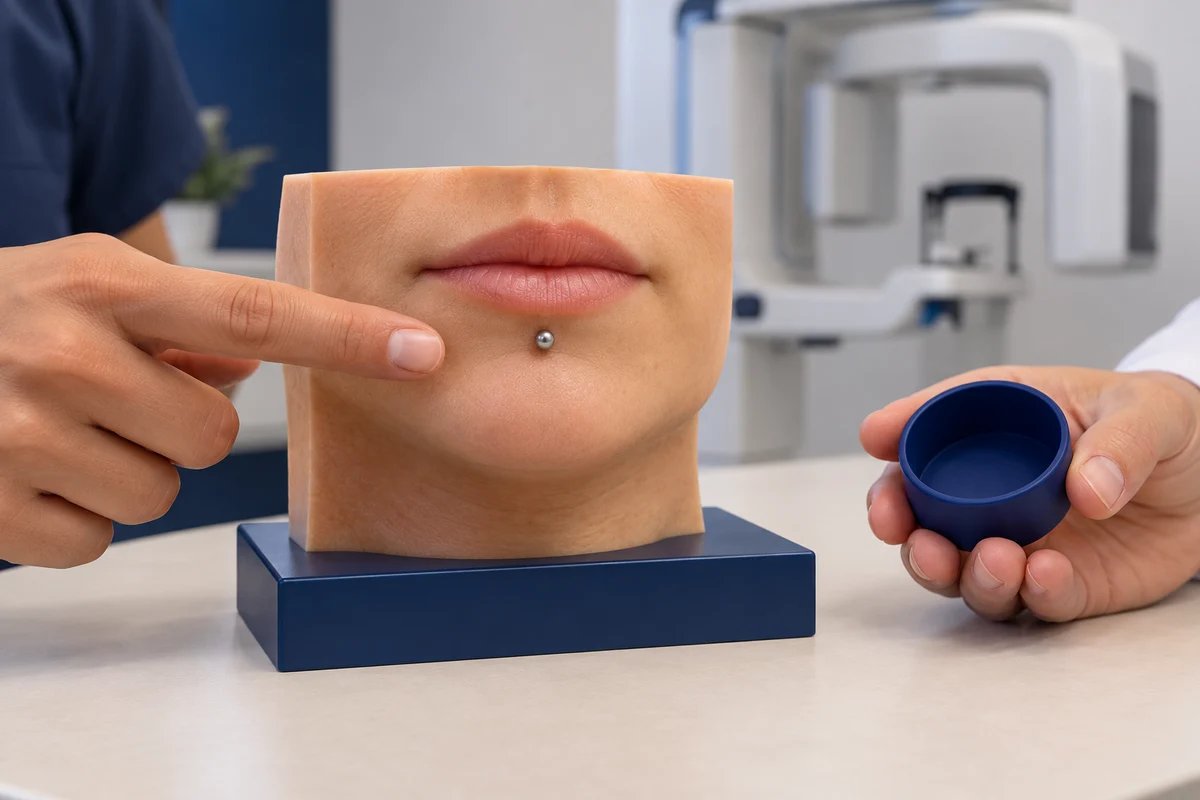
Do not force out an embedded part.
If tissue appears to be growing over jewellery, or a part has become painful, damaged or stuck, get professional advice promptly. Embedded jewellery may require clinical removal. Do not cut the tissue, pull forcibly or use tools to free it.
A missing or loose part raises the possibility of swallowing or inhaling it. Seek urgent medical advice if a component disappears and you are unsure what happened; choking or breathing difficulty requires emergency help.
When swelling or infection needs urgent care.
Contact a dentist or doctor promptly for increasing pain, swelling, pus, fever or chills around a piercing. Do not rely on a routine jewellery adjustment to treat a possible infection.
Call the local emergency service for tongue or mouth swelling affecting breathing or swallowing, or for choking. In the UK, call 999. Use a local clinical service for symptoms, rather than an enquiry coordinator.
Read the related guidance
Keep the wider treatment plan in view while comparing these options.
Questions for a clinical assessment
Seek the local care described above first. When you speak with the clinician, these questions may help you understand the plan.
- Which options and alternatives should I discuss with the dentist?
- Who will carry out my treatment, and how can I check their qualifications and registration?
- Who should I contact after returning home, and how will reviews be arranged?
Common questions
For future treatment planning, after appropriate clinical care: Compare starting prices in GBP, including zirconia crowns from £160. Your dentist confirms suitability and the full written quote.
About this information
Published by Best Smile Turkey, a health-tourism intermediary. Your treating dentist is responsible for assessment, treatment and care.
Use this information to prepare questions for your dentist. An examination is needed to advise on treatment. Photographs, models and previews cannot establish suitability or predict results.
Source checking is not a clinical review. How we use sources and images, or how to report a correction.
Sources and further reading
- American Dental Association: oral piercing and jewellery Evidence overview of tooth, gum, tissue, embedded-jewellery and airway risks.
- American Dental Association MouthHealthy: oral piercings Patient advice on dental damage, interference with care and signs requiring professional help.
- NHS: dental treatments explained An overview of crowns, bridges, veneers, implants and other options.
- General Dental Council: going abroad for dental treatment Questions to ask about the treating provider, follow-up arrangements and concerns.
These resources offer general guidance; their publishers do not endorse Best Smile Turkey or the treating provider. Manufacturer links identify products or records, not independently compared outcomes. NHS funding information concerns UK care, not treatment costs in Turkey.
Ask about this information or report a correction