
On this page
A KEY QUESTION
Use the instructions for your own appliance and ask for review if fit, comfort or the teeth underneath change.
Purpose and material
A guard may protect teeth from grinding damage; some splints are prescribed to help manage jaw symptoms. Know what yours is intended to do and how that will be reviewed.
Record its material, which arch it fits and the wear instructions. A guard, orthodontic retainer and sleep-related breathing device are not interchangeable.
Cleaning your particular guard
Royal Berkshire’s hard-acrylic splint leaflet and United Lincolnshire’s bite-guard leaflet give different cleaning instructions. Do not combine internet routines or apply hard-acrylic advice to every material.
Confirm the suitable brush, product, rinsing and any soaking. Check before using toothpaste, denture tablets, alcohol-containing products or heat. Request replacement instructions if yours are lost.
Safe storage
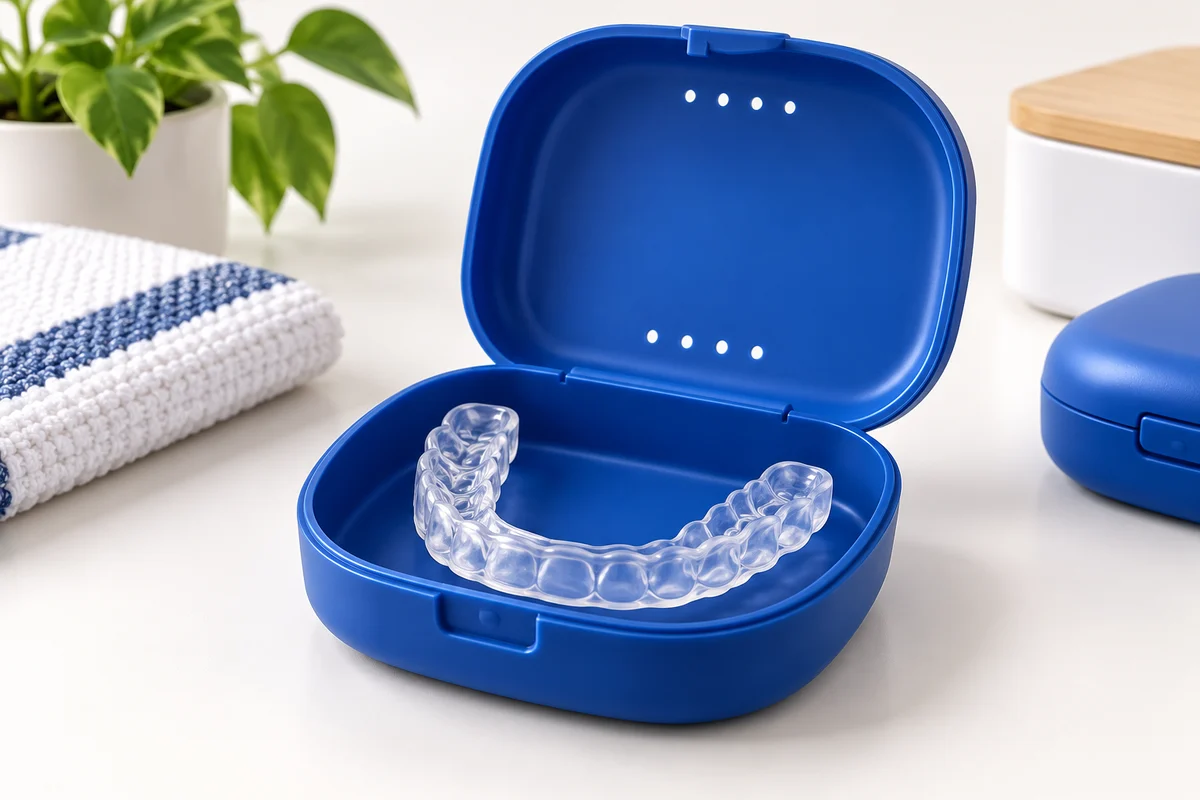
Use the recommended storage arrangement and keep the guard away from pets and children. Ask whether your material needs dry or moist storage.
A labelled case helps prevent accidental disposal or loss when travelling. If you have several appliances, label their cases and check their prescribed use rather than wearing them together without advice.
Changed fit or rubbing
Do not force a guard that will not fit. Contact the dentist about rocking, catching, sharp areas, rubbing or sore gums.
Explain recent tooth treatment or a break in wearing it. Do not heat, trim, file or glue it. Ask whether to pause use while awaiting assessment; that depends on the problem and its prescribed purpose.
Wear, damage and symptoms
Report damage and keep the device and any detached piece for assessment. Visible wear does not prove it remains protective or explain every jaw symptom.
Continuing pain, new sensitivity or a damaged tooth also needs dental attention. A clean-looking guard is not a substitute for examining the teeth and tissues underneath.
After dental treatment
Bring the guard when discussing a filling, crown, bonding, extraction or orthodontic change. It was fitted to a particular arrangement of tooth surfaces and may need reassessment afterwards.
Agree who reviews it and what would justify replacement. Keep its specification if care moves elsewhere. Best Smile Turkey coordinates enquiries; appliance prescriptions and adjustments belong to clinicians.
Read the related guidance
Keep the wider treatment plan in view while comparing these options.
Choose questions to ask.
Select your questions and copy the list, or open it as a WhatsApp draft. You can edit the message before sending.
Your consultation questions
Untick any questions you don’t need.
3 selected · No contact details needed.
Common questions
About this information
Published by Best Smile Turkey, a health-tourism intermediary. Your treating dentist is responsible for assessment, treatment and care.
Use this information to prepare questions for your dentist. An examination is needed to advise on treatment. Photographs, models and previews cannot establish suitability or predict results.
Source checking is not a clinical review. How we use sources and images, or how to report a correction.
Sources and further reading
- Royal Berkshire: Caring for a hard bite-raising appliance Fit, safe storage, damage and material-specific care for a prescribed hard acrylic splint.
- United Lincolnshire Hospitals: bite guard care instructions Reporting a poor fit or rubbing, avoiding force and storing a prescribed guard safely; care instructions apply to the supplied appliance.
- NHS: teeth grinding A dental guard’s protective purpose and assessment of continuing tooth or jaw symptoms.
- NHS: dental treatments explained An overview of crowns, bridges, veneers, implants and other options.
- General Dental Council: going abroad for dental treatment Questions to ask about the treating provider, follow-up arrangements and concerns.
These resources offer general guidance; their publishers do not endorse Best Smile Turkey or the treating provider. Manufacturer links identify products or records, not independently compared outcomes. NHS funding information concerns UK care, not treatment costs in Turkey.
Ask about this information or report a correction