

On this page
A KEY QUESTION
Ask about treatments that do not permanently change your teeth, and agree how improvement will be reviewed.
When to get help
NHS advice is to seek an urgent GP appointment or NHS 111 advice for jaw pain, movement noises, restricted opening or locking, inability to eat or drink, frequent severe headaches, scalp or temple tenderness, or visual problems.
A click alone is not automatically an emergency, but the service needs the full picture. Do not assume a new headache or visual change is dental. Serious facial injury or breathing difficulty needs immediate local emergency care. WhatsApp is not an emergency service.
Describe pain and movement
Explain which side is affected and what happens when you chew, open your mouth or wake up. Mention locking, injury, recent dental work and disrupted sleep. Avoid repeatedly opening widely to demonstrate a click.
More than one possible cause
Muscle tension, joint problems and other factors can contribute. Tell the clinician about clenching, grinding, sleep problems and past treatment. Ask whether the findings suggest a muscle, joint or dental problem, or whether another assessment is needed.
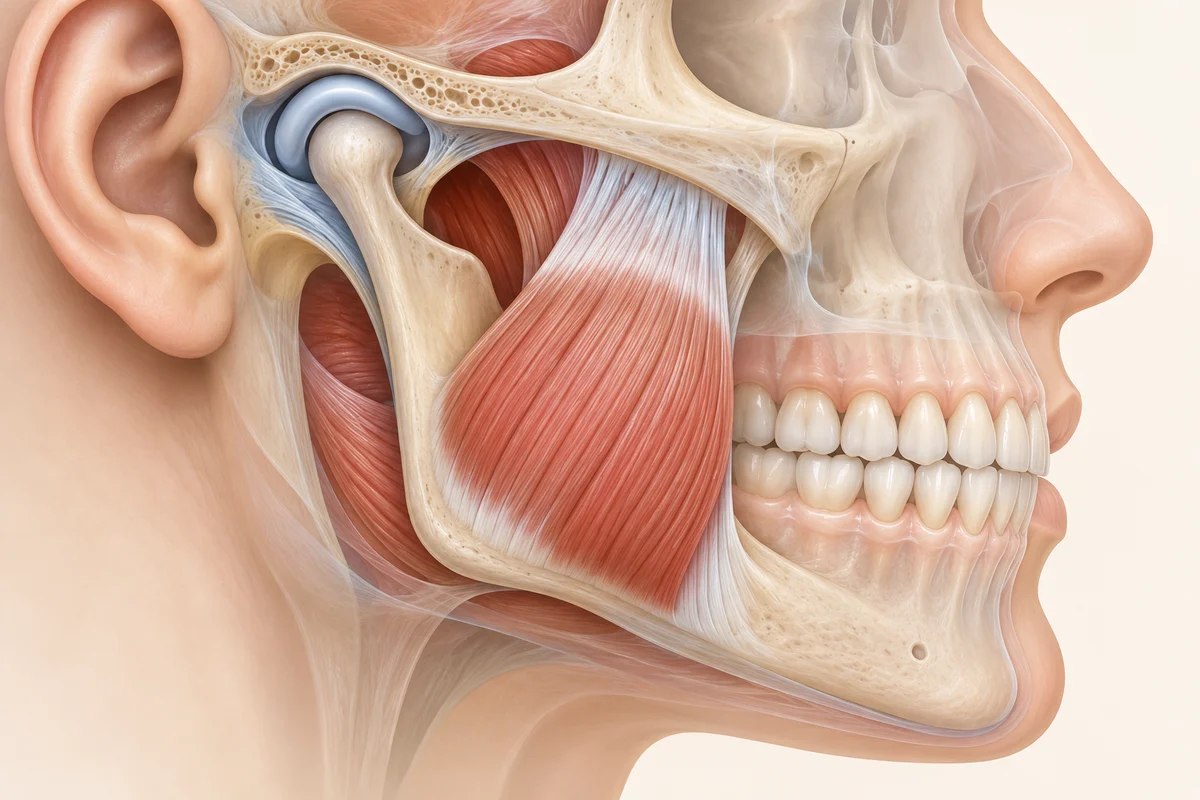
Conservative treatment
Options can include self-care, relaxation, physiotherapy and sometimes a splint. Get individual instructions rather than copying forceful exercises online. If a splint is proposed, ask what it should do, how it should fit and when it will be checked.
Before changing the bite
Newcastle Hospitals says bite adjustments are very rarely needed for TMD unless restorations are independently needed for dental health. Ask why crowns, veneers or tooth reshaping are proposed, and consider a second opinion before irreversible treatment if the explanation is unclear.
What to review
Agree goals such as easier eating, opening and sleep, and when referral may be needed. Before long dental appointments, explain any difficulty keeping your mouth open and ask about breaks. Do not assume a travel package includes specialist TMD care.
Read the related guidance
Keep the wider treatment plan in view while comparing these options.
Questions for a clinical assessment
Seek the local care described above first. When you speak with the clinician, these questions may help you understand the plan.
- Will I receive my treatment records and written care instructions?
- Who should I contact after returning home, and how will reviews be arranged?
Common questions
For future treatment planning, after appropriate clinical care: Compare starting prices in GBP, including zirconia crowns from £160. Your dentist confirms suitability and the full written quote.
About this information
Published by Best Smile Turkey, a health-tourism intermediary. Your treating dentist is responsible for assessment, treatment and care.
Use this information to prepare questions for your dentist. An examination is needed to advise on treatment. Photographs, models and previews cannot establish suitability or predict results.
Source checking is not a clinical review. How we use sources and images, or how to report a correction.
Sources and further reading
- NHS: temporomandibular disorder Jaw symptoms, current urgent-help advice and conservative treatment discussions.
- Newcastle Hospitals NHS: temporomandibular disorders Self-care and clinician-led treatment; bite adjustments are rarely needed for TMD.
- NHS: teeth grinding Assessment of grinding-related damage and the role of a fitted protective appliance.
- NHS: dental treatments explained An overview of crowns, bridges, veneers, implants and other options.
- General Dental Council: going abroad for dental treatment Questions to ask about the treating provider, follow-up arrangements and concerns.
These resources offer general guidance; their publishers do not endorse Best Smile Turkey or the treating provider. Manufacturer links identify products or records, not independently compared outcomes. NHS funding information concerns UK care, not treatment costs in Turkey.
Ask about this information or report a correction