
On this page
A KEY QUESTION
Report possible mouth–sinus symptoms to the treating clinician and obtain an individual follow-up plan.
Why an upper extraction can involve the sinus.
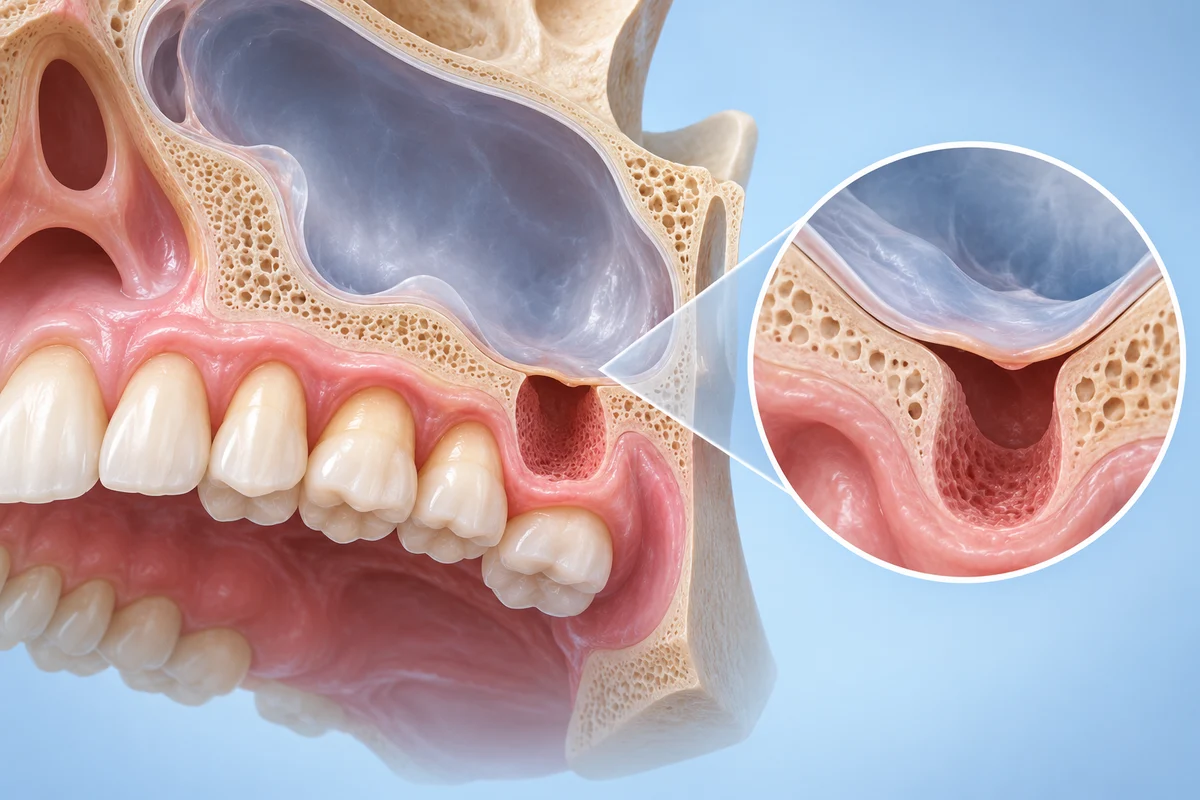
Upper molar and premolar roots can lie close to the maxillary sinus floor. An opening sometimes occurs during extraction or removal of a broken root. A persistent passage may be called an oro-antral fistula.
Have the clinician explain what was found and whether further examination or imaging is needed. This complication is different from a planned sinus lift for an implant.
Report fluid passage or air at the socket.
Contact the treating dentist or oral surgery team promptly if liquid seems to pass towards or through the nose, or you notice air moving across the extraction site. Report one-sided nasal discharge, cheek pressure or a socket that is not healing as expected too.
Describe what happened naturally and when it began. Do not blow your nose deliberately, suck or probe the site to test for an opening. Symptoms cannot establish the diagnosis by themselves.
Get the proposed treatment explained.
The clinician decides whether monitored healing or closure is appropriate. Some openings need surgery to separate the mouth and sinus. Clarify why the approach suits your case, who will provide it and how it will be reviewed.
Do not put household materials into the socket. Another patient’s recovery or a general success figure cannot predict your outcome.
Obtain personal aftercare and travel advice.
Request written instructions for mouth care, eating, prescribed treatment and activities that create pressure around the mouth and nose. Advice after a particular repair may differ from a routine extraction leaflet.
Tell the clinician about planned flights before relying on them. Arrange a review and a route to care if you leave the area. There is no universal safe-to-fly date or healing interval supplied by this guide.
Know when to seek urgent help.
If the original team is unavailable, contact a local dentist or oral surgery service rather than waiting for a return trip. Increasing swelling, fever or feeling unwell needs urgent professional advice.
Severe swelling affecting breathing, swallowing or speaking needs emergency care. In the UK, call 999 or attend A&E; use the local emergency service abroad. A travel coordinator cannot assess the opening or provide clinical clearance.
Read the related guidance
Keep the wider treatment plan in view while comparing these options.
Questions for a clinical assessment
Seek the local care described above first. When you speak with the clinician, these questions may help you understand the plan.
- Who should I contact after returning home, and how will reviews be arranged?
- How many visits are expected, and what could change the timetable?
- Will I receive my treatment records and written care instructions?
- What should I confirm about accommodation, transfers and travel before booking?
Common questions
For future treatment planning, after appropriate clinical care: Compare starting prices in GBP, including zirconia crowns from £160. Your dentist confirms suitability and the full written quote.
About this information
Published by Best Smile Turkey, a health-tourism intermediary. Your treating dentist is responsible for assessment, treatment and care.
Use this information to prepare questions for your dentist. An examination is needed to advise on treatment. Photographs, models and previews cannot establish suitability or predict results.
Source checking is not a clinical review. How we use sources and images, or how to report a correction.
Source-check record
These checks cover only the stated claims, not the whole page or your individual care.
- Leicester explains upper back-tooth roots near the sinus, extraction-related openings and possible fistula formation. This does not diagnose a patient’s socket, establish imaging needs or assess a planned sinus lift. Checked .
- Leicester lists fluid passage, air movement, poor healing and one-sided sinus symptoms. This checks the reported symptom examples, not a diagnosis, a complete symptom list or a home test. Checked .
- Leicester describes possible natural closure or surgical repair of a mouth–sinus opening. This supports clinician assessment, not self-selection by socket size, a success guarantee or an individual treatment recommendation. Checked .
Sources and further reading
- University Hospitals of Leicester: oro-antral communication Patient leaflet on the mouth–sinus connection, symptoms and clinical management.
- Calderdale and Huddersfield NHS: oro-antral communication Individual precautions and contacting the surgical team for review after suspected symptoms.
- NHS: dental abscess and emergency symptoms Escalation for severe mouth or facial swelling affecting breathing, swallowing or speaking; these signs do not diagnose the cause.
- NHS: dental treatments explained An overview of crowns, bridges, veneers, implants and other options.
- General Dental Council: going abroad for dental treatment Questions to ask about the treating provider, follow-up arrangements and concerns.
These resources offer general guidance; their publishers do not endorse Best Smile Turkey or the treating provider. Manufacturer links identify products or records, not independently compared outcomes. NHS funding information concerns UK care, not treatment costs in Turkey.
Ask about this information or report a correction