
On this page
A KEY QUESTION
Get the reason for extraction, the likely approach and your aftercare plan before agreeing.
Why remove this tooth?
The dentist should identify the tooth and explain the finding behind the recommendation. Could a filling, root canal treatment or another repair preserve it? If preservation is unlikely to work, you should understand why.
Replacing the tooth is a separate decision. An extraction does not commit you to an implant; discuss the consequences of leaving a gap and the reasonable alternatives.
When a simple extraction is possible
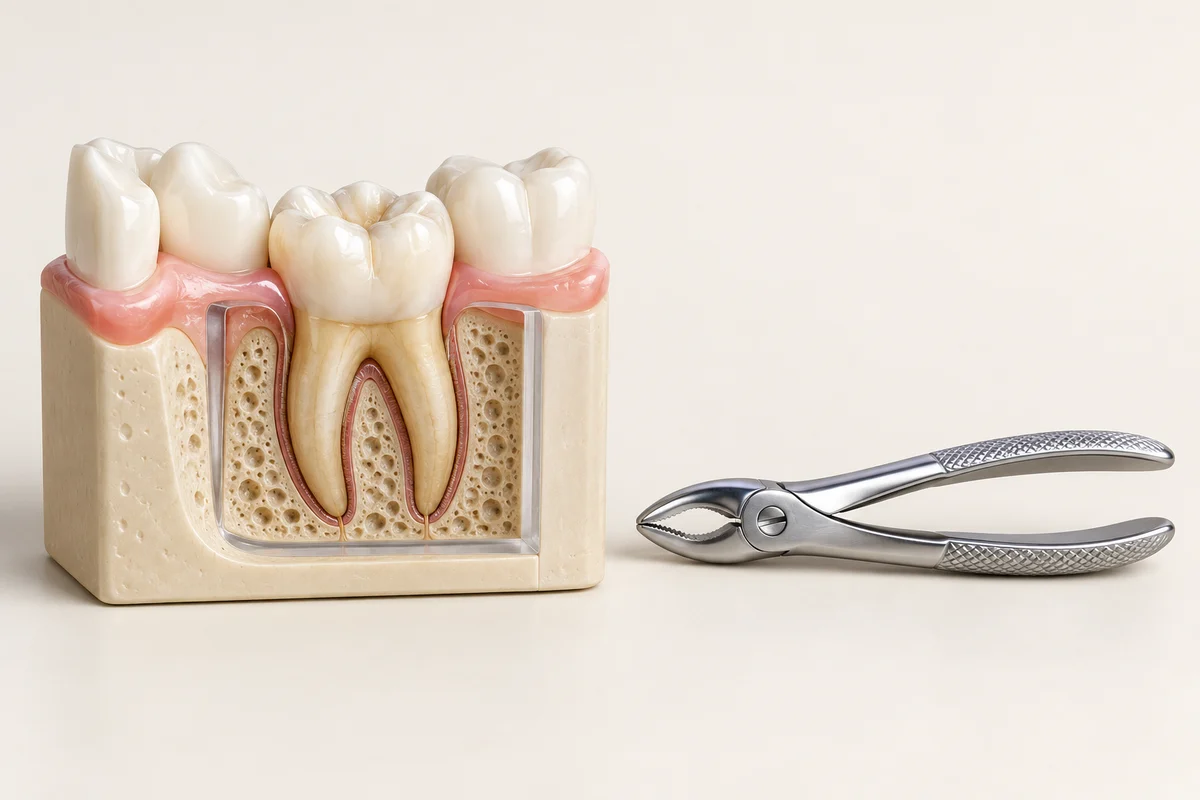
Many teeth can be loosened and removed using forceps. “Simple” describes the approach, not the absence of risk. Examination and any necessary X-rays help the dentist assess the tooth and roots; a photograph of the visible crown cannot show everything.
What surgical access involves
A tooth broken below the gum, a retained root or a difficult root shape may need more access. The dentist may lift the gum, remove some bone or divide the tooth before removing it. Stitches may follow.
Find out whether the approach could change during treatment, who would perform it and how referral or extra charges would be handled.
Anaesthetic and individual risks
Local anaesthetic is commonly used for either approach. Sedation needs a separate assessment and does not automatically follow from the word surgical. Agree a signal for discomfort.
Risks involving nearby teeth, nerves or the sinus depend on the site. Share your health and medicine history; do not change prescribed medicines yourself.
Aftercare and getting help
Follow the treating team’s written eating, cleaning, bleeding and stitch instructions. Medicine advice and return to work, exercise or travel should fit your procedure.
Worsening pain, increasing swelling, fever or persistent bleeding needs prompt clinical advice. Breathing or swallowing difficulty, major mouth or neck swelling, or heavy uncontrolled bleeding needs immediate local emergency care. Do not wait for a coordinator or a flight.
Before you leave
Keep a record of the tooth removed, any additional work, the review arrangements and the clinical contact. Find out whether stitches need removal.
Best Smile Turkey is an intermediary. The treating provider explains the procedure, obtains consent and supplies clinical aftercare. Its written quotation should cover any agreed change in scope.
Read the related guidance
Keep the wider treatment plan in view while comparing these options.
Choose questions to ask.
Select your questions and copy the list, or open it as a WhatsApp draft. You can edit the message before sending.
Your consultation questions
Untick any questions you don’t need.
5 selected · No contact details needed.
Common questions
About this information
Published by Best Smile Turkey, a health-tourism intermediary. Your treating dentist is responsible for assessment, treatment and care.
Use this information to prepare questions for your dentist. An examination is needed to advise on treatment. Photographs, models and previews cannot establish suitability or predict results.
Source checking is not a clinical review. How we use sources and images, or how to report a correction.
Sources and further reading
- Newcastle Hospitals NHS: surgical removal of teeth Reasons for surgical access, anaesthesia, stitches and procedure-specific risks.
- Guy’s and St Thomas’ NHS: dental surgery and recovery Recovery, wound care and when postoperative concerns need assessment.
- General Dental Council: obtaining valid consent UK professional standards on options, guarantees, ongoing consent and declining treatment.
- NHS: dental treatments explained An overview of crowns, bridges, veneers, implants and other options.
- General Dental Council: going abroad for dental treatment Questions to ask about the treating provider, follow-up arrangements and concerns.
These resources offer general guidance; their publishers do not endorse Best Smile Turkey or the treating provider. Manufacturer links identify products or records, not independently compared outcomes. NHS funding information concerns UK care, not treatment costs in Turkey.
Ask about this information or report a correction