

On this page
A KEY QUESTION
Ask what was measured, over what period and with which repairs included before comparing longevity claims.
Define the claimed result
Request the original source and its definition of survival or success. Was the restoration still present, or had it needed no intervention? Those are different outcomes. Leave an unexplained headline percentage out of your comparison until you know what was measured.
Identify which part was followed
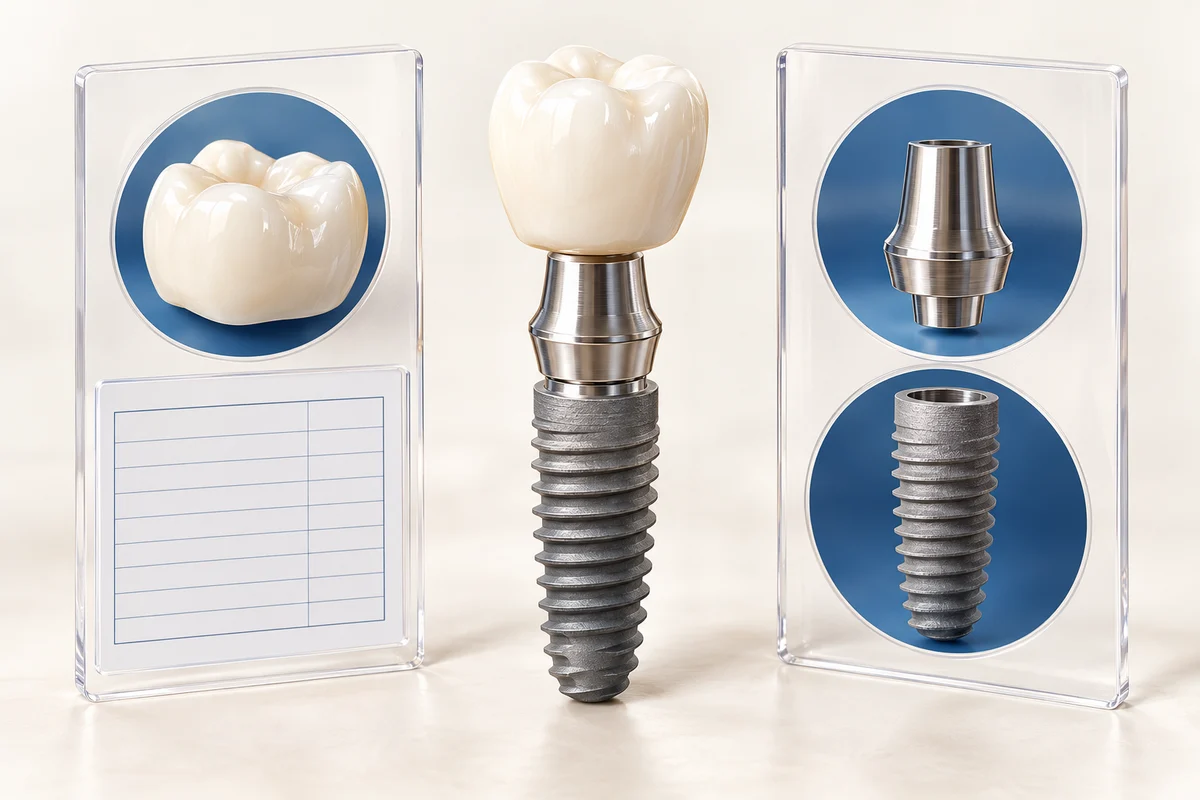
An implant body, connector and crown are separate components. Evidence about an implant remaining in bone does not establish that its crown needed no repair. Likewise, distinguish a crown from the natural tooth beneath it. Label each claim with the part it concerns.
Read the study context
Look for the number of people or restorations, the treatment studied and the actual follow-up period. Were all participants followed that long, and how was missing follow-up handled? A long-established practice or material does not mean every result was observed for the same duration.
Count maintenance and repairs
Find out which reviews and additional procedures contributed to the reported result. FDI supports considering repair of suitable defective restorations to preserve tooth tissue. A repair is not automatically evidence of poor treatment; the dentist needs to assess the fault and its cause.
Read the warranty separately
A warranty describes an offer and conditions, rather than clinical longevity. Establish covered parts, exclusions and maintenance requirements. For overseas work, clarify who examines concerns and whether repairs, assessment, travel or accommodation attract charges. “Lifetime” alone does not answer these questions.
Discuss your own prognosis
Your dentist can explain relevant factors in oral health, bite, habits and cleaning access. The FDA notes that overall health influences implant outcomes. Plan reviews and future costs. Do not replace functioning work solely because an online estimate has elapsed, or ignore symptoms because it is relatively new.
Read the related guidance
Keep the wider treatment plan in view while comparing these options.
Choose questions to ask.
Select your questions and copy the list, or open it as a WhatsApp draft. You can edit the message before sending.
Your consultation questions
Untick any questions you don’t need.
4 selected · No contact details needed.
Common questions
About this information
Published by Best Smile Turkey, a health-tourism intermediary. Your treating dentist is responsible for assessment, treatment and care.
Use this information to prepare questions for your dentist. An examination is needed to advise on treatment. Photographs, models and previews cannot establish suitability or predict results.
Source checking is not a clinical review. How we use sources and images, or how to report a correction.
Source-check record
These checks cover only the stated claims, not the whole page or your individual care.
Sources and further reading
- Jung et al. (2012): implant-supported single crowns — systematic review Abstract: implant and crown survival are assessed separately from biological, technical and aesthetic complications. Group estimates are not individual predictions; the full paper was not reviewed.
- FDA: dental implants, what you should know Implant components, long-term risks, professional reviews and reporting pain or movement.
- FDI World Dental Federation: repair of restorations Patient- and tooth-specific assessment and the role of repair in preserving existing tooth structure.
- NHS: dental treatments explained An overview of crowns, bridges, veneers, implants and other options.
- General Dental Council: going abroad for dental treatment Questions to ask about the treating provider, follow-up arrangements and concerns.
These resources offer general guidance; their publishers do not endorse Best Smile Turkey or the treating provider. Manufacturer links identify products or records, not independently compared outcomes. NHS funding information concerns UK care, not treatment costs in Turkey.
Ask about this information or report a correction