

On this page
A KEY QUESTION
Ask which stages are guided, how the guide’s fit will be checked and what backup approach has been discussed.
What a static guide does
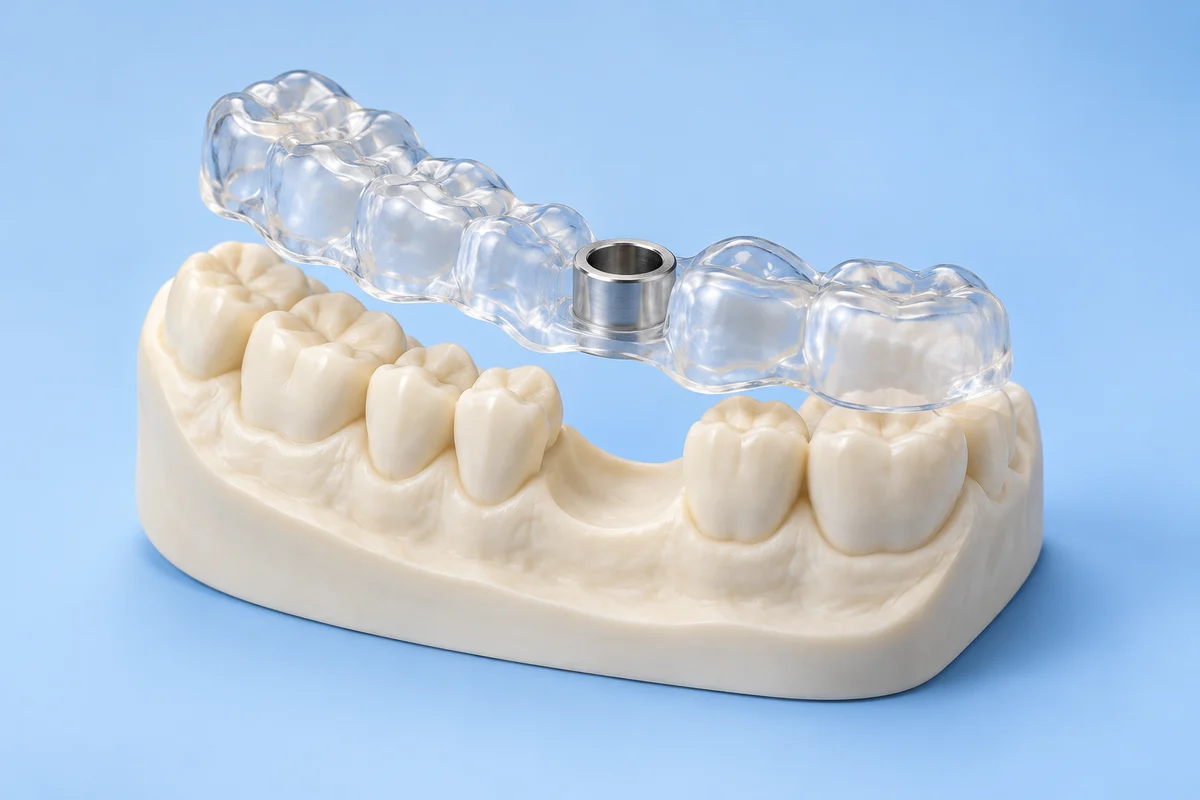
A guide follows a pre-planned route. It is more than a scan displayed on a screen, and “digital” does not necessarily mean a template will be used.
Find out which stages are guided: preparing the implant site, placing the implant, or both. Quotations may use the same label for different workflows.
Records behind the plan
CBCT provides three-dimensional jaw information. Surface records and the intended replacement teeth contribute other planning details. These records must fit together to produce a useful plan.
Ask who checks them and whether changes to teeth or temporary restorations would require new records. A digital model cannot guarantee what will be encountered during surgery.
Support and fit
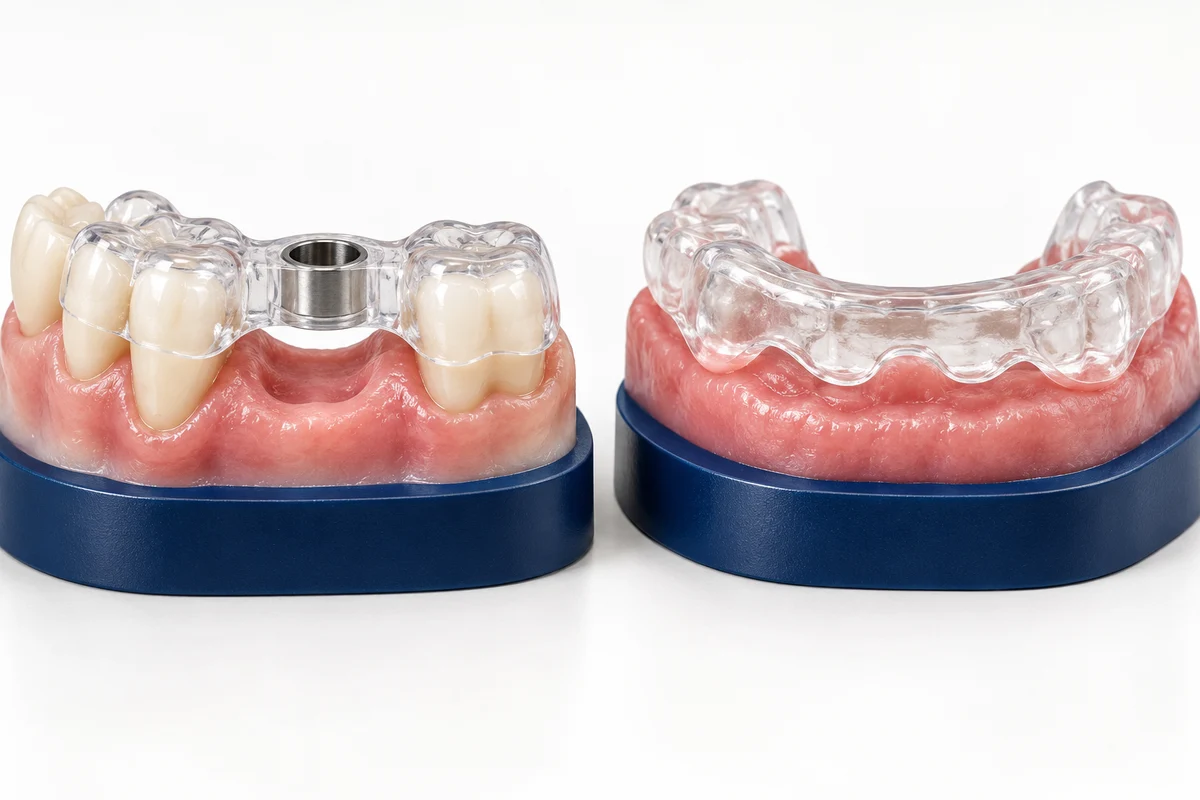
Guides can rest on different structures, including teeth or tissues over a toothless ridge. Seating and stability matter because the template connects the computer plan to the mouth.
The clinician should explain how fit is checked and whether additional support is needed. Mention difficulty opening your mouth because access can affect the proposed approach.
Where inaccuracies arise
The ITI-hosted review describes errors arising at separate stages and accumulating through the workflow. Scanning, matching records, manufacture and clinical use all need checking.
These older sources explain the principles; they do not provide a current accuracy guarantee for a clinic. Discuss the checks and anatomical safeguards in your actual plan.
If the guide cannot be used
A static template cannot independently adapt to an unexpected finding. An unsuitable fit or access problem may mean stopping, changing approach or arranging further planning. Discuss that possibility before surgery.
Guidance does not establish that surgery will be robotic, flapless or painless, or that teeth can be fitted immediately. Anaesthetic, surgical and loading plans need their own explanations.
Your workflow record
Keep a note of the records, intended restoration, guide’s role and review points. Establish whether guide manufacture adds a stage and what changes would require it to be reconsidered.
Ask the treating provider whether guided surgery is available, which equipment and records it requires, and who would plan and carry out the procedure.
Read the related guidance
Keep the wider treatment plan in view while comparing these options.
Choose questions to ask.
Select your questions and copy the list, or open it as a WhatsApp draft. You can edit the message before sending.
Your consultation questions
Untick any questions you don’t need.
4 selected · No contact details needed.
Common questions
About this information
Published by Best Smile Turkey, a health-tourism intermediary. Your treating dentist is responsible for assessment, treatment and care.
Use this information to prepare questions for your dentist. An examination is needed to advise on treatment. Photographs, models and previews cannot establish suitability or predict results.
Source checking is not a clinical review. How we use sources and images, or how to report a correction.
Sources and further reading
- ITI: Computer-guided implant surgery Static guide definition, transfer of a virtual plan, deviations and the need for clinical planning.
- ITI-hosted review: Accuracy of static computer-aided implant surgery Cumulative sources of inaccuracy along a digital workflow.
- Guy’s and St Thomas’: dental cone beam CT Three-dimensional imaging of the teeth and jaws; imaging is one part of clinical planning.
- NHS: dental treatments explained An overview of crowns, bridges, veneers, implants and other options.
- General Dental Council: going abroad for dental treatment Questions to ask about the treating provider, follow-up arrangements and concerns.
These resources offer general guidance; their publishers do not endorse Best Smile Turkey or the treating provider. Manufacturer links identify products or records, not independently compared outcomes. NHS funding information concerns UK care, not treatment costs in Turkey.
Ask about this information or report a correction