

On this page
A KEY QUESTION
Ask what the image will show and how it could change your care.
At a glance.
| Compare | Conventional X-rays | CBCT |
|---|---|---|
| View | Two-dimensional | Three-dimensional |
| Use | Selected for the dental concern | When other imaging cannot provide the needed detail |
| Radiation | Depends on the examination | Typically higher; individual justification matters |
General differences to discuss with your dentist. This comparison does not determine which treatment is suitable for you.
Photos are a starting point
Photos show visible concerns but cannot establish root or bone health. X-rays can reveal disease and damage hidden from a visual examination. Treat a photo-based proposal as provisional and ask what needs checking before preparation or extraction.
Ask why the image is needed
Symptoms, oral health, previous treatment and disease risk guide selection. There is no single schedule for everyone; a recent image may not answer a new question.
- What benefit would the image provide?
- Could existing images or another investigation help?
- What remains uncertain if I decline?
Understand CBCT
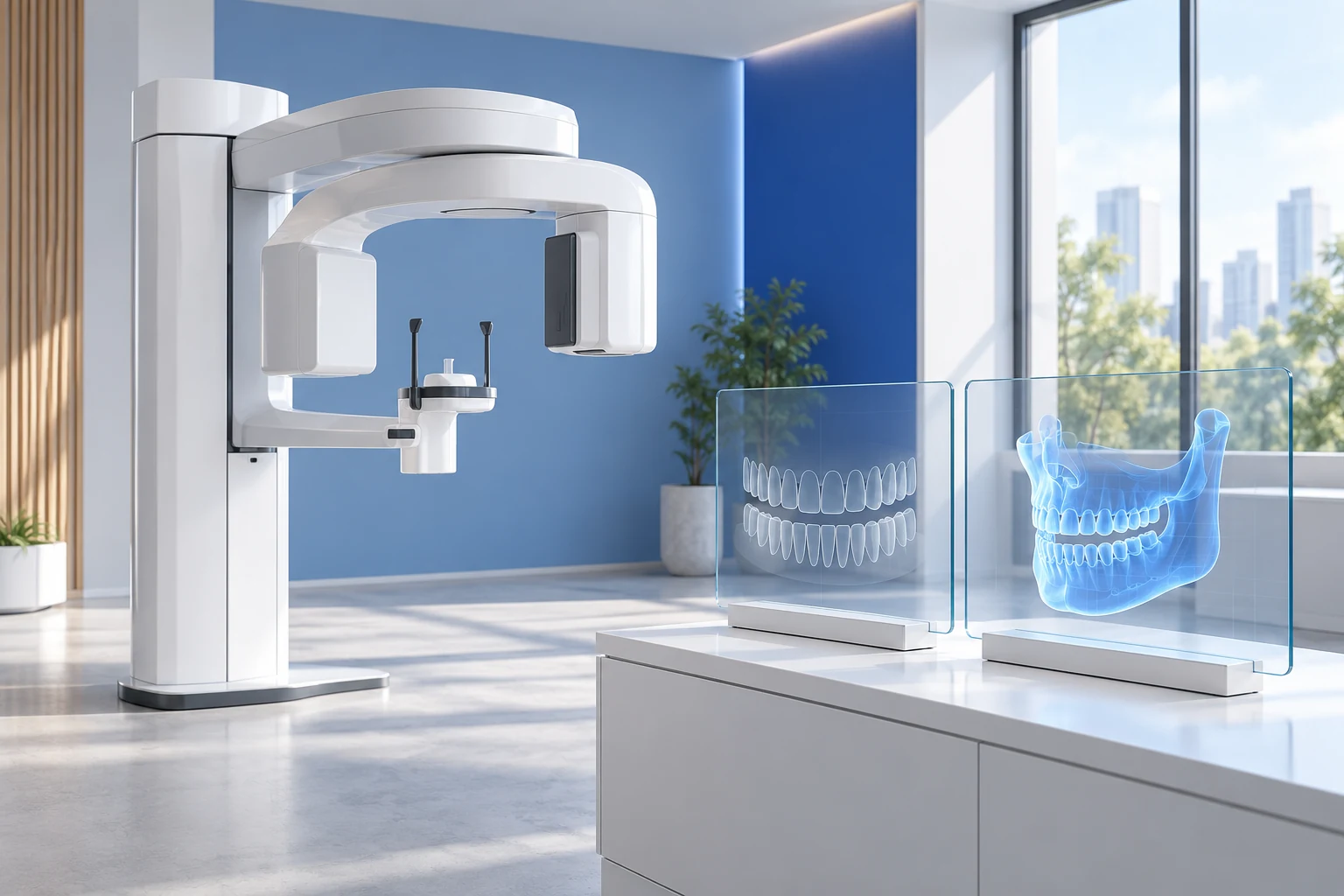
Cone beam computed tomography uses X-rays to show teeth and jaws in three dimensions. It can help with implant planning and selected root canal or other investigations. FDA guidance recommends it when other imaging cannot supply the required information.
Ask why the scan area is needed and whether lower-exposure imaging would suffice. A scan cannot guarantee implant suitability or avoid the need for grafting.
Discuss radiation and pregnancy
Clinically appropriate imaging has benefits that outweigh its small radiation risk; unnecessary exposure should be avoided. Dose varies with equipment, settings and area scanned.
Tell the team if you are or may be pregnant. ADA guidance considers necessary dental X-rays safe during pregnancy. Do not postpone urgent or necessary dental care solely because of pregnancy; discuss the need and timing with your clinician.
Bring relevant records
Request existing images, dates and reports. Use the receiving clinician’s preferred secure format. New images may still be needed if coverage, quality or your condition has changed.
For CBCT, follow the provider’s instructions about removing jewellery and keeping still. Mention anxiety or difficulty standing, sitting or remaining still.
Ask who explains the result
Confirm imaging and reporting charges, who assesses the images and when they will explain them. Request copies. Review any changed treatment, cost or schedule before agreeing.
Best Smile Turkey coordinates enquiries; the treating dental team provides clinical care. Confirm imaging arrangements and available equipment with the treating team.
Read the related guidance
Keep the wider treatment plan in view while comparing these options.
Choose questions to ask.
Select your questions and copy the list, or open it as a WhatsApp draft. You can edit the message before sending.
Your consultation questions
Untick any questions you don’t need.
5 selected · No contact details needed.
Common questions
About this information
Published by Best Smile Turkey, a health-tourism intermediary. Your treating dentist is responsible for assessment, treatment and care.
Use this information to prepare questions for your dentist. An examination is needed to advise on treatment. Photographs, models and previews cannot establish suitability or predict results.
Source checking is not a clinical review. How we use sources and images, or how to report a correction.
Sources and further reading
- American Dental Association: X-rays and radiographs Individual imaging decisions, existing records, radiation reduction and the 2026 patient-selection recommendations.
- US Food and Drug Administration: dental CBCT How CBCT works, its potential uses, radiation considerations and the need for clinical justification.
- American Dental Association: pregnancy Guidance on necessary dental treatment and radiographs during pregnancy.
- Guy’s and St Thomas’: dental cone beam CT scan Patient information on scan preparation, pregnancy disclosure, the examination and reporting; local arrangements vary.
- NHS: dental treatments explained An overview of crowns, bridges, veneers, implants and other options.
- General Dental Council: going abroad for dental treatment Questions to ask about the treating provider, follow-up arrangements and concerns.
These resources offer general guidance; their publishers do not endorse Best Smile Turkey or the treating provider. Manufacturer links identify products or records, not independently compared outcomes. NHS funding information concerns UK care, not treatment costs in Turkey.
Ask about this information or report a correction