

On this page
A KEY QUESTION
Understand the reason for the plan and any additional procedure before agreeing to surgery or final travel arrangements.
The proposed site
Have the clinician point out the implant position and nearby structures. Injury to surrounding tissues, including sinus perforation, is a recognised implant risk. Each site needs its own assessment; available space and the approach may differ across the mouth.
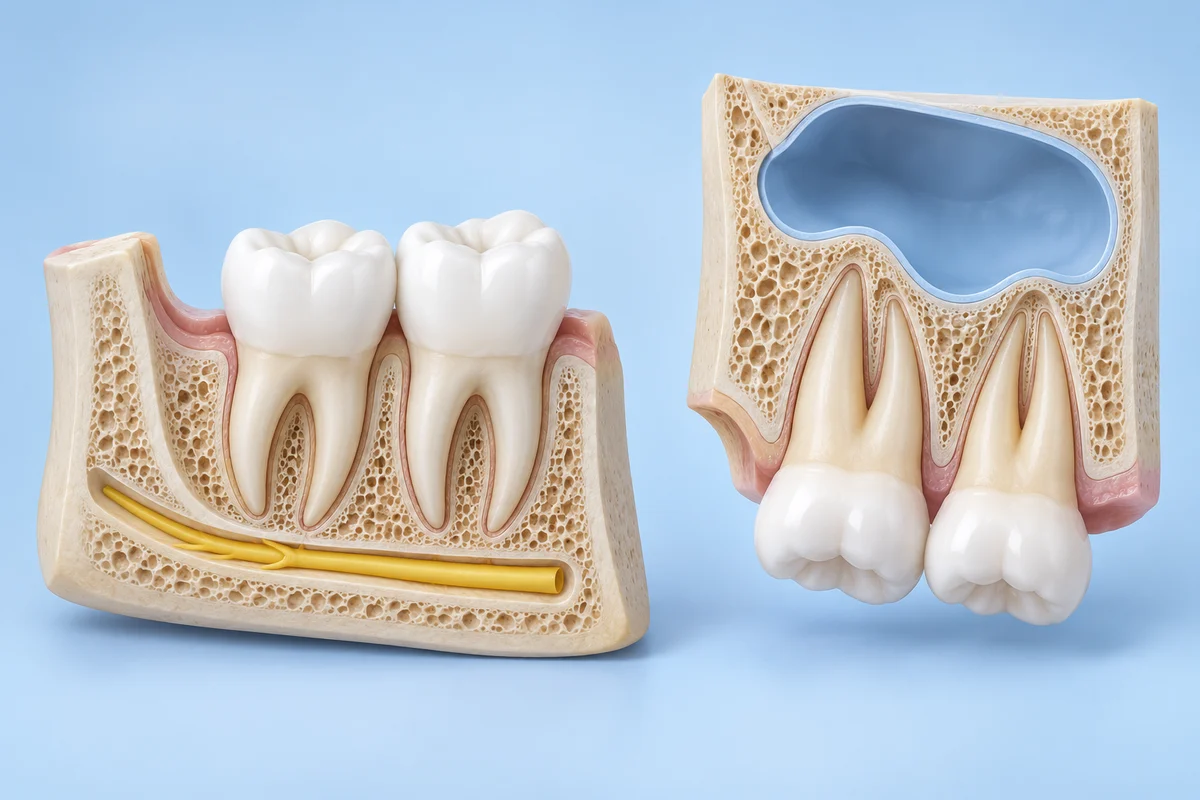
Nerve-related risks
Nerve injury can affect sensation temporarily or permanently. Discuss which area could be affected and how risk is reduced. Mention existing numbness, altered feeling or previous jaw surgery so the starting situation is recorded. Obtain instructions for reporting changes after treatment.
The upper-jaw sinuses
The maxillary sinuses are air spaces near the upper jaw. Bone beneath them can affect plans for upper back teeth. A sinus lift is a separate procedure with its own risks. If recommended, have the reason and alternatives explained.
Why imaging is needed
CBCT gives three-dimensional information about teeth and jaw structures. The clinician still needs to interpret it alongside the examination. Find out what the image must answer and who reports it. Bring existing records; further imaging should have a clinical purpose.
Comparing recommendations
If proposals differ, compare their explanations of the anatomical limits and suitable alternatives. Implant dimensions or brand alone do not explain the choice. Depending on assessment, discussion may include another restoration, further investigation or accepting a space. Suitability requires clinical judgement.
Before travelling
Confirm the responsible clinician, needed imaging and decisions that remain provisional. Establish what happens if examination changes the plan, including any extra procedure. Keep the report and explanation with your records. A website cannot interpret your scan or select implant dimensions.
Read the related guidance
Keep the wider treatment plan in view while comparing these options.
Choose questions to ask.
Select your questions and copy the list, or open it as a WhatsApp draft. You can edit the message before sending.
Your consultation questions
Untick any questions you don’t need.
4 selected · No contact details needed.
Common questions
About this information
Published by Best Smile Turkey, a health-tourism intermediary. Your treating dentist is responsible for assessment, treatment and care.
Use this information to prepare questions for your dentist. An examination is needed to advise on treatment. Photographs, models and previews cannot establish suitability or predict results.
Source checking is not a clinical review. How we use sources and images, or how to report a correction.
Sources and further reading
- FDA: dental implants, what you should know Implant risks, healing, complications and contacting a dentist about looseness or pain.
- Guy’s and St Thomas’: dental cone beam CT What three-dimensional dental imaging adds to jaw assessment and how reports are used.
- Cambridge University Hospitals: sinus lift procedures Upper-jaw sinus anatomy, assessment and the separate decision about sinus augmentation.
- NHS: dental treatments explained An overview of crowns, bridges, veneers, implants and other options.
- General Dental Council: going abroad for dental treatment Questions to ask about the treating provider, follow-up arrangements and concerns.
These resources offer general guidance; their publishers do not endorse Best Smile Turkey or the treating provider. Manufacturer links identify products or records, not independently compared outcomes. NHS funding information concerns UK care, not treatment costs in Turkey.
Ask about this information or report a correction