
On this page
A KEY QUESTION
Use family history to start a conversation about your own findings and a practical prevention plan.
Describe the history without guessing
Explain which relative had gum problems, roughly when these began and whether you know the diagnosis. If all you know is that someone lost teeth, say that. It is useful to distinguish a confirmed history from a family assumption.
Ask whether this information changes any part of your assessment. You do not need to arrive with a complete family medical history or obtain someone else’s private records.
Understand the limits of genetic testing
The American Dental Association says currently marketed genetic tests cannot reliably predict future cavities or severe gum disease. Having an associated marker does not mean disease will develop; daily habits and environmental factors also matter.
If you already have a commercial result, bring the report rather than treating its score as a diagnosis. Ask what, if anything, it changes about care supported by your examination.
Ask what the examination shows now
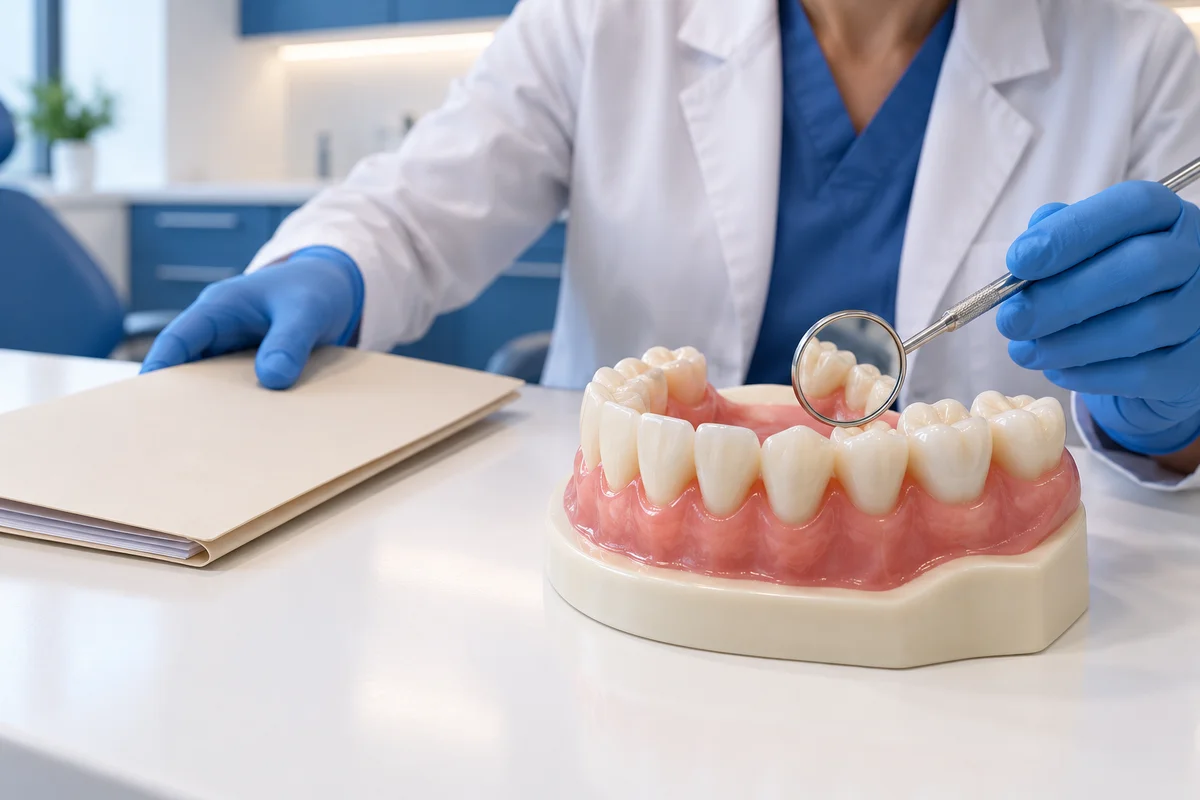
A periodontal assessment considers the gums, plaque, teeth, bite and supporting bone. Gum measurements and appropriate X-rays help the dentist understand current health. Ask which findings need treatment, monitoring or specialist advice.
Book a dental assessment for bleeding, painful or swollen gums. Very sore, swollen gums or teeth becoming loose need an urgent dental appointment. Seek care for a current problem rather than waiting to clarify family history.
Turn risk information into daily care
Brushing and cleaning between teeth help control plaque. Ask for a demonstration suited to your mouth, and discuss smoking if relevant. The useful outcome is a routine you can manage, with clinical reviews to assess its effect.
Write down the next step and who arranges it. If specialist care is proposed, ask what question the referral should answer. Best Smile Turkey can coordinate enquiries; clinical assessment and prevention advice belong with the treating dentist.
Read the related guidance
Keep the wider treatment plan in view while comparing these options.
Questions for a clinical assessment
Seek the local care described above first. When you speak with the clinician, these questions may help you understand the plan.
- Which options and alternatives should I discuss with the dentist?
- Will I receive my treatment records and written care instructions?
- Who should I contact after returning home, and how will reviews be arranged?
Common questions
For future treatment planning, after appropriate clinical care: Compare starting prices in GBP, including zirconia crowns from £160. Your dentist confirms suitability and the full written quote.
About this information
Published by Best Smile Turkey, a health-tourism intermediary. Your treating dentist is responsible for assessment, treatment and care.
Use this information to prepare questions for your dentist. An examination is needed to advise on treatment. Photographs, models and previews cannot establish suitability or predict results.
Source checking is not a clinical review. How we use sources and images, or how to report a correction.
Sources and further reading
- American Dental Association: genetics and oral health Limits of predictive genetic tests and the role of examination and everyday risk factors.
- American Academy of Periodontology: prevention Genetic and other risk factors, plaque control and periodontal assessment.
- NHS: gum disease Symptoms requiring dental assessment and signs needing an urgent dental appointment.
- NHS: dental treatments explained An overview of crowns, bridges, veneers, implants and other options.
- General Dental Council: going abroad for dental treatment Questions to ask about the treating provider, follow-up arrangements and concerns.
These resources offer general guidance; their publishers do not endorse Best Smile Turkey or the treating provider. Manufacturer links identify products or records, not independently compared outcomes. NHS funding information concerns UK care, not treatment costs in Turkey.
Ask about this information or report a correction