

On this page
A KEY QUESTION
Get swelling assessed where you are. Do not wait for a flight, quotation or online reply.
Emergency warning signs
Call 999 or go to A&E for difficulty breathing, speaking or swallowing; a swollen or painful eye or sudden vision problems; substantial mouth swelling; or difficulty opening your mouth. Do not drive yourself to A&E. Outside the UK, use local emergency services.
Without these signs, a suspected abscess still needs an urgent dental appointment. In England, contact NHS 111 if you cannot reach a dentist. WhatsApp is not an emergency service.
What is an abscess?
An abscess is a collection of pus caused by infection. Pain, fever, swelling or a bad taste may occur, but these symptoms cannot confirm the cause. Tell the dentist what you have noticed, even if you are unsure what to call it.
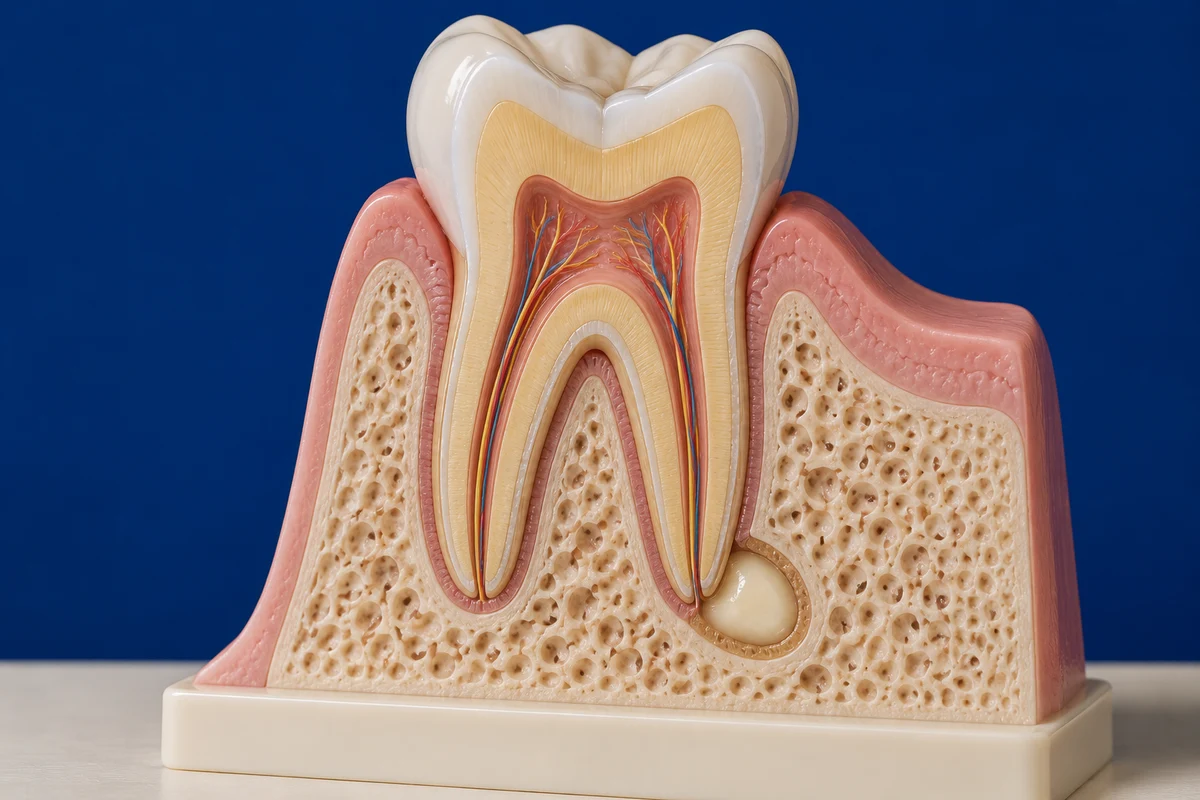
What to tell the practice
Explain when the swelling began, how quickly it has changed and whether you can eat, drink and open your mouth. Mention feeling unwell or any eye symptoms immediately. Update the service if things worsen after earlier advice.
Treatment depends on the cause
The dentist may drain the abscess and treat the tooth with root canal treatment or extraction. Antibiotics are sometimes needed. Do not use leftover antibiotics or someone else’s prescription. Bring details of anything already prescribed.
Before the appointment
Bring medicine, allergy and health information, plus any dental records readily available. Do not delay urgent assessment while gathering them.
- Which area was treated before, and when?
- Has swelling changed since earlier advice?
- Who should you contact if it gets worse?
Follow-up matters
Ask whether the first visit completes treatment and get written follow-up instructions. Check the out-of-hours contact. If you are away from home, request a treatment summary for your usual dentist.
Read the related guidance
Keep the wider treatment plan in view while comparing these options.
Questions for a clinical assessment
Seek the local care described above first. When you speak with the clinician, these questions may help you understand the plan.
- Will I receive my treatment records and written care instructions?
- Who should I contact after returning home, and how will reviews be arranged?
Common questions
For future treatment planning, after appropriate clinical care: Compare starting prices in GBP, including zirconia crowns from £160. Your dentist confirms suitability and the full written quote.
About this information
Published by Best Smile Turkey, a health-tourism intermediary. Your treating dentist is responsible for assessment, treatment and care.
Use this information to prepare questions for your dentist. An examination is needed to advise on treatment. Photographs, models and previews cannot establish suitability or predict results.
Source checking is not a clinical review. How we use sources and images, or how to report a correction.
Source-check record
These checks cover only the stated claims, not the whole page or your individual care.
- NHS dental-abscess guidance on urgent dental assessment, emergency signs involving breathing, speaking, swallowing, the eye, substantial mouth swelling or restricted opening, and not driving to A&E. The UK service numbers do not apply outside the UK. This is not a personal triage assessment. Checked .
- NHS definition of a dental abscess as an infection-related collection of pus and its listed symptoms. This check does not establish whether a particular swelling, fever, pain or altered taste is an abscess. Checked .
Sources and further reading
- NHS: dental abscess Urgent assessment of suspected abscesses and emergency signs involving swelling, eyes and breathing.
- NHS: emergency and urgent dental care Current urgent dental access routes, injury priorities and emergency warning signs.
- NHS: toothache When toothache needs dental review and signs requiring emergency assessment.
- NHS: dental treatments explained An overview of crowns, bridges, veneers, implants and other options.
- General Dental Council: going abroad for dental treatment Questions to ask about the treating provider, follow-up arrangements and concerns.
These resources offer general guidance; their publishers do not endorse Best Smile Turkey or the treating provider. Manufacturer links identify products or records, not independently compared outcomes. NHS funding information concerns UK care, not treatment costs in Turkey.
Ask about this information or report a correction