

On this page
A KEY QUESTION
Find out what the proposed work will improve and what will stay the same.
At a glance.
| Approach | Main purpose | Ask |
|---|---|---|
| Adjustment or repair | Local fit issue or damage | Is there wider wear? |
| Reline | Fitting surface | Are teeth and bite still suitable? |
| Rebase | Base material | What is kept? |
| New denture | A new appliance | What needs redesigning? |
General differences to discuss with your dentist. This comparison does not determine which treatment is suitable for you.
Describe the change
Say when movement or soreness began and whether it followed a break, extraction or repair. Mention bite changes and increasing adhesive use. Bring previous repair or lining details. Changes in gums, bone or supporting teeth can affect fit even when the denture looks unchanged.
What a reline changes
Relining renews the surface against the soft tissues. It may help when their shape has changed. Ask whether the material is temporary or longer-term and whether the existing teeth and bite remain suitable; a reline does not correct every problem.
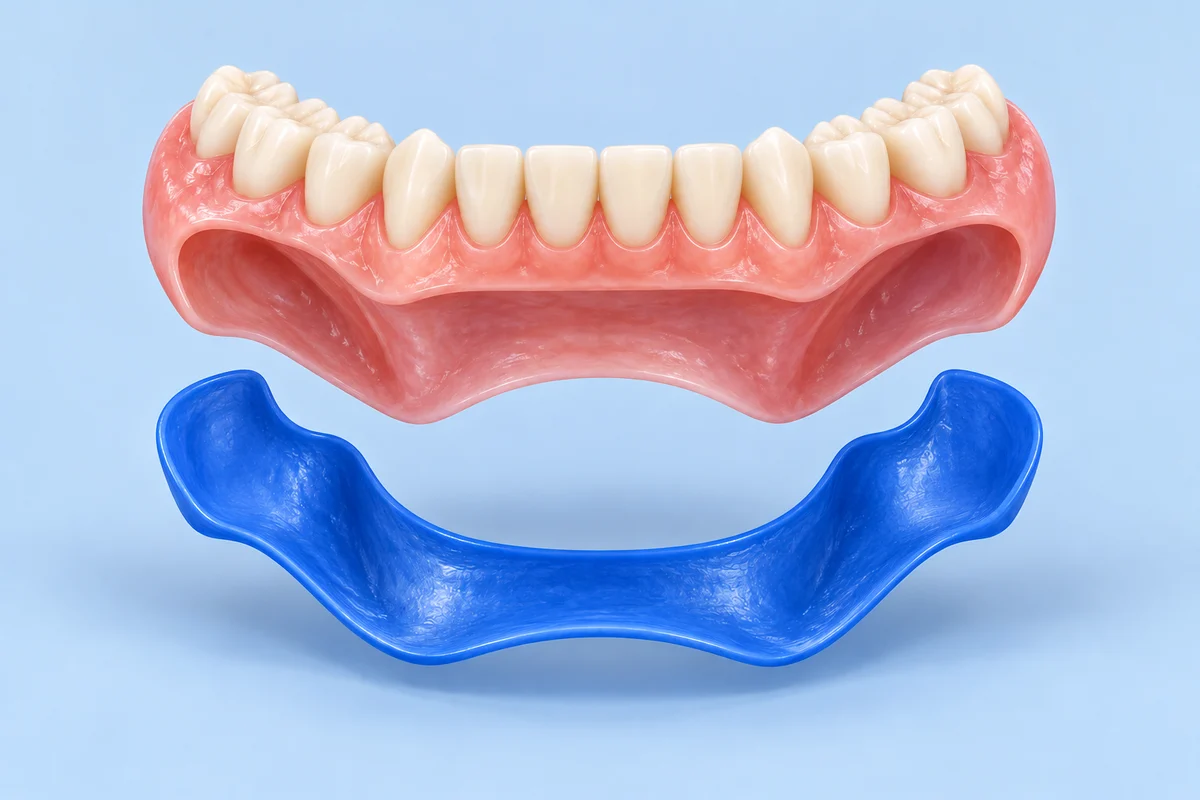
Rebase or replacement?
A rebase retains parts of the existing denture while replacing its base. Ask exactly what is kept. Worn teeth, damage, instability or changes in supporting teeth may favour a new appliance, but these findings need assessment rather than automatic replacement.
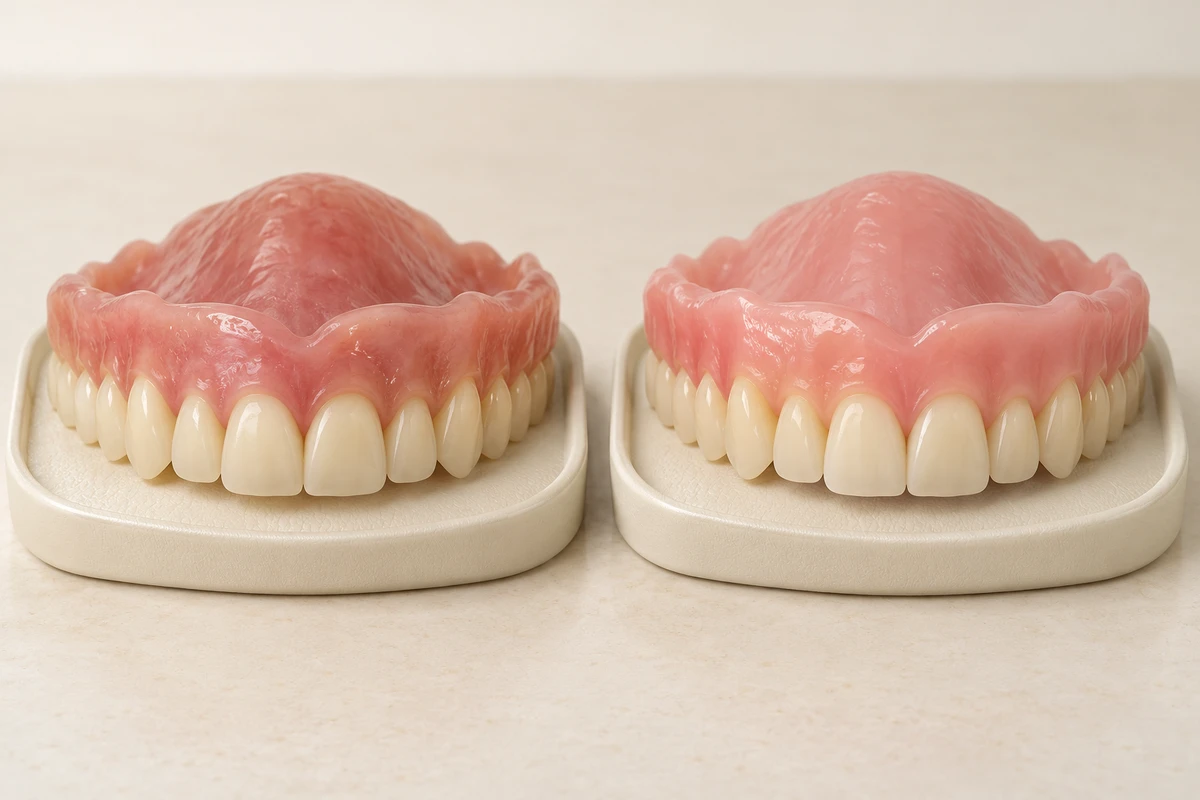
Healing and new materials
Mention recent extractions and whether the denture was fitted immediately. Clarify whether the work helps during healing or is a longer-term solution. New linings may need different brushing, soaking and storage instructions.
Avoid home alterations
Adhesive does not remedy an ill-fitting denture. Do not file it, bend parts, use household glue or apply home relining material without professional advice. Keep broken pieces safely and ask whether the appliance should be worn while waiting, especially if anything is sharp or loose.
Practical arrangements
Confirm availability and whether local care would be more practical than travel.
- Why is this option recommended?
- How long might laboratory work leave me without the denture?
- Which fittings and reviews are included?
- How will cleaning instructions change?
- Who handles unresolved problems and extra costs?
Read the related guidance
Keep the wider treatment plan in view while comparing these options.
Choose questions to ask.
Select your questions and copy the list, or open it as a WhatsApp draft. You can edit the message before sending.
Your consultation questions
Untick any questions you don’t need.
5 selected · No contact details needed.
Common questions
About this information
Published by Best Smile Turkey, a health-tourism intermediary. Your treating dentist is responsible for assessment, treatment and care.
Use this information to prepare questions for your dentist. An examination is needed to advise on treatment. Photographs, models and previews cannot establish suitability or predict results.
Source checking is not a clinical review. How we use sources and images, or how to report a correction.
Sources and further reading
- American Dental Association: glossary of dental terms Definitions distinguishing denture relining from replacement of base material.
- Cambridge University Hospitals: denture care Reasons for changing fit and professional relining, rebasing or replacement.
- American Dental Association: denture care and maintenance Signs requiring assessment for replacement and limits of denture adhesive.
- NHS: dental treatments explained An overview of crowns, bridges, veneers, implants and other options.
- General Dental Council: going abroad for dental treatment Questions to ask about the treating provider, follow-up arrangements and concerns.
These resources offer general guidance; their publishers do not endorse Best Smile Turkey or the treating provider. Manufacturer links identify products or records, not independently compared outcomes. NHS funding information concerns UK care, not treatment costs in Turkey.
Ask about this information or report a correction