

On this page
A KEY QUESTION
Ask what extra tooth structure is needed, what tissue changes are proposed and how the final restoration will be timed.
Which “crown” is meant?
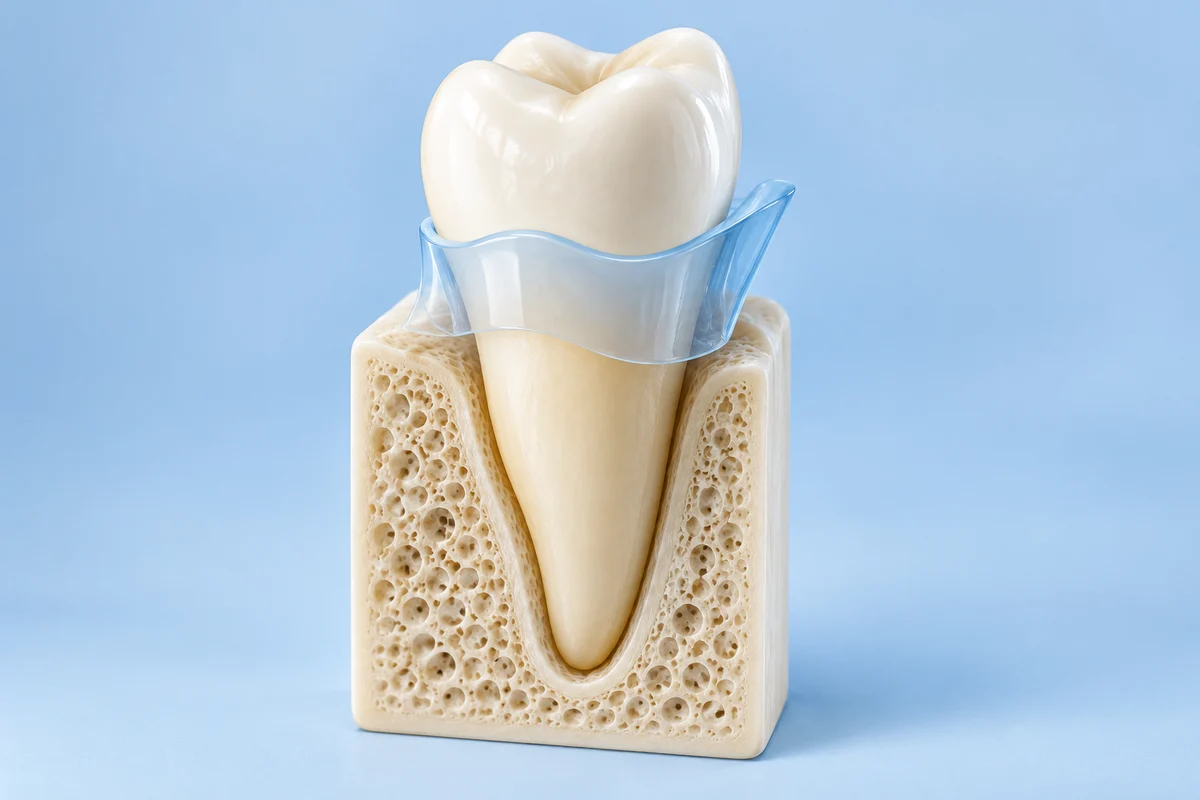
The natural crown is the tooth above the gum. A dental crown is a restoration covering a prepared tooth. Crown lengthening changes how much natural tooth is exposed.
Have the dentist show where the proposed restoration would finish and what prevents it being placed as intended now.
Why a restoration may need it
Damage close to or beneath the gum can make a tooth difficult to restore. Exposing more tooth may improve access for a filling, crown or bridge.
The recommendation should address this tooth’s overall condition and outlook. Establish what work would remain afterwards; exposure alone neither completes treatment nor guarantees the tooth can be saved.
Gum and bone changes
The supporting tissues and planned restoration need to be considered together. A small visible gum-line change may involve more than trimming the gum.
Clarify whether gum, bone or both would be altered, and whether neighbouring teeth are involved. “Gum contouring” on a quotation may not fully describe the proposed operation.
Sensitivity and appearance
Possible effects include discomfort, bleeding, swelling, infection and sensitivity. Changing gum position may expose existing restoration edges, and the tissues can continue changing during healing.
For front teeth, discuss proportions and the gum line beside neighbouring teeth. A photograph of somebody else’s result cannot show what your outcome will be.
Restorative and cosmetic aims
Crown lengthening can also serve an appearance-related aim. However, visible gum when smiling has different possible causes; the diagnosis must support the proposal.
For restoration, compare reasonable alternatives for the tooth and the effects of no treatment. For a cosmetic goal, keeping the appearance unchanged is also an option. Discuss tissue changes as well as the desired look.
Timing the final restoration
Gum position may change as healing progresses, affecting when the final restoration is made. There is no universal date to apply to every tooth.
Agree temporary protection, review arrangements and who will fit the restoration. Best Smile Turkey coordinates enquiries; treating clinicians decide the sequence. Before booking travel, establish how a delayed stage would be handled.
Read the related guidance
Keep the wider treatment plan in view while comparing these options.
Choose questions to ask.
Select your questions and copy the list, or open it as a WhatsApp draft. You can edit the message before sending.
Your consultation questions
Untick any questions you don’t need.
4 selected · No contact details needed.
Common questions
About this information
Published by Best Smile Turkey, a health-tourism intermediary. Your treating dentist is responsible for assessment, treatment and care.
Use this information to prepare questions for your dentist. An examination is needed to advise on treatment. Photographs, models and previews cannot establish suitability or predict results.
Source checking is not a clinical review. How we use sources and images, or how to report a correction.
Sources and further reading
- CUH: Crown lengthening surgery Exposing tooth structure for restoration; procedure, alternatives and potential sensitivity/appearance changes.
- American Academy of Periodontology: surgical procedures Restorative and appearance-related reasons for crown lengthening and changing gum and bone contours.
- NHS: dental treatments explained An overview of crowns, bridges, veneers, implants and other options.
- General Dental Council: going abroad for dental treatment Questions to ask about the treating provider, follow-up arrangements and concerns.
These resources offer general guidance; their publishers do not endorse Best Smile Turkey or the treating provider. Manufacturer links identify products or records, not independently compared outcomes. NHS funding information concerns UK care, not treatment costs in Turkey.
Ask about this information or report a correction