

On this page
A KEY QUESTION
Find out what is known about the damage and what remains uncertain before choosing a crown or extraction.
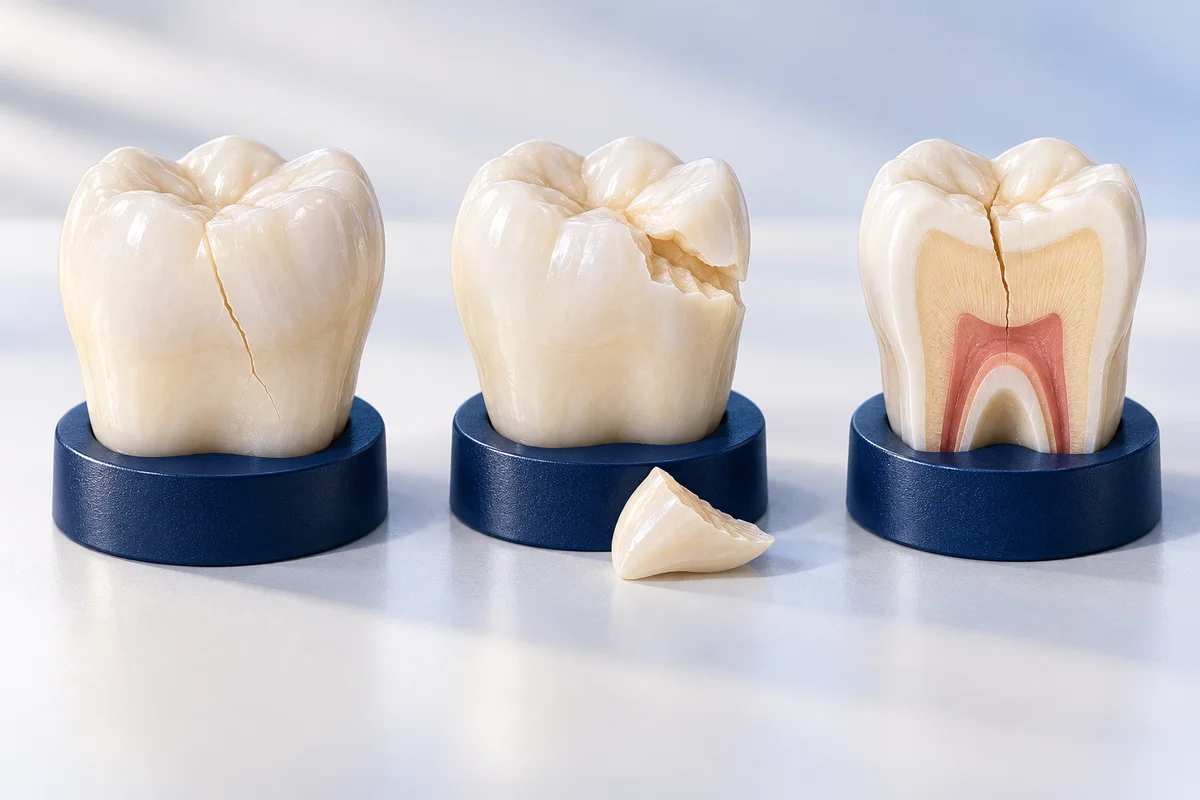
Different types of damage
Superficial enamel lines, broken cusps, cracked teeth, split teeth and root fractures describe different problems. Have the finding and terminology explained. A visible line cannot show the full extent, and a large filling alone does not establish that extraction is needed.
Symptoms without self-testing
Cracks may cause intermittent pain on chewing or temperature sensitivity, and the tooth can be hard to identify. Note ordinary symptoms and recent injury. Do not bite hard objects to test it or prise fragments loose. NHS advice is to keep a broken tooth fragment in milk or saliva.
What the assessment can show
The dentist may combine examination, tooth-response tests, gum findings and imaging. Routine X-rays do not show every crack. Sometimes the extent only becomes clear after removing a restoration or starting treatment. Discuss what further investigation could change and whether another opinion would help.
Treatment and its limits
A restoration can protect suitable remaining tooth structure. Root canal treatment addresses affected tissue inside the tooth; it does not repair the crack itself. A deeper crack or split can limit options. Have the likely benefits, remaining risks and final restoration explained.
Urgent local help
Significant or worsening pain, swelling, fever or difficulty opening the mouth needs urgent advice. In England, contact a dentist or NHS 111 if urgent dental care is unavailable; elsewhere use your local service. Call 999 if swelling affects breathing or swallowing. Do not wait for overseas care.
Record the plan
Keep the tooth identifier, suspected damage, next step and fallback if more extensive damage is found. Temporary protection or monitoring needs individual instructions and a review. Share these clinical findings when discussing treatment abroad rather than relying only on a smile photograph.
Read the related guidance
Keep the wider treatment plan in view while comparing these options.
Choose questions to ask.
Select your questions and copy the list, or open it as a WhatsApp draft. You can edit the message before sending.
Your consultation questions
Untick any questions you don’t need.
4 selected · No contact details needed.
Common questions
About this information
Published by Best Smile Turkey, a health-tourism intermediary. Your treating dentist is responsible for assessment, treatment and care.
Use this information to prepare questions for your dentist. An examination is needed to advise on treatment. Photographs, models and previews cannot establish suitability or predict results.
Source checking is not a clinical review. How we use sources and images, or how to report a correction.
Sources and further reading
- NHS: chipped, broken or cracked teeth Dental assessment, preserving a broken fragment and possible repair approaches.
- American Association of Endodontists: cracked-tooth assessment Crack categories, limitations of imaging and examination, and the importance of crack extent for treatment decisions.
- NHS: finding urgent dental care Urgent dental access and emergency symptoms requiring hospital care.
- NHS: dental treatments explained An overview of crowns, bridges, veneers, implants and other options.
- General Dental Council: going abroad for dental treatment Questions to ask about the treating provider, follow-up arrangements and concerns.
These resources offer general guidance; their publishers do not endorse Best Smile Turkey or the treating provider. Manufacturer links identify products or records, not independently compared outcomes. NHS funding information concerns UK care, not treatment costs in Turkey.
Ask about this information or report a correction