
On this page
A KEY QUESTION
Agree the plan for each gap and the role of any retained baby tooth before irreversible treatment begins.
Diagnosis and earlier records
Examination and X-rays distinguish a tooth that never developed from one that was removed or remains unerupted. Retained primary teeth and small teeth can be part of hypodontia.
Bring older radiographs and orthodontic letters. A marked tooth chart helps separate confirmed findings from an earlier provisional plan.
A retained baby tooth
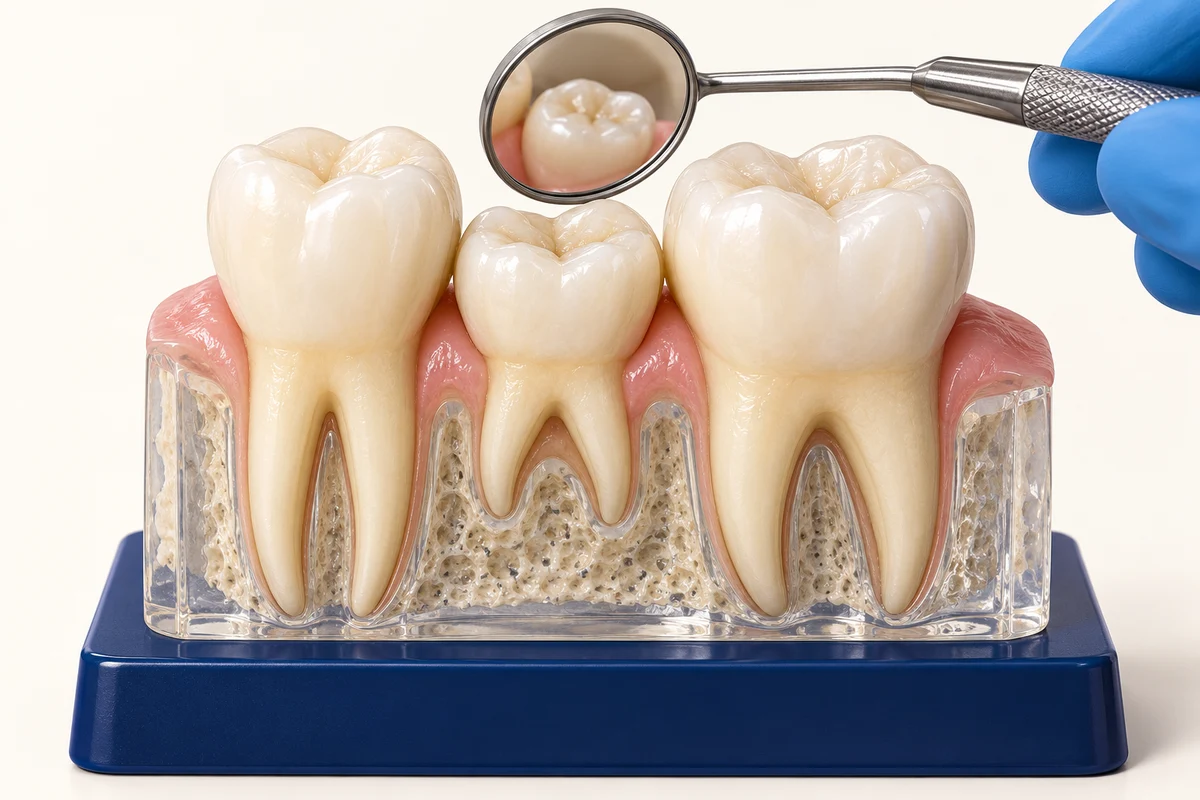
Do not assume a retained primary tooth needs removal because of its name. The dentist should explain its condition, function and outlook.
Discuss whether it can remain under review, what would prompt intervention and how removal would affect later options. If extraction is proposed now, establish why and what you would wear afterwards.
Closing or maintaining space
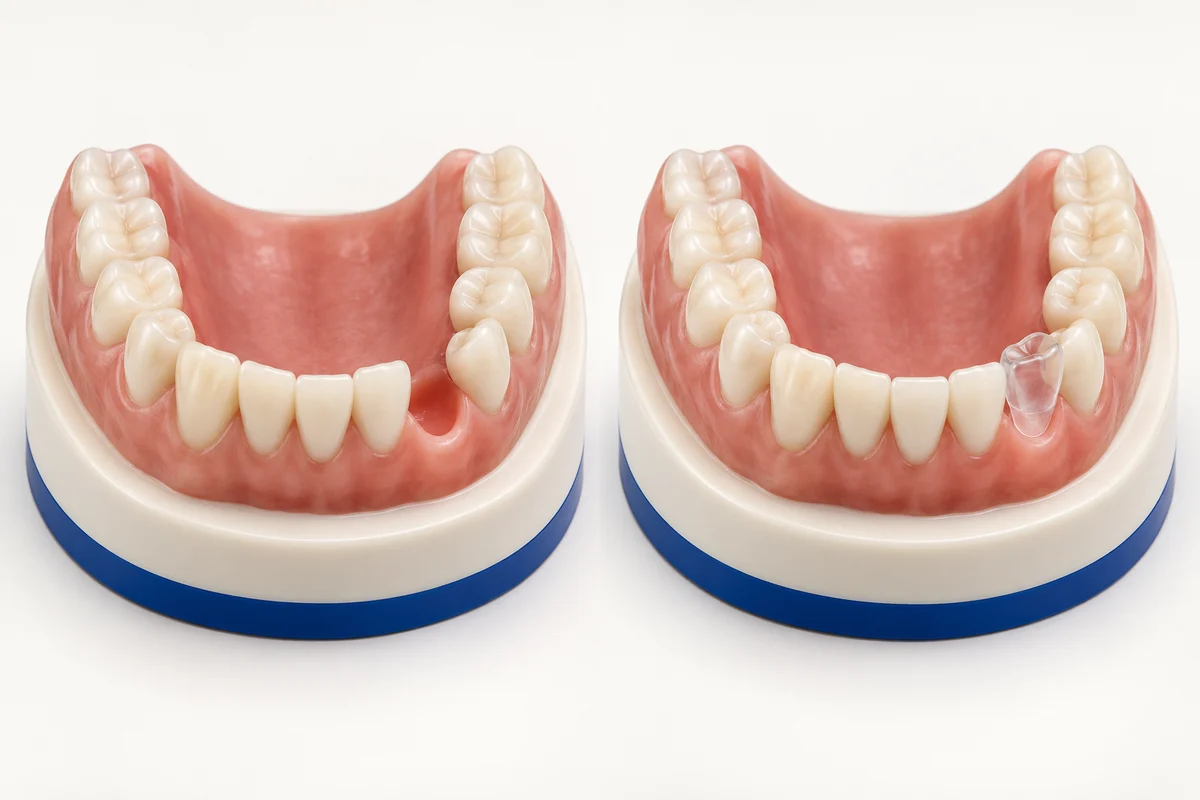
Orthodontics can close gaps or create room for replacement teeth. Those are different destinations. A small gap today may not represent the intended final arrangement.
Use a drawing or model to clarify which spaces will close and which will remain. Include your preferences about appearance, function and treatment commitments.
Coordinating the clinicians
Adult tooth movement needs suitable dental and gum health. The eventual restoration can influence how spaces are arranged, so orthodontic and restorative decisions need coordination.
Identify who approves the final tooth positions, manages temporary teeth and completes the restoration. Ask which clinicians are available and how they would work together. If care changes location, obtain a handover describing unfinished work.
Replacement and reshaping
Bridges, dentures and implants are possible replacements. Tooth-coloured material may reshape small teeth. Congenital absence does not automatically make an implant the preferred option.
Clarify whether the plan changes tooth positions, shapes or both, and what is provisional. An enquiry to understand options need not commit you to a particular reconstruction.
Care after active treatment
Retainers help maintain tooth positions after orthodontics. Retained primary teeth and replacement teeth also need continuing care. Agree how those review needs will be managed.
Keep the diagnosis, tooth chart, appliance details and clinical contacts. Best Smile Turkey coordinates enquiries; confirm who will provide long-term care at home before starting treatment across several providers.
Read the related guidance
Keep the wider treatment plan in view while comparing these options.
Choose questions to ask.
Select your questions and copy the list, or open it as a WhatsApp draft. You can edit the message before sending.
Your consultation questions
Untick any questions you don’t need.
3 selected · No contact details needed.
Common questions
About this information
Published by Best Smile Turkey, a health-tourism intermediary. Your treating dentist is responsible for assessment, treatment and care.
Use this information to prepare questions for your dentist. An examination is needed to advise on treatment. Photographs, models and previews cannot establish suitability or predict results.
Source checking is not a clinical review. How we use sources and images, or how to report a correction.
Sources and further reading
- Guy’s and St Thomas’: Hypodontia Congenitally absent teeth, retained primary teeth and multidisciplinary options.
- British Orthodontic Society: adult orthodontic questions Adult tooth movement, dental and gum health, treatment goals and questions about coordinated care.
- British Orthodontic Society: retainers Relapse, longer-term tooth movement and the need for an individually explained retention plan.
- NHS: dental treatments explained An overview of crowns, bridges, veneers, implants and other options.
- General Dental Council: going abroad for dental treatment Questions to ask about the treating provider, follow-up arrangements and concerns.
These resources offer general guidance; their publishers do not endorse Best Smile Turkey or the treating provider. Manufacturer links identify products or records, not independently compared outcomes. NHS funding information concerns UK care, not treatment costs in Turkey.
Ask about this information or report a correction