

On this page
A KEY QUESTION
Compare the benefit of replacement with its procedures, costs and future care.
Include no replacement as an option
If appearance, eating and socialising are unaffected, leaving a gap may be worth discussing. Ask what clinical or practical problem replacement would address. You can weigh an appearance benefit against your own priorities.
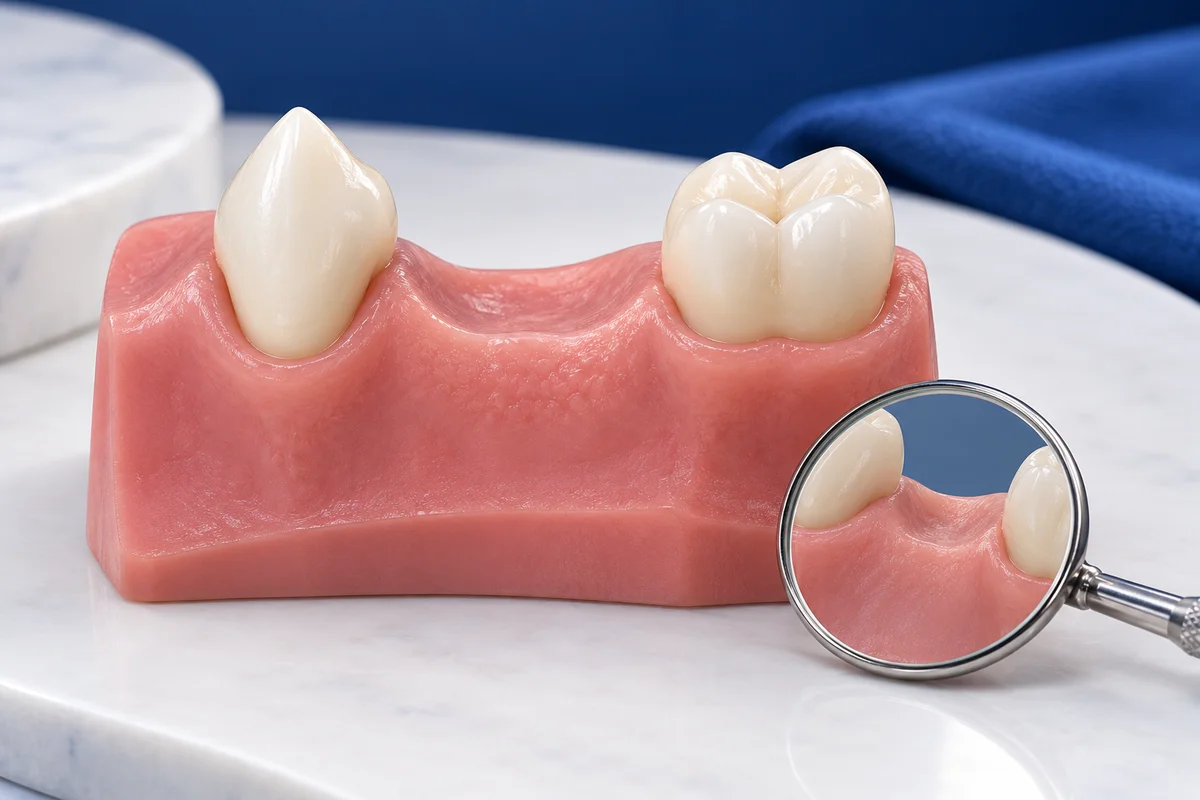
Assess the particular gap
Explain when and why the tooth was lost, other missing teeth and any previous replacement. Mention trapped food, chewing difficulty, speech or bite changes. Examination and any clinically indicated imaging help assess options; a photograph alone is insufficient.
What could change over time?
Remaining teeth may move and bone changes can occur around a missing tooth. Drifting can make a bridge harder to fit later. Ask which changes matter in your case and how they would be monitored. Neither inevitable harm nor a guarantee of no change is justified.
What replacement involves
A conventional bridge may require preparation of neighbouring teeth; an adhesive bridge uses a different approach. Dentures and implants have other treatment and maintenance needs. Compare suitable options by the problem they solve and the ongoing care involved. Leaving a gap still requires care for the rest of your mouth.
Agree a review plan
Record the decision and follow the review interval recommended for your oral health. Ask what needs an earlier appointment, including new discomfort, chewing difficulty or a changed bite. Treat existing disease separately and get advice on cleaning beside the gap.
Decide before booking treatment
A consultation should allow discussion of no replacement as well as treatment. Establish suitability with the treating dentist before committing to a replacement procedure or travel.
- What difficulty does the gap cause now?
- What finding supports replacement?
- Could leaving it with reviews be reasonable?
- What changes should I report?
- What assessment would be needed if I reconsidered?
Read the related guidance
Keep the wider treatment plan in view while comparing these options.
Choose questions to ask.
Select your questions and copy the list, or open it as a WhatsApp draft. You can edit the message before sending.
Your consultation questions
Untick any questions you don’t need.
5 selected · No contact details needed.
Common questions
About this information
Published by Best Smile Turkey, a health-tourism intermediary. Your treating dentist is responsible for assessment, treatment and care.
Use this information to prepare questions for your dentist. An examination is needed to advise on treatment. Photographs, models and previews cannot establish suitability or predict results.
Source checking is not a clinical review. How we use sources and images, or how to report a correction.
Sources and further reading
- Leeds Teaching Hospitals: bridges and alternatives Leaving a gap as an option and the possibility of movement affecting later bridge treatment.
- American Dental Association: missing teeth Possible functional effects, movement and replacement options after tooth loss.
- NHS: what happens when you visit a dentist Examination, clinically indicated imaging and discussion of treatment choices.
- NHS: dental treatments explained An overview of crowns, bridges, veneers, implants and other options.
- General Dental Council: going abroad for dental treatment Questions to ask about the treating provider, follow-up arrangements and concerns.
These resources offer general guidance; their publishers do not endorse Best Smile Turkey or the treating provider. Manufacturer links identify products or records, not independently compared outcomes. NHS funding information concerns UK care, not treatment costs in Turkey.
Ask about this information or report a correction