

On this page
A KEY QUESTION
Ask what supports the denture and how to protect the teeth you keep.
Assess the remaining teeth
A partial denture can replace teeth in several areas of one jaw. Explain any problems with chewing, speech or appearance. The dentist should assess remaining teeth and treat decay or gum problems where needed. Any proposed extraction needs its own reason and discussion of preservation.
What holds it in place?
Replacement teeth sit on a base, with support from gum areas and remaining teeth according to the design. Clasps may help retention; ask which will show. Some designs use crown-related attachments that require extra tooth treatment. Discuss why crowns are needed and whether a simpler design would suit you.
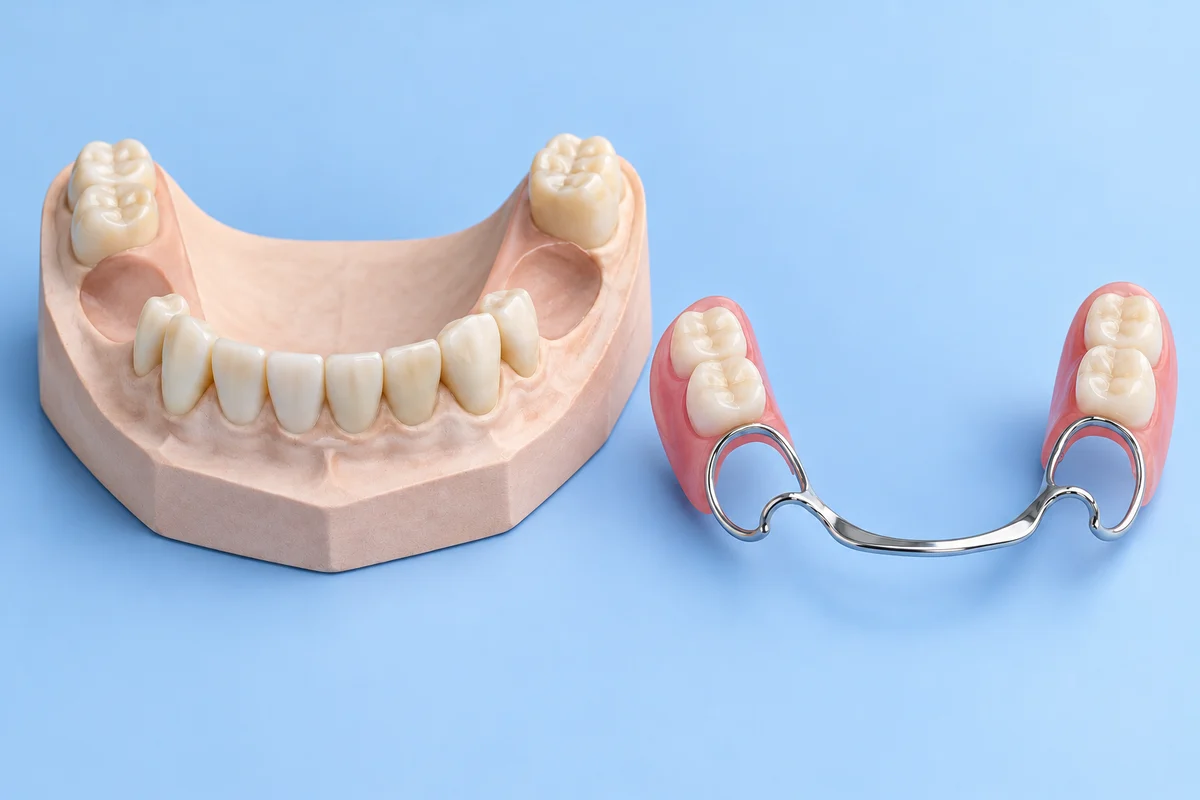
Acrylic or metal framework?
A cobalt-chromium framework can be thinner than an all-acrylic design, but neither suits every mouth. Discuss bulk, support, cleaning and appearance. Find out whether the denture is temporary or longer-term, and whether it could be altered if another tooth were lost.
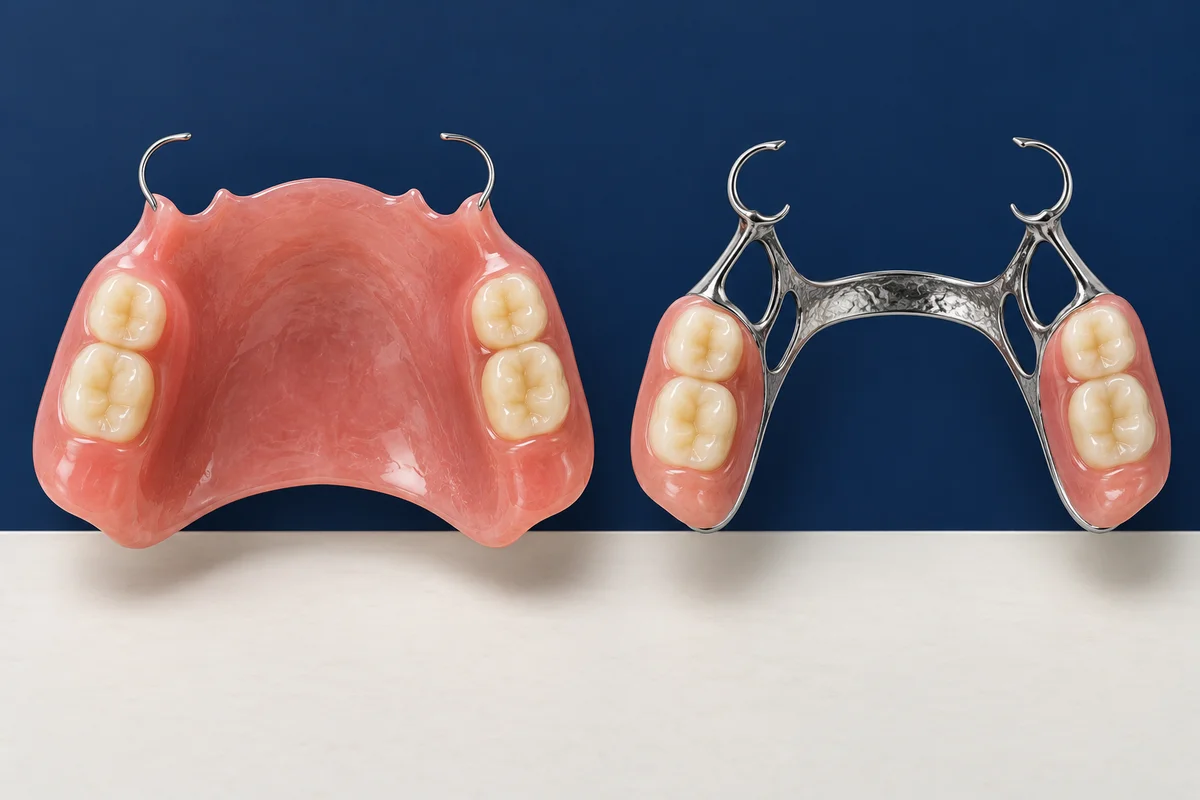
Practise insertion and removal
Let the team watch you handle the denture. Do not bite it into place, bend a clasp or file the base. Explain any difficulty with grip or vision. Initial bulkiness or speech changes may take practice; persistent pain or trouble seating it needs advice.
Clean the teeth as well
Remove the denture for cleaning as instructed. Brush natural teeth twice daily with fluoride toothpaste and clean between them, including supporting teeth. Get advice specific to metal parts or linings, storage and overnight removal. Report bleeding gums, loose supporting teeth or changed fit.
Adjustments and reviews
Before arranging treatment abroad, confirm that the design is offered and where fitting checks and later care will take place.
- Which teeth and gum areas provide support?
- Will any teeth need preparation?
- Can I manage removal and cleaning?
- Which adjustments and repairs are included?
- Who assesses problems at home?
Read the related guidance
Keep the wider treatment plan in view while comparing these options.
Choose questions to ask.
Select your questions and copy the list, or open it as a WhatsApp draft. You can edit the message before sending.
Your consultation questions
Untick any questions you don’t need.
5 selected · No contact details needed.
Common questions
About this information
Published by Best Smile Turkey, a health-tourism intermediary. Your treating dentist is responsible for assessment, treatment and care.
Use this information to prepare questions for your dentist. An examination is needed to advise on treatment. Photographs, models and previews cannot establish suitability or predict results.
Source checking is not a clinical review. How we use sources and images, or how to report a correction.
Sources and further reading
- Leeds Teaching Hospitals: removable partial dentures Partial denture materials, remaining-tooth care, handling and review advice.
- American Dental Association: partial dentures Frameworks, clasps, precision attachments and safe insertion and removal.
- Cleveland Clinic: dentures How partial dentures are supported and the role of assessment and fitting.
- NHS: dental treatments explained An overview of crowns, bridges, veneers, implants and other options.
- General Dental Council: going abroad for dental treatment Questions to ask about the treating provider, follow-up arrangements and concerns.
These resources offer general guidance; their publishers do not endorse Best Smile Turkey or the treating provider. Manufacturer links identify products or records, not independently compared outcomes. NHS funding information concerns UK care, not treatment costs in Turkey.
Ask about this information or report a correction