

On this page
A KEY QUESTION
Consider gum health and cleaning access as well as the appearance of any proposed change.
When the space appeared
Explain whether it is new, widening or became noticeable after straightening or gum treatment. Mention food trapping, bleeding or bite changes. A space near the gum differs from a full-length gap. Photographs show appearance but cannot establish supporting-tissue health.
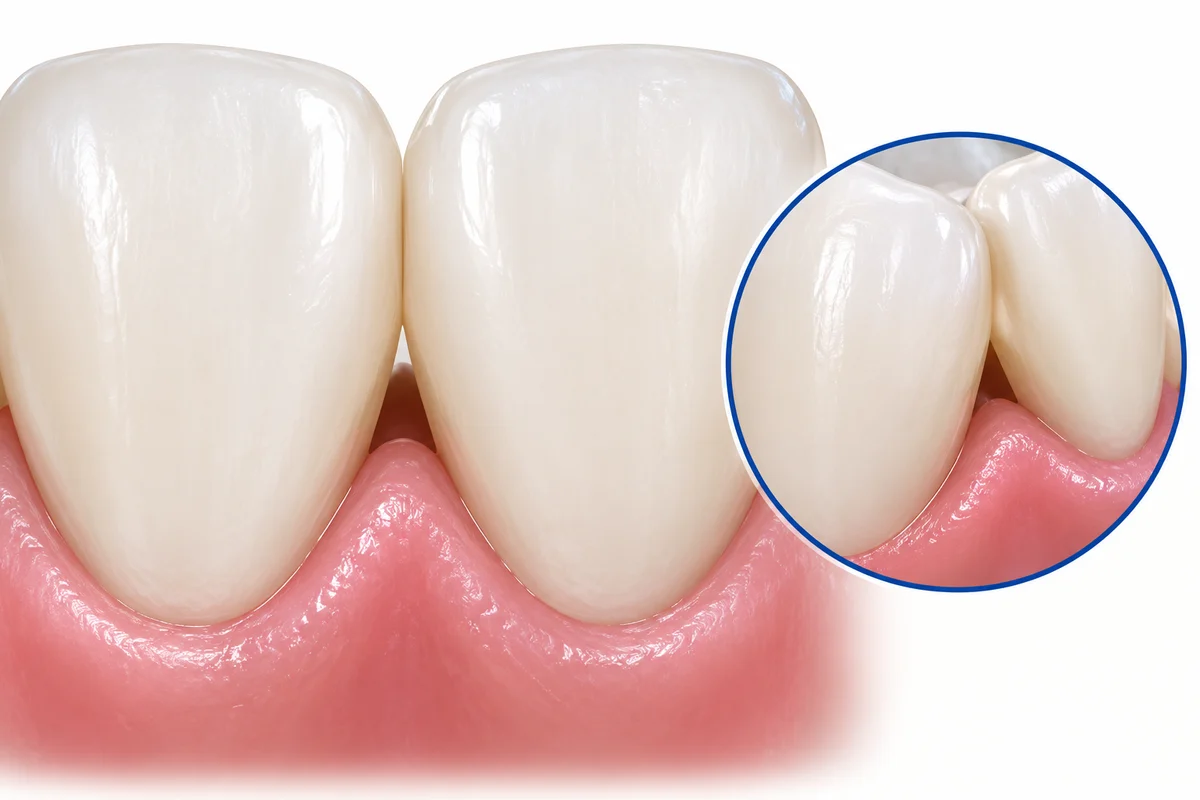
Gum health
Periodontal disease can cause recession and tooth movement, creating visible spaces. New gaps with bleeding, swollen gums or loose teeth deserve assessment. Not every triangle means disease. Have the gum findings explained and any health treatment addressed before cosmetic decisions.
After straightening
Small triangular spaces can become visible after adult orthodontic treatment. Depending on the cause, options may include accepting them, selected reshaping or adding tooth-coloured material. Raise the concern before appliances are removed. Do not alter retainer wear to try to close a space.
What treatment would change
A plan might move teeth, change their outline, add material or treat gum disease. Discuss the expected benefit, what may remain and any irreversible preparation. Consider the resulting tooth width and maintenance. Keeping a stable space may be a reasonable option.
Cleaning the area
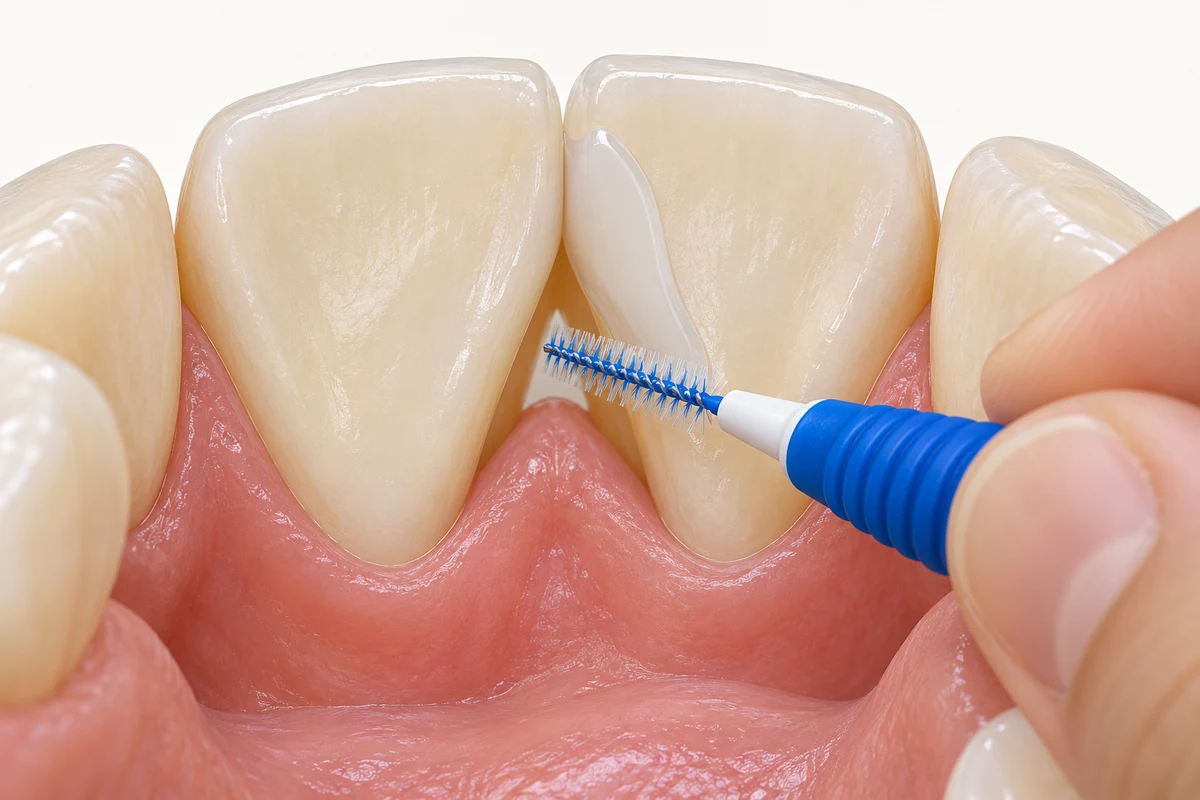
Have suitable interdental tools and technique demonstrated for your spaces. If material is added, establish how you will clean around it and how its contour will be checked. A good front-facing appearance does not show whether ongoing care will be manageable.
Choose the priority
Food trapping and visible contrast may lead to different discussions. Record your main concern and the dentist’s explanation. Decide whether the next step is health care, observation or elective treatment, without assuming extensive work is needed to address the space.
Read the related guidance
Keep the wider treatment plan in view while comparing these options.
Choose questions to ask.
Select your questions and copy the list, or open it as a WhatsApp draft. You can edit the message before sending.
Your consultation questions
Untick any questions you don’t need.
4 selected · No contact details needed.
Common questions
About this information
Published by Best Smile Turkey, a health-tourism intermediary. Your treating dentist is responsible for assessment, treatment and care.
Use this information to prepare questions for your dentist. An examination is needed to advise on treatment. Photographs, models and previews cannot establish suitability or predict results.
Source checking is not a clinical review. How we use sources and images, or how to report a correction.
Sources and further reading
- European Federation of Periodontology: gum disease questions How periodontal disease can change gum support, tooth position and visible spaces.
- NHS: gum disease Bleeding, recession, loose teeth, professional care and daily interdental cleaning.
- University Hospitals of Leicester: having braces fitted Patient leaflet covering assessment, black triangles, treatment limitations and monitoring.
- NHS: dental treatments explained An overview of crowns, bridges, veneers, implants and other options.
- General Dental Council: going abroad for dental treatment Questions to ask about the treating provider, follow-up arrangements and concerns.
These resources offer general guidance; their publishers do not endorse Best Smile Turkey or the treating provider. Manufacturer links identify products or records, not independently compared outcomes. NHS funding information concerns UK care, not treatment costs in Turkey.
Ask about this information or report a correction