

On this page
A KEY QUESTION
Ask which type of resorption was found, what evidence shows its extent and who will review the tooth.
Get a precise name and location.
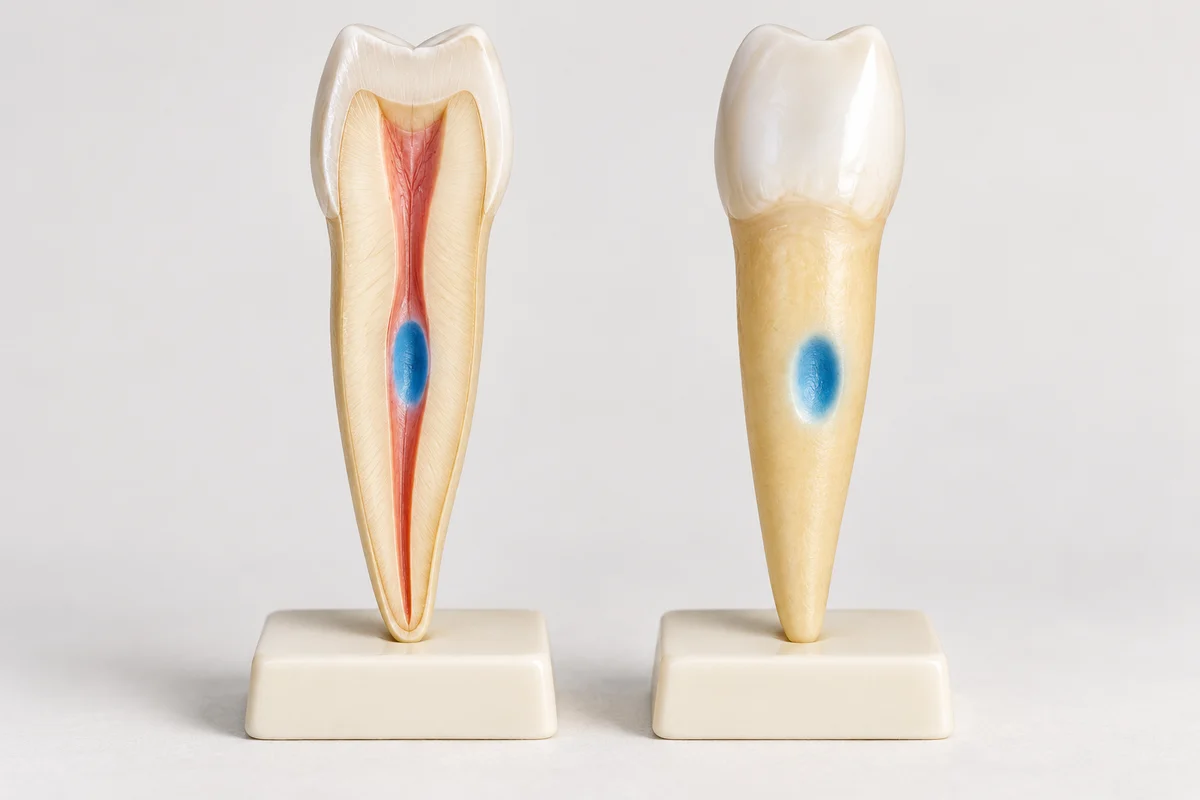
Internal resorption affects the tooth from within its pulp space. External resorption starts on an outer surface; cervical and apical terms describe areas around the neck of the tooth and root tip. The full diagnosis matters more than the general word.
Have the dentist point out the affected tooth and area on a model or image. A diagram cannot diagnose your own X-ray.
Separate what is visible from what is uncertain.
Ask how much structure appears affected and whether earlier images are available for comparison. A single image may show an abnormality without establishing how quickly it changed. The clinician decides whether additional imaging would answer a useful question.
Mention earlier injury, orthodontic treatment or internal whitening, even if it happened years ago. These can be relevant to some forms of resorption, but a past treatment does not establish the cause or prove anybody was at fault.
Why the options differ.
An endodontist or another suitably experienced clinician may help assess a complex finding. Depending on the type and extent, discussions can include monitoring, repair, root canal treatment or removal when the tooth cannot be retained appropriately.
Root canal treatment is not a remedy for every form of resorption. Ask what each option aims to achieve, what uncertainty remains and whether the tooth can support the proposed restoration. Treatment cannot simply make lost root structure grow back.
Make monitoring an actual plan.
If observation is recommended, record the reason, the next review and what would trigger a different approach. Keep dated images, the diagnosis and any specialist opinion together. This is useful if you change dentist or are planning other dental work.
Before a crown, veneer or orthodontic change involving that tooth, make sure the treating clinician knows about the finding. Cosmetic appearance is not enough to establish that the underlying tooth is suitable for a new procedure.
Report new symptoms between reviews.
Contact your dentist if the tooth becomes painful, loose or changes noticeably, or if you develop swelling. These symptoms need assessment and do not tell you which type of resorption is present.
Keep follow-up even without pain. Examination and records matter as well as how the tooth feels.
Read the related guidance
Keep the wider treatment plan in view while comparing these options.
Questions for a clinical assessment
Seek the local care described above first. When you speak with the clinician, these questions may help you understand the plan.
- Which options and alternatives should I discuss with the dentist?
- How much natural tooth would be prepared, and are there less invasive alternatives?
- Will I receive my treatment records and written care instructions?
- Who should I contact after returning home, and how will reviews be arranged?
Common questions
For future treatment planning, after appropriate clinical care: Compare starting prices in GBP, including zirconia crowns from £160. Your dentist confirms suitability and the full written quote.
About this information
Published by Best Smile Turkey, a health-tourism intermediary. Your treating dentist is responsible for assessment, treatment and care.
Use this information to prepare questions for your dentist. An examination is needed to advise on treatment. Photographs, models and previews cannot establish suitability or predict results.
Source checking is not a clinical review. How we use sources and images, or how to report a correction.
Sources and further reading
- American Association of Endodontists: types of resorption Patient explanation of internal, cervical and apical resorption and individual assessment.
- American Association of Endodontists: differentiating resorption Professional explanation of differing mechanisms and why root canal treatment is not appropriate for every type.
- NHS: dental treatments explained An overview of crowns, bridges, veneers, implants and other options.
- General Dental Council: going abroad for dental treatment Questions to ask about the treating provider, follow-up arrangements and concerns.
These resources offer general guidance; their publishers do not endorse Best Smile Turkey or the treating provider. Manufacturer links identify products or records, not independently compared outcomes. NHS funding information concerns UK care, not treatment costs in Turkey.
Ask about this information or report a correction