

On this page
A KEY QUESTION
Request a component-by-component material list and evidence for the particular implant design, not just the word “ceramic”.
Name each component
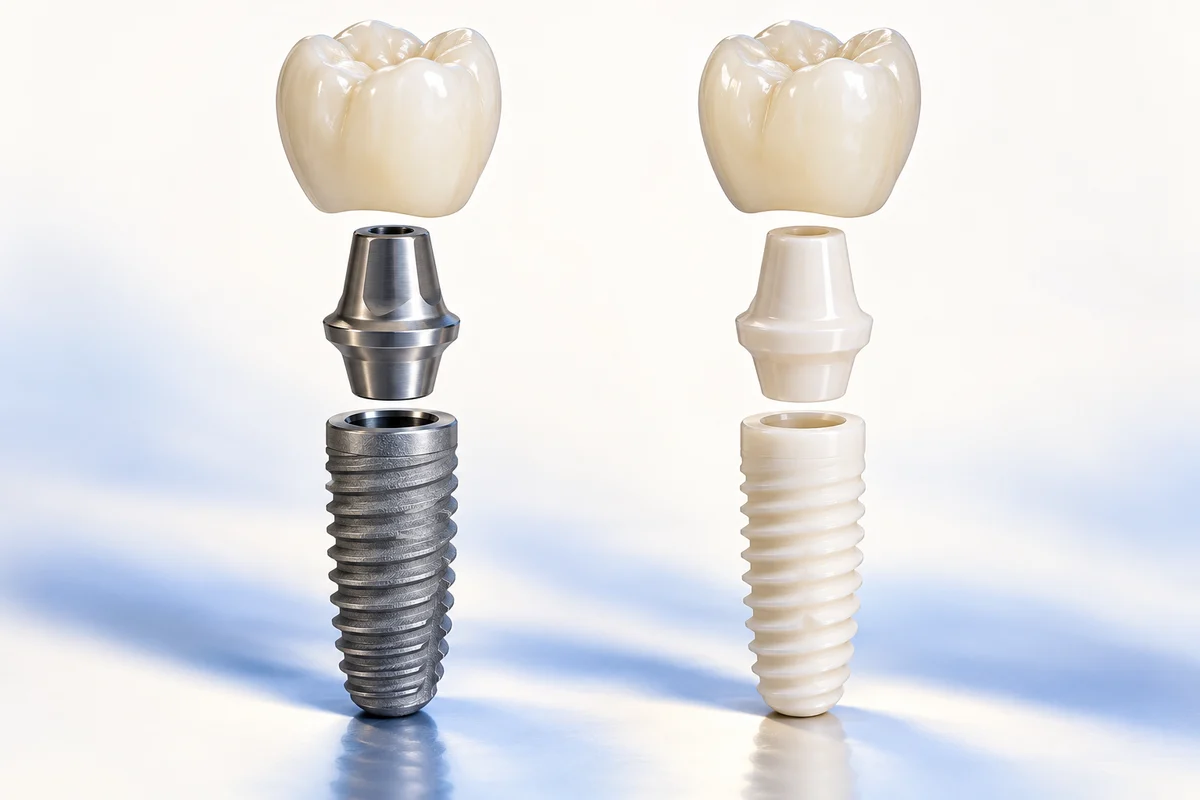
The implant body sits in bone. The abutment connects it to the replacement tooth, often using a screw. The visible crown or bridge is another component, and these parts can use different materials.
Get a labelled diagram or component list so two quotations can be compared on the same basis.
What the material means
Implant bodies may use titanium, titanium alloys or zirconia. Colour is one consideration; the restoration, gum tissues and position also affect appearance.
If you want to avoid a particular material, explain why and bring any documented reaction history. Material preference cannot diagnose an allergy or establish that another system removes all risk.
One-piece and two-piece designs
One-piece designs combine the body and connecting portion. Two-piece designs use a separate connection. ITI notes that some two-piece zirconia systems contain an internal metal screw.
Find out which parts can be replaced separately and how the design affects the planned restoration. “Ceramic” does not necessarily describe the entire assembly.
What the evidence covers
The 2023 ITI consensus found that longer-followed zirconia evidence mainly concerned one-piece implants supporting single crowns or short fixed bridges. Two-piece zirconia evidence was more limited.
Results for one design cannot simply be applied to every newer system. The evidence discussed should match the proposed implant, restoration and follow-up period.
Care and repairs
ITI found no clinical evidence that zirconia prevents peri-implantitis better than titanium. Both need cleaning and dental review.
Discuss access for cleaning, how problems would be investigated and who could repair the restoration. Keep the manufacturer, system and material details, especially if different dentists will provide later care.
Confirm the actual proposal
The treating provider needs to confirm availability and explain alternatives if the requested system is unsuitable. A quotation should distinguish the fixture, connector, screw and crown.
Ask the treating provider which implant materials and systems are available. Your dentist must decide whether a particular option is suitable for you.
Read the related guidance
Keep the wider treatment plan in view while comparing these options.
Choose questions to ask.
Select your questions and copy the list, or open it as a WhatsApp draft. You can edit the message before sending.
Your consultation questions
Untick any questions you don’t need.
4 selected · No contact details needed.
Common questions
About this information
Published by Best Smile Turkey, a health-tourism intermediary. Your treating dentist is responsible for assessment, treatment and care.
Use this information to prepare questions for your dentist. An examination is needed to advise on treatment. Photographs, models and previews cannot establish suitability or predict results.
Source checking is not a clinical review. How we use sources and images, or how to report a correction.
Sources and further reading
- ITI 2023: Clinical and radiographic outcomes of zirconia dental implants Fixture material, selected indications, and one-piece versus two-piece evidence limitations.
- FDA: dental implants, what you should know Implant components and materials, keeping system details, maintenance and possible complications.
- NHS: dental treatments explained An overview of crowns, bridges, veneers, implants and other options.
- General Dental Council: going abroad for dental treatment Questions to ask about the treating provider, follow-up arrangements and concerns.
These resources offer general guidance; their publishers do not endorse Best Smile Turkey or the treating provider. Manufacturer links identify products or records, not independently compared outcomes. NHS funding information concerns UK care, not treatment costs in Turkey.
Ask about this information or report a correction