

On this page
A KEY QUESTION
Seek urgent dental advice if an ulcer has lasted two weeks or more without healing, or has worsened over that time. Any ulcer lasting over three weeks must be examined. Get help sooner for increasing pain or difficulty eating or drinking.
Describe the soreness
Explain when it began and whether you have a new denture or recent adjustment. Note where it hurts, whether removal helps and how eating or sleep is affected. Bring the denture and any cleaning or adhesive products.
Checking the fit
New dentures sometimes need adjustment for sore spots. Trouble with an established appliance also needs examination. Do not file the denture, bend clasps or make a lining yourself. If wearing it is very painful, ask the practice what to do before your appointment.
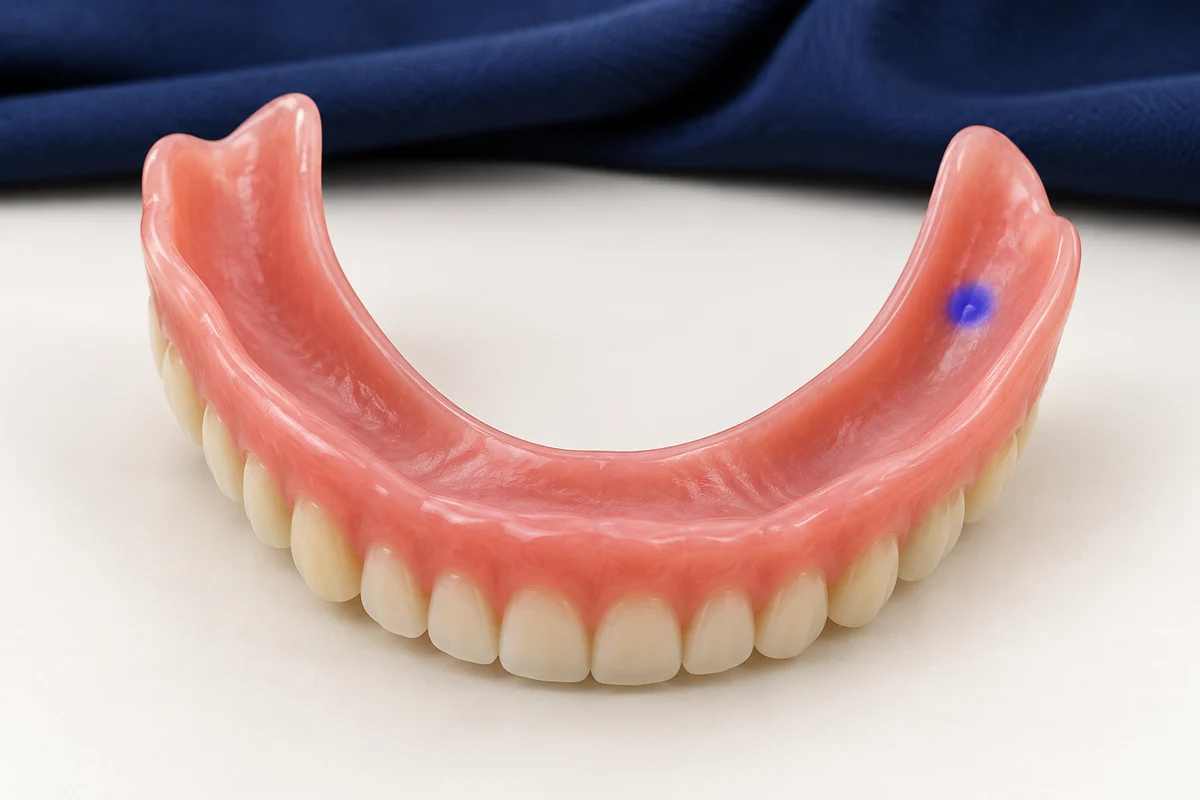
Denture stomatitis
This means inflammation beneath a denture. Care may involve cleaning, wearing habits and fit; a photograph cannot establish the cause or need for medicine. Follow instructions suited to your appliance. Do not copy someone else’s disinfectant mixture or antifungal treatment.
Review your daily routine
Tell the dentist how you clean and soak the denture, whether you sleep in it and which products have changed. Get written care instructions if treatment is prescribed. Recent extractions or surgery may require a different routine from a healed mouth.
Ulcers that do not heal
For an ulcer present for at least two weeks that remains unhealed or is deteriorating, ask a dentist for an urgent appointment or contact NHS 111 in England. Do not wait until three weeks. An ulcer lasting more than three weeks must be checked by a dentist or GP; seek advice sooner if it is unusual, increasingly painful, red or bleeding. Apparent denture rubbing does not rule out other causes. Report new lumps or persistent changes.
When to seek urgent care
Get urgent dental advice for severe or increasing symptoms. Difficulty breathing or swallowing needs immediate local emergency care. Do not delay assessment for a planned trip abroad; share any local findings with your treating team.
Read the related guidance
Keep the wider treatment plan in view while comparing these options.
Choose questions to ask.
Select your questions and copy the list, or open it as a WhatsApp draft. You can edit the message before sending.
Your consultation questions
Untick any questions you don’t need.
3 selected · No contact details needed.
Common questions
About this information
Published by Best Smile Turkey, a health-tourism intermediary. Your treating dentist is responsible for assessment, treatment and care.
Use this information to prepare questions for your dentist. An examination is needed to advise on treatment. Photographs, models and previews cannot establish suitability or predict results.
Source checking is not a clinical review. How we use sources and images, or how to report a correction.
Sources and further reading
- Cambridge University Hospitals: denture care Sore areas after fitting, follow-up adjustments and care of the denture and mouth.
- SDCEP: denture stomatitis, local measures Professional guidance on denture and mouth hygiene; cleaning choices depend on denture material.
- NHS: mouth ulcers When a persistent, unusual or worsening mouth ulcer should be examined.
- NHS: emergency and urgent dental care Urgent advice for ulcers present for two weeks or more that are not healing or have worsened.
- NHS: dental treatments explained An overview of crowns, bridges, veneers, implants and other options.
- General Dental Council: going abroad for dental treatment Questions to ask about the treating provider, follow-up arrangements and concerns.
These resources offer general guidance; their publishers do not endorse Best Smile Turkey or the treating provider. Manufacturer links identify products or records, not independently compared outcomes. NHS funding information concerns UK care, not treatment costs in Turkey.
Ask about this information or report a correction