

On this page
A KEY QUESTION
Keep taking prescribed medicines unless your responsible clinician gives you individual instructions.
Your medicine history
Bring current and previous drug names, dates, and whether they were tablets, injections or infusions. Include the condition treated and prescriber details. Some medicines used for osteoporosis are also given in different regimens for cancer, with different risk profiles.
What MRONJ means
Medication-related osteonecrosis of the jaw, or MRONJ, affects jawbone. It is associated with certain medicines, including bisphosphonates and denosumab. Risks vary with the drug, its use and your health. Ask how these factors affect the proposed procedure.
Routine care and bone surgery
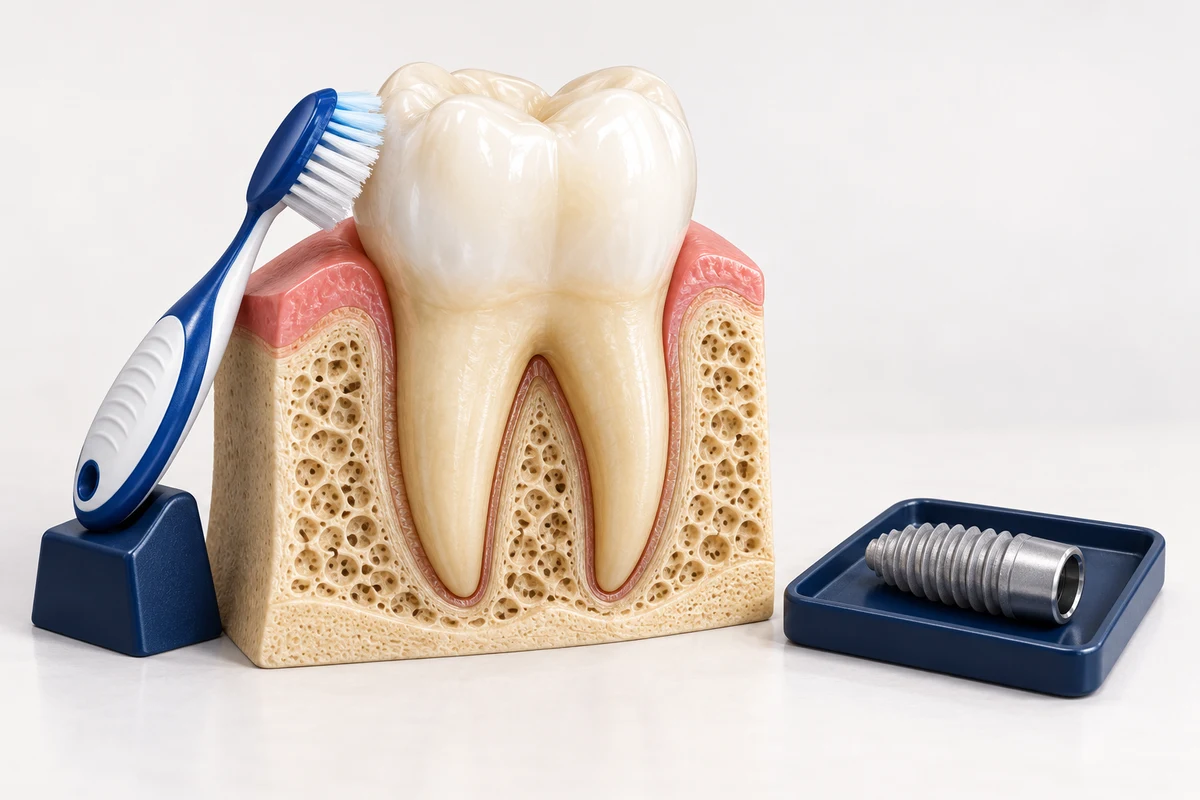
Routine dentistry and surgery involving bone need different discussions. The overall risk described for osteoporosis patients is low, but extraction or implant placement still needs individual assessment. Ask whether a damaged tooth can be restored and, if removal is needed, why and how healing will be reviewed. Keep attending dental care.
Do not arrange your own medicine break
Never stop tablets, delay an injection or change a dose to fit a dental trip. Stopping alendronic acid can increase fracture risk. The dentist and prescriber should coordinate any timing discussion; an appointment between doses does not prove this has happened.
- Has my full medicine history been reviewed?
- Is advice from my prescriber needed?
- Who gives the individual timing instructions?
- What happens to the booking while advice is pending?
Report mouth problems
Continue cleaning and dental reviews, and have rubbing dentures checked. Persistent mouth pain, swelling, exposed bone or a wound that seems not to heal need prompt assessment. These signs do not establish MRONJ. Seek local care rather than waiting for travel.
Keep the agreed plan
The written proposal should cover the procedure, medicine considerations, alternatives and healing reviews. Record any need for specialist advice or postponement. Before surgical travel, confirm that the treating clinician has reviewed the necessary information and keep both dental and prescribing contacts available.
Read the related guidance
Keep the wider treatment plan in view while comparing these options.
Choose questions to ask.
Select your questions and copy the list, or open it as a WhatsApp draft. You can edit the message before sending.
Your consultation questions
Untick any questions you don’t need.
5 selected · No contact details needed.
Common questions
About this information
Published by Best Smile Turkey, a health-tourism intermediary. Your treating dentist is responsible for assessment, treatment and care.
Use this information to prepare questions for your dentist. An examination is needed to advise on treatment. Photographs, models and previews cannot establish suitability or predict results.
Source checking is not a clinical review. How we use sources and images, or how to report a correction.
Sources and further reading
- American Dental Association: osteoporosis medicines and MRONJ Medicine-specific risk, the distinction between osteoporosis and cancer regimens, and individual dental planning.
- SDCEP: dental advice for patients taking osteoporosis medicines Patient information on low overall risk, continuing prescribed medicines, ordinary dental care and symptoms to report.
- NHS: common questions about alendronic acid The fracture-prevention purpose of this medicine, dental disclosure and the importance of discussing concerns before stopping.
- NHS: dental treatments explained An overview of crowns, bridges, veneers, implants and other options.
- General Dental Council: going abroad for dental treatment Questions to ask about the treating provider, follow-up arrangements and concerns.
These resources offer general guidance; their publishers do not endorse Best Smile Turkey or the treating provider. Manufacturer links identify products or records, not independently compared outcomes. NHS funding information concerns UK care, not treatment costs in Turkey.
Ask about this information or report a correction