

On this page
A KEY QUESTION
Choose a treatment whose appointments, cleaning and future care you can realistically manage.
Start with your main difficulty
There is no upper age limit by itself in Royal College of Surgeons implant guidance. Describe the problem, such as a moving denture or difficulty chewing, and ask how each option might help. Individual medical and dental assessment is still essential.
Health and medicines
Bring prescriptions, non-prescription products and relevant health history, including recent changes. Mention blood thinners and osteoporosis medicines. Ask whether surgery or long appointments need another clinician’s input. Do not change prescribed medicines yourself.
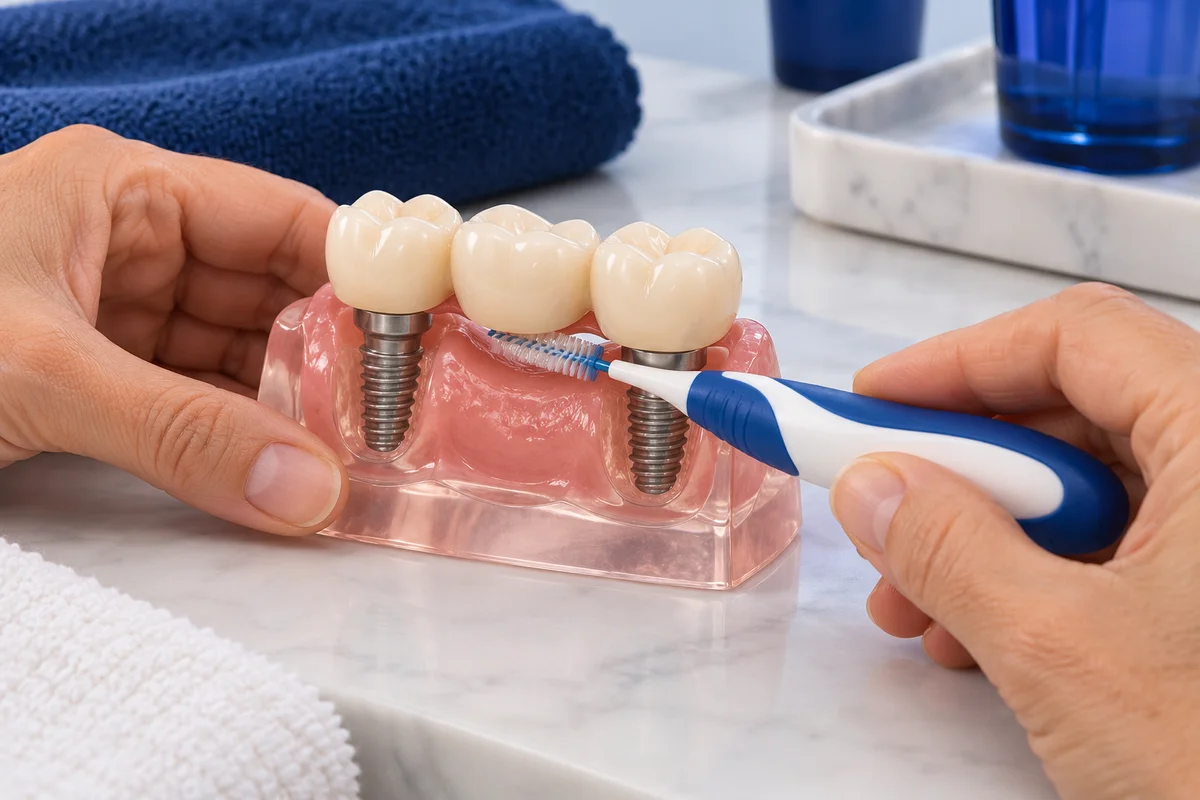
Try the cleaning routine
Grip, vision and reach can affect cleaning. Try the recommended aids rather than relying on a demonstration. With your agreement, involve anyone who helps with care and discuss what they would need to learn.
- Can I reach around supports and beneath the teeth?
- Would adapted cleaning aids help?
- What support might I need if daily care became harder?
- Who can maintain the restoration near home?
Compare practical alternatives
Options may include improving a denture, a bridge, selective replacement or accepting a gap. Compare surgery, appointments, cleaning and maintenance. Fixed teeth stay in place but still need cleaning underneath and around their supports. Consider how each option would work if mobility, finances or available help changed.
Comfort, access and travel
Tell the team about positioning, breaks, hearing or visual needs and help getting into the chair. Request information in a usable form. You can involve someone you trust while keeping your own choices central. Confirm clinic and accommodation access, transport, support and extra charges; a package may not include personal care or medical supervision.
Future maintenance
Ask about reviews, professional cleaning, adjustments and replacement parts. Keep records identifying the implant system. Agree a plan for local care if travel becomes difficult and clarify when a return trip might be needed. The treating team should explain these arrangements before booking.
Read the related guidance
Keep the wider treatment plan in view while comparing these options.
Choose questions to ask.
Select your questions and copy the list, or open it as a WhatsApp draft. You can edit the message before sending.
Your consultation questions
Untick any questions you don’t need.
5 selected · No contact details needed.
Common questions
About this information
Published by Best Smile Turkey, a health-tourism intermediary. Your treating dentist is responsible for assessment, treatment and care.
Use this information to prepare questions for your dentist. An examination is needed to advise on treatment. Photographs, models and previews cannot establish suitability or predict results.
Source checking is not a clinical review. How we use sources and images, or how to report a correction.
Sources and further reading
- Royal College of Surgeons: standards of care for NHS-funded implant treatment Age, treatment tolerance and future maintenance considerations; NHS funding criteria do not determine overseas eligibility.
- American Dental Association: ageing and dental health Individual medical, medicine, communication and functional considerations, including adaptations for oral care.
- Leeds Teaching Hospitals NHS: dental implants Assessment, ongoing care and alternatives including dentures, bridges or accepting a space.
- NHS: dental treatments explained An overview of crowns, bridges, veneers, implants and other options.
- General Dental Council: going abroad for dental treatment Questions to ask about the treating provider, follow-up arrangements and concerns.
These resources offer general guidance; their publishers do not endorse Best Smile Turkey or the treating provider. Manufacturer links identify products or records, not independently compared outcomes. NHS funding information concerns UK care, not treatment costs in Turkey.
Ask about this information or report a correction