

On this page
A KEY QUESTION
The treating dentist must assess readiness for the next stage. Comfort or a booked date cannot establish it.
Healing inside the jaw
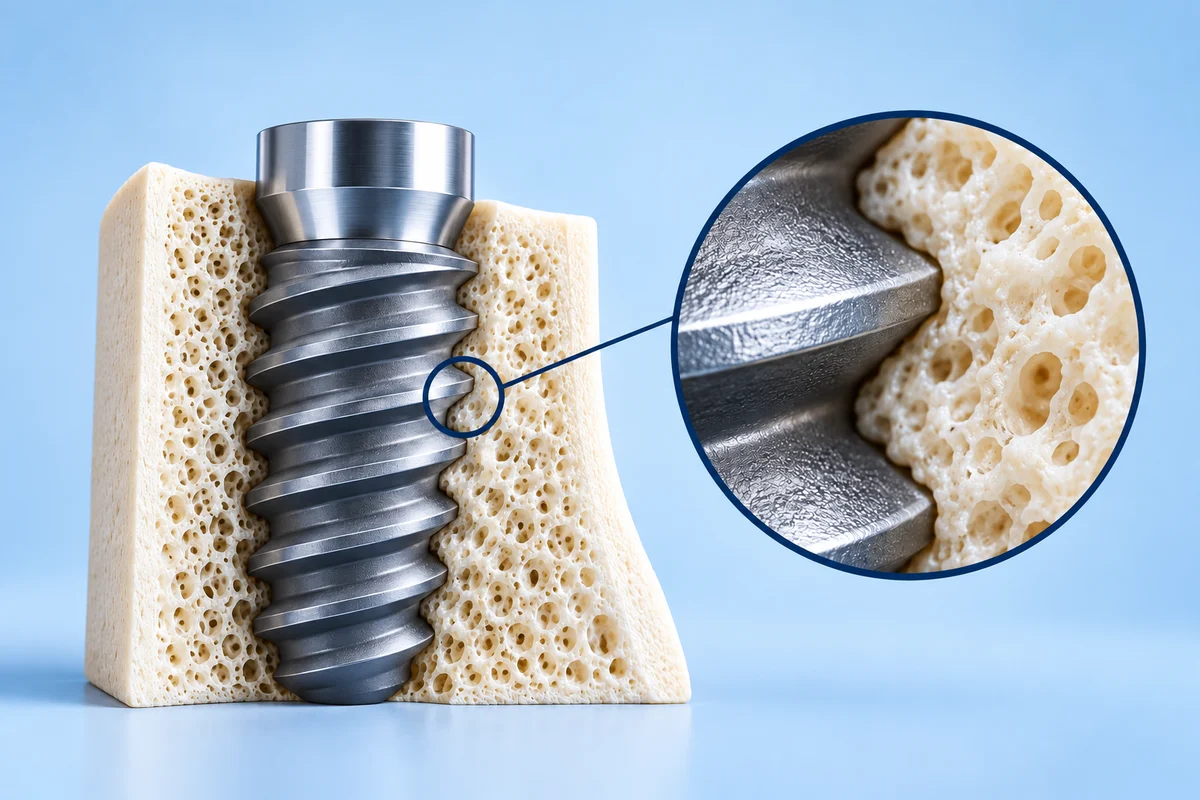
Bone grows around an implant and helps hold it in place. This differs from the gum wound settling on the surface. At a review, have the dentist explain both the tissue healing and whether the site is ready for restorative work.
Initial and later stability
Primary stability is the mechanical hold at placement; secondary stability develops through healing. Neither can be assessed by pressing on a tooth. Initial stability helps guide decisions about fitting replacement teeth, alongside the other findings for your site and restoration.
What to report
Contact the dental provider promptly if an implant feels loose or painful. Describe where, when it started and any change. Do not rock it or bite harder to test it. Keep following eating instructions even if discomfort has eased.
Temporary teeth during healing
A temporary tooth may be attached to an implant, supported elsewhere or removable. Get eating and cleaning advice for the exact arrangement. If early fixed teeth are proposed, agree the fallback before surgery in case the findings do not support them, including costs and appointments.
The healing review
Have the examination, imaging or stability checks explained, including what remains uncertain. Record the next decision: continue healing, attend another review or proceed to a named restorative appointment. Get updated instructions if the temporary teeth or permitted use changes.
Booking the return visit
Before treating a travel date as fixed, obtain the clinician’s confirmation that the planned stage can proceed. If the plan changes, establish when it will be reviewed and how to care for the current restoration. Healing cannot be judged by someone else’s timeline.
Read the related guidance
Keep the wider treatment plan in view while comparing these options.
Choose questions to ask.
Select your questions and copy the list, or open it as a WhatsApp draft. You can edit the message before sending.
Your consultation questions
Untick any questions you don’t need.
4 selected · No contact details needed.
Common questions
About this information
Published by Best Smile Turkey, a health-tourism intermediary. Your treating dentist is responsible for assessment, treatment and care.
Use this information to prepare questions for your dentist. An examination is needed to advise on treatment. Photographs, models and previews cannot establish suitability or predict results.
Source checking is not a clinical review. How we use sources and images, or how to report a correction.
Sources and further reading
- American Dental Association: implants Bone integration and the distinction between placement, healing and replacement teeth.
- International Team for Implantology: implant loading Professional consensus on full-arch loading, case selection and primary stability; not an individual loading prescription.
- FDA: dental implants, what you should know Implant risks, healing, complications and contacting a dentist about looseness or pain.
- NHS: dental treatments explained An overview of crowns, bridges, veneers, implants and other options.
- General Dental Council: going abroad for dental treatment Questions to ask about the treating provider, follow-up arrangements and concerns.
These resources offer general guidance; their publishers do not endorse Best Smile Turkey or the treating provider. Manufacturer links identify products or records, not independently compared outcomes. NHS funding information concerns UK care, not treatment costs in Turkey.
Ask about this information or report a correction