

On this page
A KEY QUESTION
Try the equipment and show the team how you use it. Choose which tasks you want help with.
What is difficult?
Explain whether the problem is gripping, turning the brush, reaching back teeth, opening toothpaste or managing a denture. Mention changes in pain, fatigue or tremor. Bring your usual brush and report any swallowing or mouth-opening difficulties, which need their own assessment.
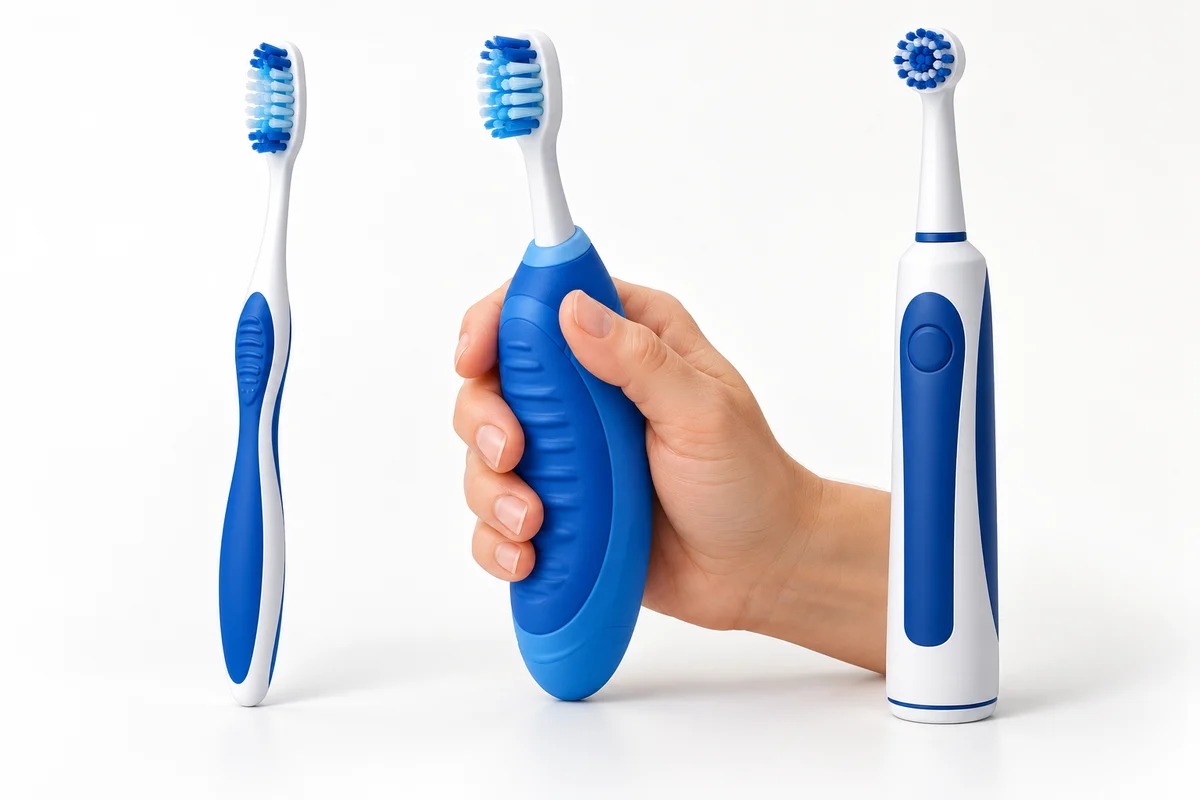
Handles and powered brushes
Possible aids include thicker or longer handles, adapted grips and powered brushes. A powered brush may reduce movement but can be heavy or hard to control. Check comfort, vibration, grip security and ease of cleaning before buying. Get appropriate help with modifications.
Reaching every surface
Clean all tooth surfaces with fluoride toothpaste. Ask the dental professional to watch your technique and help with areas you miss. Discuss between-teeth cleaning separately; request a demonstration of suitable aids rather than forcing a brush into a gap.
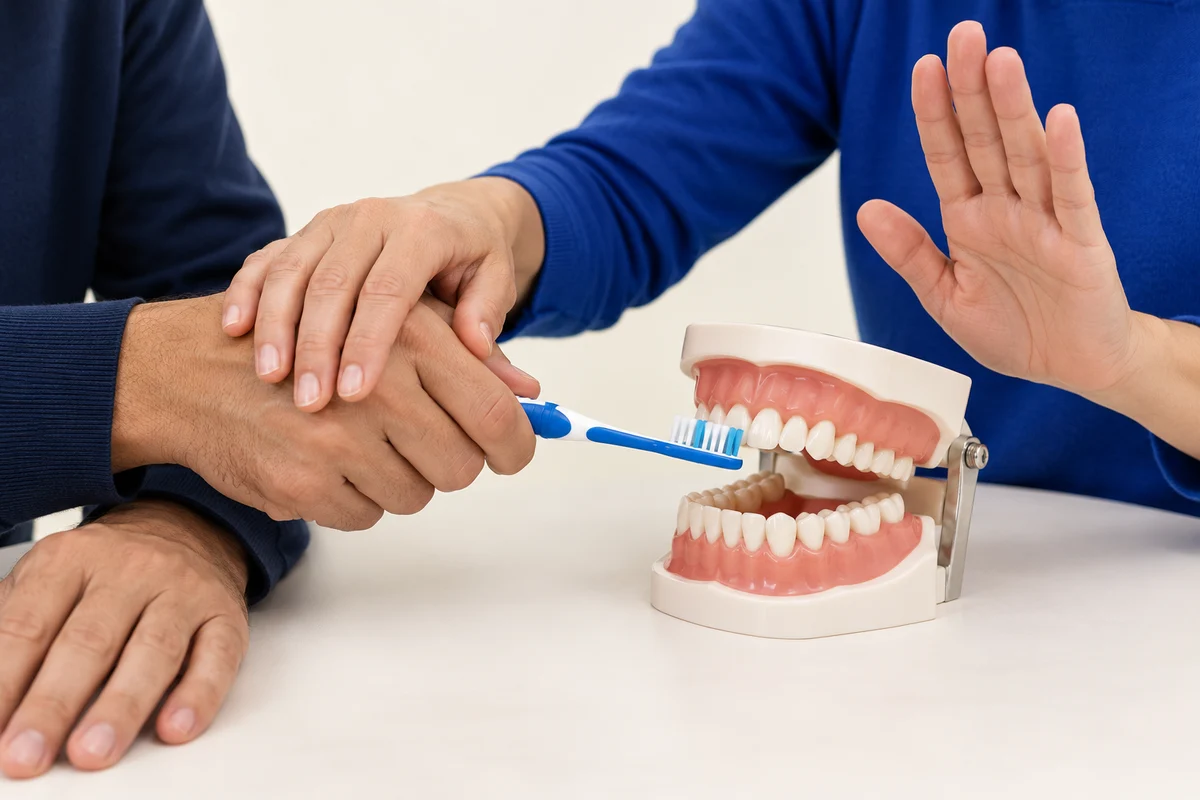
Help on your terms
If you want support, invite that person to the demonstration. Agree whether they will prepare equipment, guide your hand or clean particular areas. Choose a signal for discomfort or a pause. Physical assistance does not change your right to make treatment decisions.
Cleaning future dental work
Before choosing crowns, bridges, implants or dentures, test how you would clean the proposed design with your usual movements and chosen support.
- Can I reach around and underneath each part?
- Can I handle the cleaning aids?
- What will work on days when grip or energy is worse?
Review the routine
Ask how cleaning effectiveness will be checked and when to return if it remains difficult. Report soreness, bleeding or avoided areas. Review the routine when your abilities, support or dental work change. Confirm accessibility and practical support before treatment away from home.
Read the related guidance
Keep the wider treatment plan in view while comparing these options.
Choose questions to ask.
Select your questions and copy the list, or open it as a WhatsApp draft. You can edit the message before sending.
Your consultation questions
Untick any questions you don’t need.
4 selected · No contact details needed.
Common questions
About this information
Published by Best Smile Turkey, a health-tourism intermediary. Your treating dentist is responsible for assessment, treatment and care.
Use this information to prepare questions for your dentist. An examination is needed to advise on treatment. Photographs, models and previews cannot establish suitability or predict results.
Source checking is not a clinical review. How we use sources and images, or how to report a correction.
Sources and further reading
- Rotherham NHS: toothbrushing with reduced dexterity Adapted handles, powered brushes and choosing aids with a dental professional.
- NHS: how to keep your teeth clean Cleaning all tooth surfaces, fluoride toothpaste and practical brushing advice.
- NHS: dental treatments explained An overview of crowns, bridges, veneers, implants and other options.
- General Dental Council: going abroad for dental treatment Questions to ask about the treating provider, follow-up arrangements and concerns.
These resources offer general guidance; their publishers do not endorse Best Smile Turkey or the treating provider. Manufacturer links identify products or records, not independently compared outcomes. NHS funding information concerns UK care, not treatment costs in Turkey.
Ask about this information or report a correction